Water to Wine :“True Vine”
“What Jesus did here in Cana of Galilee was the first of the signs through which he revealed his glory; and his disciples believed in him.” (John 2:11)
A Reflection
John’s Gospel is not a random collection of stories. It is a carefully chosen set of memories meant to reveal who Jesus truly is. Again and again, John draws on the Torah and the imagery of God’s power throughout the Old Testament to make a bold claim: Jesus is Israel’s God in the flesh. With that in mind, it’s striking that Jesus’ first miracle is so quiet. At a wedding in Cana, Jesus turns water into wine. For some, this is not only one of pop culture’s favorite miracles but also one of Jesus’ most impressive, as he has completely transformed one substance into another. Yet for his first “sign revealing his glory,” almost no one notices. John invites us to slow down and pay attention. There are three key themes in this passage that help us understand what’s really happening: timing, shame, and the best being saved for last.
Timing
John 2:3–4 tells us that Mary, the mother of Jesus, is the first to notice the problem: the wine has run out. When she brings this to Jesus, he responds,“Woman, why do you involve me? My hour has not yet come.” At first glance, this sounds harsh. But Jesus calling his mother “woman” isn’t disrespectful. In English, this would be the equivalent of “ma’am”. According to the Cultural Backgrounds Study Bible, the literal translation of what he says is “What is there between me and you? My appointed time hasn’t arrived yet.” Mary is focused on a present crisis. Jesus, however, is speaking on an entirely different timeline. Throughout John’s Gospel, Jesus seems to experience time differently. When he refers to “his hour,” he is consistently pointing toward his death. His response highlights the cost of beginning his public ministry—because once it starts, the cross is inevitable.
Mary doesn’t ask Jesus to make more wine. And all-knowing Jesus doesn’t jump into action to make more wine before it runs out, and she mentions it. But his inaction allows Mary to approach him in faith, not knowing where else to go. Mary’s act of telling the servants to listen to Jesus’ instructions, in light of his response, shows her ultimate trust in her son. Mary asked Jesus for help and then let go of control.
Shame
John 2:1 reminds us that Jesus and his disciples were invited guests at this wedding. Ancient Jewish weddings were massive celebrations, often lasting up to seven days. Hospitality was a sacred value in Hebrew culture, woven throughout Scripture as a divine command. To host well was to honor your family and your guests. Running out of wine wasn’t just inconvenient; it was shameful. Imagine a modern wedding with 200 guests, but only enough food for half of them. If you were one of the guests left hungry, you would feel disappointed and forgotten. That’s the kind of social failure unfolding at Cana.
When Jesus is about to perform the miracle, John makes a very interesting observation. John 2:6 says, “Nearby stood six stone water jars, the kind used by the Jews for ceremonial washing, each holding from twenty to thirty gallons.” These jars were used for ritual purification, for cleansing what was considered unclean. The vessels meant to symbolize human attempts at purity and adequacy are the very ones Jesus chooses to fill. Where human effort ran out, Jesus stepped in. Jesus turns the water that symbolically holds where we fall short into a refreshing beverage that brings life to the party. Isn’t that how Jesus redeems our stories? He takes what should disqualify us and uses it to qualify us. He turns shame into abundance.
Best for Last
Jesus tells the servants to fill the massive stone jars with water, then instructs them to take some to the master of the banquet—the MC of the celebration. This is a risky move. Running out of wine was news no one wanted him to announce. Carrying what appeared to be water to the master wasn’t just obedience; it was true faith. The miracle doesn’t happen before they start walking. It happens as they walk. Sometimes trust looks like moving forward as if God has already acted.
Imagine the panic in the servant's chest as the master tastes it. Then he stands, walks to the groom, and announces: “Everyone brings out the choice wine first and then the cheaper wine after the guests have had too much to drink; but you have saved the best till now.”(John 2:10) It was customary to save the cheap wine for later in the wedding festival when everyone was drunk and tired and wouldn’t notice the quality.
That’s what makes this miracle so compelling. Jesus displays extraordinary power in an ordinary moment, for a need most people never even notice. The guests didn’t know. The couple didn’t know. Only Mary, the servants, and the disciples saw it, and perhaps that’s the point. The best arriving after the old supply runs dry hints at something more. Earlier, Jesus spoke of his coming death. Maybe this miracle quietly foreshadows the resurrection—that even when everything seems spent, God is still saving something better for what comes next.
Take with You
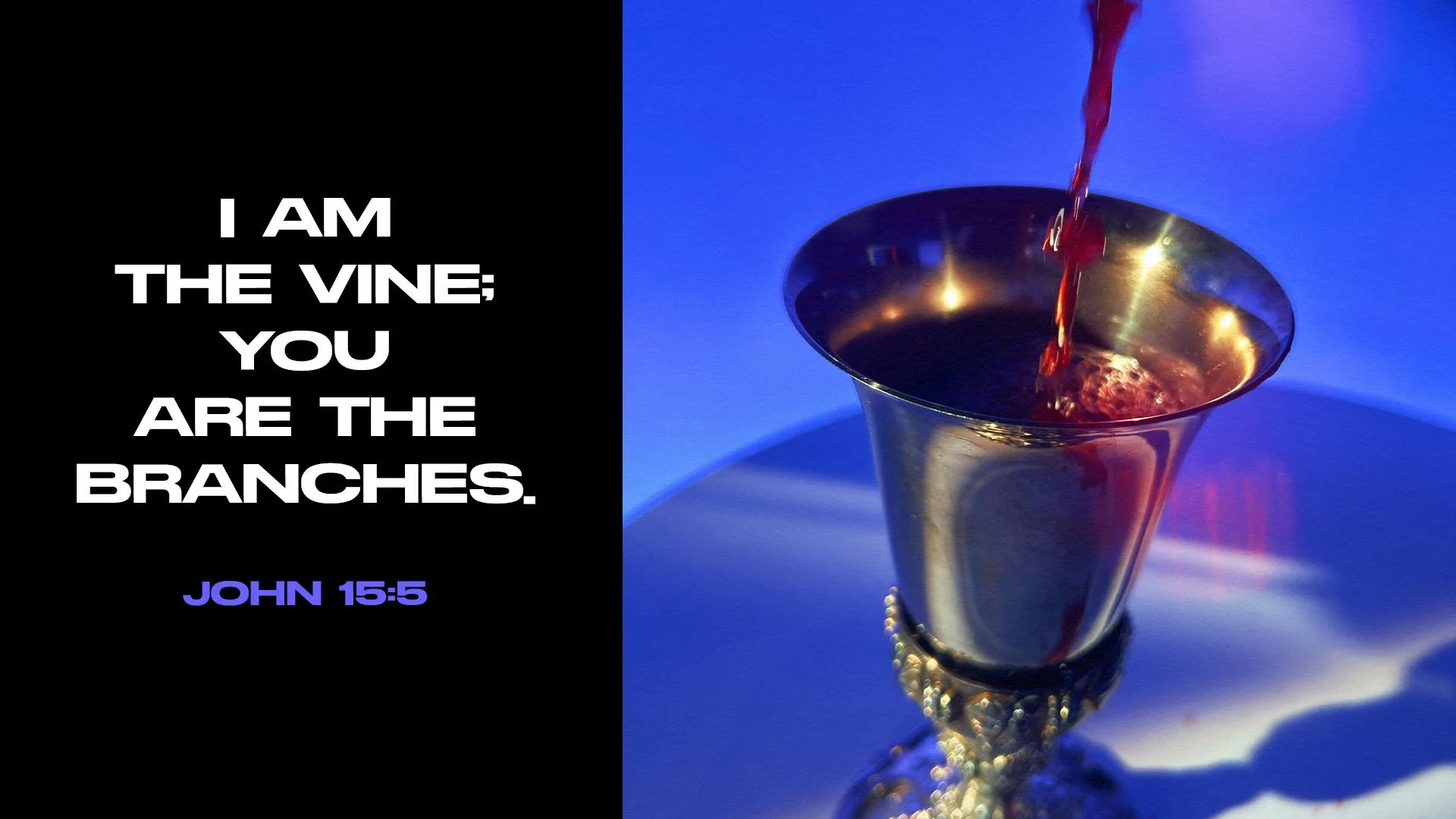
“I am the true vine, and my Father is the gardener. He cuts off every branch in me that bears no fruit, while every branch that does bear fruit he prunes so that it will be even more fruitful.” (John 15:1-2)
In John 15, Jesus is walking with his disciples from the Upper Room, where they have just finished the Last Supper. Judas has already left to meet with the religious leaders to lead them to Jesus. Yet, Jesus takes his time with the 11 walking through the city of Jerusalem and out the Susa Gate towards the Mount of Olives. There, as they walk through the winepresses, there he calls himself the “True Vine”. In the Old Testament, vines sometimes symbolized God’s people (Psalms 80:8, Hosea 10:1). Here, Jesus applies that image to himself. Life, fruit, and faithfulness all depend on remaining connected to him.
At the Wedding in Cana, Jesus was invited. Mary trusted him without knowing the outcome. The servants obeyed without yet seeing the miracle. All of it required remaining close to the True Vine. Remember how John 2:11 calls the miracle that represented Jesus transforming the wedding party’s shame the “revealing of his glory”? Again, in John 15:8, Jesus describes his glory as this: the work of God in us and through our lives.
As branches, we represent the health of the vine by the fruit we produce. Jesus condenses all of the Law and the Prophets into one in John 15:12 when he says, “My command is this: Love each other as I have loved you.” Producing fruit is inseparable from how we love. Jesus taught this on the night before he died on the cross.
Later, in John 15:18, Jesus says, “If the world hates you, keep in mind that it hated me first.” Jesus knew that not only did his death signal salvation, but it also signaled how it feels sometimes to be attached to this True Vine. But perseverance is the key to faith. Just as the wedding at Cana didn’t end where the resources ran out, the story doesn't end there either. The best is still to come.
Constable, Thomas. DD. "Commentary on John 2". "Dr. Constable's Expository Notes". https://www.studylight.org/commentaries/eng/dcc/john-2.html. 2012.
NIV, CULTURAL BACKGROUNDS STUDY BIBLE : Bringing to Life the Ancient World of Scripture. Zondervan, 2017.