

Places: Nazareth

Where do you call “home”?
Home may conjure up images of the place you were born, the place you spent your childhood, the place where you’ll find the people you love. Your home may stretch across towns and cities, states and regions, even national boundaries, calling up affection or complex feelings—perhaps both at once.
For Jesus, home was Nazareth—and at the same time, it wasn’t.
Nazareth was the place where Jesus spent his childhood, raised by his parents in a town that called him “Joseph’s son.” Yet Jesus was not who they imagined. He was the Son of God, chosen before conception to bring justice to the nations through the power of God’s Spirit. Unknown to his neighbors, their long-awaited Messiah had come to dwell among them, so that the light of salvation might extend not just to the sons of Jacob, but to all people on earth.
For Jesus, home was not Nazareth, but all the people he was sent to love—and he loved us to the end brought about by our hands.
Rejecting Our Own
“He went to Nazareth, where he had been brought up, and on the Sabbath day he went into the synagogue, as was his custom. He stood up to read, and the scroll of the prophet Isaiah was handed to him. Unfurling it, he found the place where it is written:
‘The Spirit of the Lord is on me, because he has anointed me to proclaim good news to the poor. He has sent me to proclaim freedom for the prisoners and recovery of sight for the blind, to set the oppressed free, to proclaim the year of the Lord’s favor.’
“Then he rolled up the scroll, gave it back to the attendant and sat down. The eyes of everyone in the synagogue were fastened on him. He began by saying to them, ‘Today this Scripture is fulfilled in your hearing.’” (Luke 4:16-21)
When has the world ever welcomed those who speak the truth?
In a thousand tongues, they preach hope to the hurting, unchain the oppressed, and lift up the dignity of those we despise. Their words will not return to them empty, like seeds planted for a future their hands may not harvest. Still they press onward, laboring to turn their words into reality—up until the day their voices are silenced, their hands and feet stilled by the people who feared them.
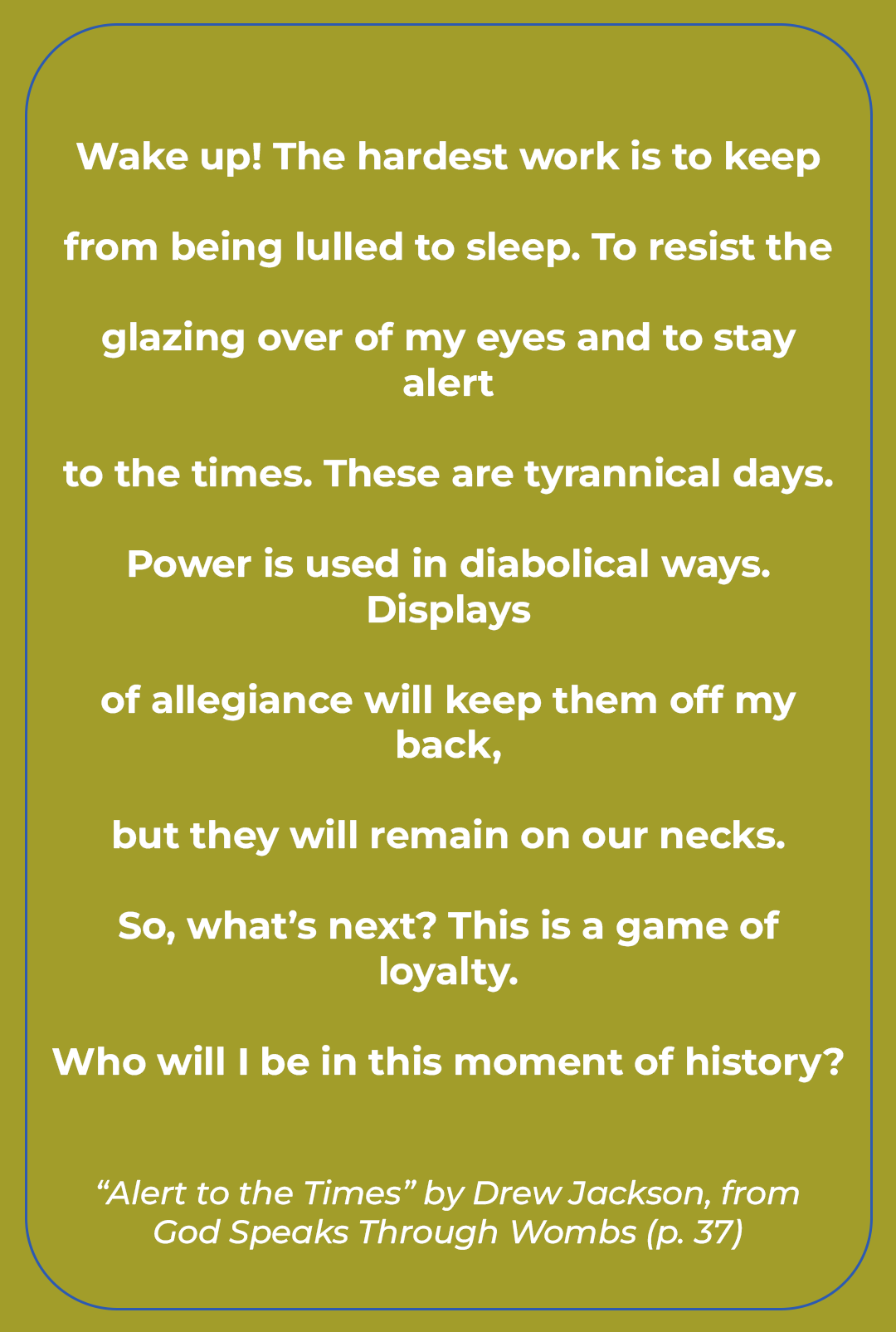
We are used to falling asleep to our fear, especially when we believe we’re getting what we wanted. In Nazareth, Jesus did not simply speak as a prophet, but as the initiator of God’s reign and the restorer of God’s people. In other words, he was the embodiment of their long-awaited hope. The audience was amazed at the words Jesus spoke to them, not knowing that soon they would desire to kill him.
They rejected their own when he challenged their worldview, rage hiding their fear of their world overturning. In days filled with tyranny, they sunk into slumber, closing their eyes and ears to the Truth.
As I write, adults and children here in the U.S. are being targeted, detained, and denied their human rights, neglected to the point of dying in custody—or rather, captivity. Many more are living at the nexus of impossible choices, terrified for their homes, their families, their neighbors, still finding the strength to show up for their communities. Protests and testimonies and pleas for assistance—no, pleas for resistance—are flooding in from all corners of the earth as war rages: Minnesota and Cuba, Palestine and Iran, Congo and Sudan and Haiti and—
Then I close my apps, turn the firehose off, and try to forget what I just learned so I can breathe again.
Lord, help me breathe! Help me to see, again and again, until my eyes can’t help but weep with the suffering. Help me to listen to their pain, so that my heart becomes troubled by the sin of inaction. In these hours of great need, help me to not fall asleep under the weight of my fear, lest I fall into temptation in these days we are living in.
Give Us Signs from Heaven
“Jesus said to them, “Surely you will quote this proverb to me: ‘Physician, heal yourself!’ And you will tell me, ‘Do here in your hometown what we have heard that you did in Capernaum.’ ” (Luke 4:23)
Where is God in times like these?
The people of Nazareth—and all Jews in Roman-occupied Judea—likely had the same question. God’s chosen people were still waiting for their deliverance, yet no signs had appeared that God was listening during the years of conflict that led to Rome’s control. Prophets and movements declaring God would soon restore their nation had come and gone for generations, their words falling to the ground like all false promises—followed often by their death-stained bodies.
What, then, made this man from their town any different?
They needed proof of his power, the sign of authority when their own power was limited. They needed to see that God’s compassion was real, that God was not absent and had not forgotten them. They needed to know that their people would be well, when the possibility of wholeness had been relegated to the miraculous.
The only problem they had was the person God dwelled in.
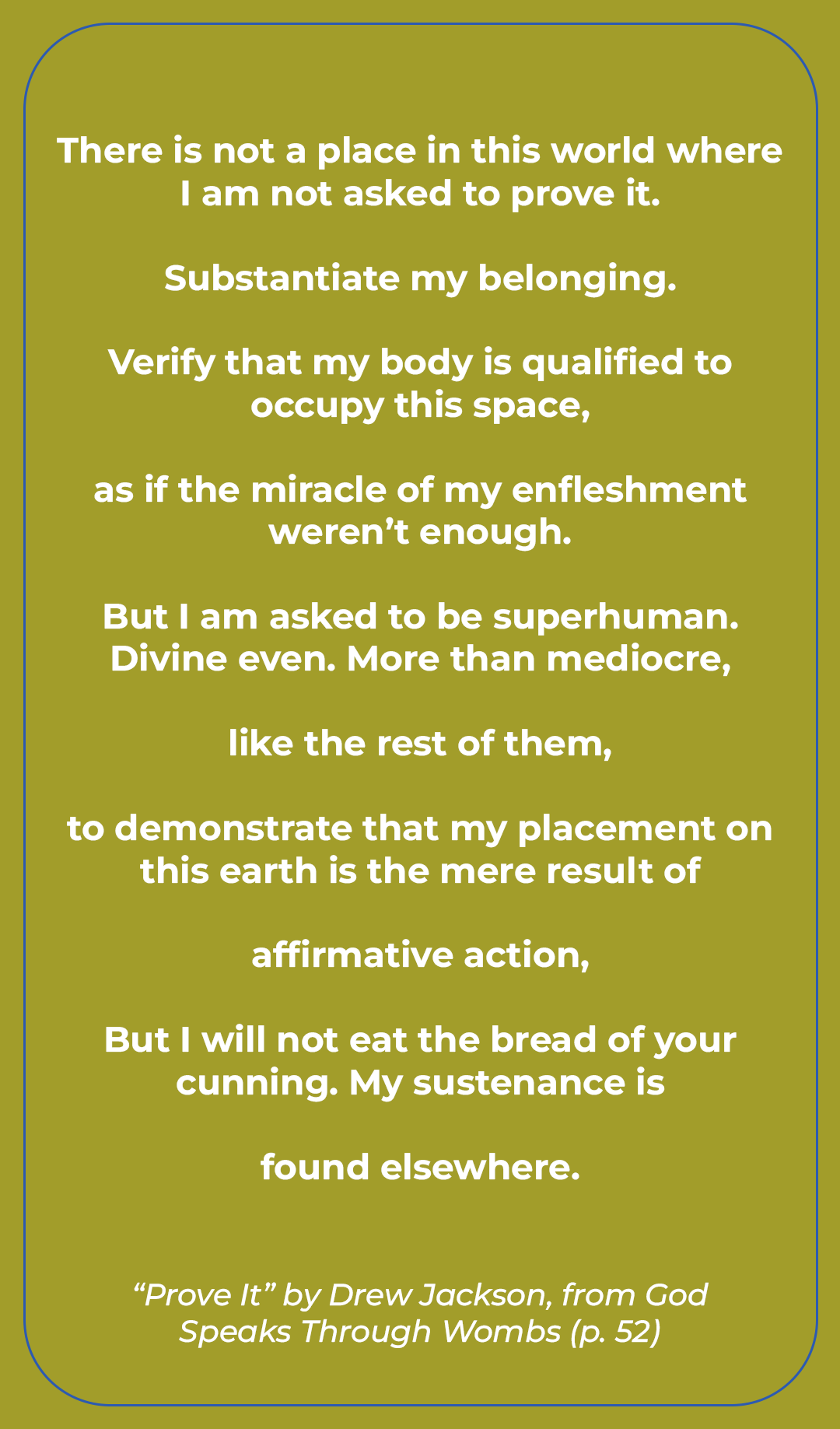
Here in 2026, we are again waiting for God to deliver us, to bring peace in a world that crushes our hope. We may wonder where God is, but we are blinded by pride even when God comes to us. We look for God in the people we trust, the people who mirror us, the people we deem holy enough. Yet God dwells in the bodies we consider least qualified: the ones we force to earn their belonging, their rights, their dignity, their survival. No wonder they often refuse to indulge us.
Lord, forgive me. I have looked upon you and found you wanting, unable to see you past layers of pride. I’ve asked for signs when you offered your presence, preferring proof of your power over the miracle of your enfleshment. It is only by your grace that I’ve seen you in those we deem unfit as your image. May I never forget your countless faces.
Love is the Floor
“[Jesus continued,] ‘I assure you that there were many widows in Israel in Elijah’s time, when the sky was shut for three and a half years and there was a severe famine throughout the land. Yet Elijah was not sent to any of them, but to a widow in Zarephath in the region of Sidon. And there were many in Israel with leprosy in the time of Elisha the prophet, yet not one of them was cleansed—only Naaman the Syrian.’” All the people in the synagogue were furious when they heard this. They got up, drove him out of the town, and took him to the brow of the hill on which the town was built, in order to throw him off the cliff. But he walked right through the crowd and went on his way. ”(Luke 4:25-28)
Our love has always been too fickle. Too small. Too cowardly.
The fullness of God came to us in the flesh, proclaiming the mystery that had been hidden for generations: all people will be freed and restored by Love. This includes, especially, the people who don’t belong, the people we neglect, the people we hate. To God’s chosen people, this news is infuriating. We should be God’s priority, for aren’t we the faithful?
We are not. Jesus words’ are an indictment of our failure to love God, and the Nazarenes knew this, for they knew their history.
When Ahab was king of Israel, he pursued military and economic power with passion, leading God’s people away from God in service to politics (see his marriage to Jezebel). God was being supplanted in the hearts of the Israelites, so the Spirit sent Elijah to a widow in the land of the false god they worshipped. And when Ahab’s son continued to steer them in the direction of evil, the Spirit sent to Elisha the commander of an army they would soon be at war with. God blessed the godless and healed a foreign enemy, for Love is not a respecter of boundaries.
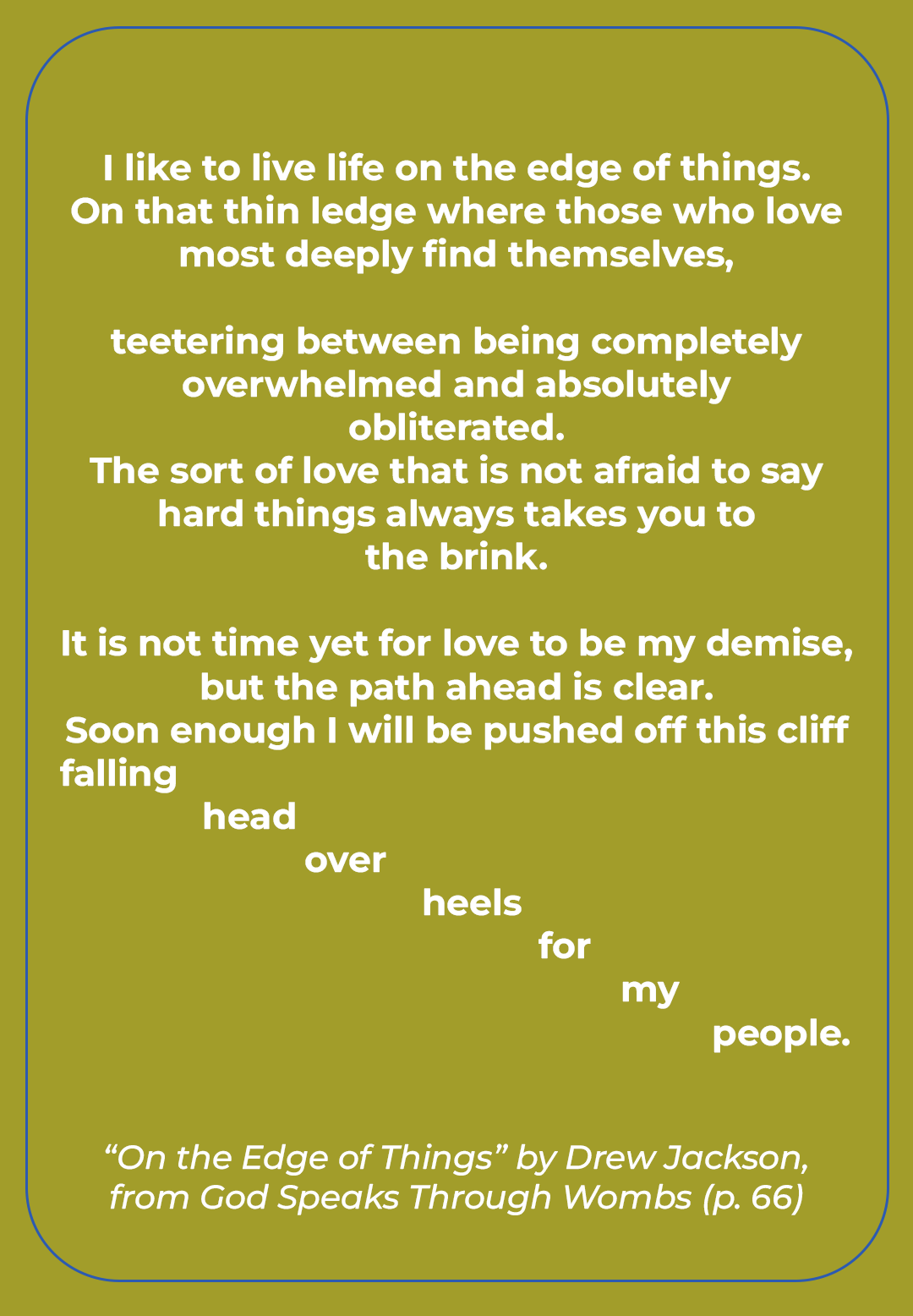
Our lines in the sand are precious to us. We raise walls on top of them, cementing hostility, unaware that we stand on a foundation of Love. When God dares to remind us, we cling to our arrogance, driving Love out of town to be killed by our fury. Despite our rebellion, our God remains faithful, falling head over heels into love for all people.
Lord, turn me back to you. My pride and my lovelessness are always before you, revealing the distance between my heart and yours. Restore in me a pure heart fixed on Love, no matter the cost to the walls I build up. And as I follow you, lead me deeper into love for all of your people, even when it means trusting you in the free fall.
ABOUT THE AUTHOR