

People: Mary and Martha

“Martha, Martha,” the LORD answered, “you are worried and upset about many things, but few things are needed - or indeed only one. Mary has chosen what is better, and it will not be taken away from her.” (Luke 10:41-42)
The statement, “what is better,”lingered longer than expected in Luke 10:41–42.It wasn’t loud or demanding, but it stayed, circling back like a quiet question that refused to be dismissed. What exactly was better? Better than serving, better than being responsible, better than fulfilling what was expected?
In a cultural context where women were largely defined by roles of service and domestic responsibility, Martha’s actions would have been seen as not only appropriate, but commendable. She was doing what was right. And yet, Mary stepped outside of that framework, taking the posture of a disciple at the feet of Jesus, which was something women were not typically invited into.
What made this moment striking was not only her choice, but His response. Jesus did not correct her; He affirmed her. In doing so, He introduced a quiet but decisive shift: what was “better” was no longer measured by expectation or productivity, but by proximity and by being formed in His presence. It was not simply about doing less, but about being invited into a place of belonging where one had not previously been permitted. And if that was true, then this moment was not simply about two sisters and their choices, but about a deeper redefinition of value, access, and who was invited to receive it.

This moment in the home of Martha and Mary was not an isolated affirmation, but part of a larger pattern unfolding throughout Jesus’s ministry. What was declared “better” in that room began to take shape in the lives of other women who encountered Him. It was not only those who followed closely, but also those who approached from places of need, exclusion, or curiosity. Again and again, Jesus met women within the limits placed on them by society and quietly moved those boundaries outward.
Whether in private conversation or public encounter, He engaged them with a depth that invited more than momentary relief. It invited nearness, understanding, and belonging. What began with Mary at His feet did not remain confined to a single moment; it widened into a consistent reality in which women were drawn closer, not held at a distance, and welcomed into spaces they had not traditionally occupied.
In elevating these women, Jesus did not do so through grand declarations, but through consistent, embodied actions that expanded their roles beyond what society expected. Women were not only recipients of His compassion; they became participants in His ministry. Luke records that women such as Mary Magdalene, Joanna, and Susanna traveled with Him and the Twelve, supporting the work through their own resources (Luke 8:1–3), an indication that they held both agency and influence within the movement. This was not incidental support, but a form of partnership that sustained the ministry itself. Others were entrusted with spiritual depth and responsibility: the Samaritan woman engaged in theological dialogue and became a witness to her community (John 4:25–30, 39); the woman once silenced by years of suffering was publicly restored and named “daughter” (Mark 5:25–34); Mary of Bethany was affirmed in her posture as a disciple (Luke 10:39, 42) and later recognized for her prophetic devotion (John 12:1–8). Even at the crucifixion, when many had fled, women remained present, bearing witness to both His death and burial (Matthew 27:55–56; Luke 23:49, 55). And at the resurrection, they were the first to encounter the empty tomb and the first to be sent with its message (Luke 24:1–10; John 20:11–18). In each of these moments, Jesus was not merely including women, He was forming them, entrusting them, and positioning them as active participants in the unfolding of the Gospel. He was quietly but decisively expanding what their place could be.
Taken together, these moments reveal that Jesus’s ministry did not simply make space for women, it redefined their place within the life of the Kingdom. What began as an invitation to sit at His feet unfolded into a pattern of restoration, participation, and commission that challenged the assumptions of the time. Women were no longer confined to the roles that had defined them. They were drawn into relationship, formed in truth, and entrusted with responsibility. This was not a removal of service, but a reordering of it where presence with Jesus became the foundation from which all else flowed. In this way, “what was better” was not a rejection of what women had been doing, but an invitation into something fuller: a life marked not only by what was expected of them, but by what was made available to them. And in that invitation, Jesus did not merely elevate women, He restored their belonging, affirmed their dignity, and positioned them within the unfolding story of redemption.
Returning to the words, “what is better,” the passage in Luke 10 no longer reads as a simple contrast between two sisters, but as a doorway into a much larger reality. What Jesus named as “better” in that moment with Mary was not confined to stillness or study alone, but revealed a deeper invitation into belonging with Him. One that would echo throughout His ministry with women. From the home in Bethany to the roads of Galilee, from quiet conversations at wells to public moments of healing and restoration, women were repeatedly drawn into places they had not been given access to before. They were seen, formed, entrusted, and sent. And in each encounter, Jesus quietly redefined what their lives could hold. “Better” was not a measure of worth between service and presence, but the revelation that nearness to Him was being opened as a place where women could stand, remain, and participate fully in the work of the Kingdom.
ABOUT THE AUTHOR
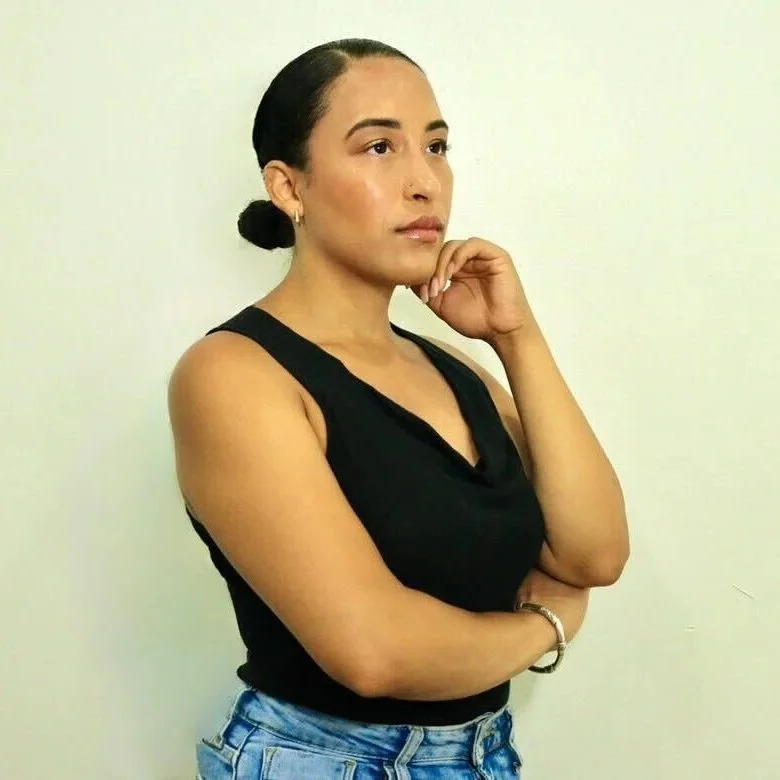
Allea is a multidisciplinary storyteller working through poetry, photography, and written word. Her work lives at the intersection of faith, creativity, and human experience, often highlighting the beauty found in stillness, vulnerability, and the unseen. With an eye for detail and a heart for depth, she creates pieces that invite reflection and meaningful connection. Her work is less about performance and more about presence, creating intentional space for others to slow down, engage honestly, and encounter both themselves and God in a deeper way.