The Resurrection in Film

The Stone Rolled Credits
For as long as film has been an artistic medium, it has been used to tell the story of Jesus. However, the problem of depicting the Divine started very early and remains an artistic problem today. Resurrection has been one of the biggest hurdles for films about Jesus to tackle. Let’s look at five of the most interesting attempts directors have taken. The question we will approach most of these scenes with is: after telling the story of Jesus, what is the takeaway audiences are given with how the resurrection is shown?
Jesus (2000) ★

As part of a collection of movies following famous Bible characters, Jesus (2000) was released starring Jeremy Sisto in the title role. Although there is much to discuss about this movie, the Resurrection sequence is unique in that it follows a trend that was popular in the new millennium. After loosely following the events in John 20, Jesus appears to his disciples, only to mystically transport to modern day Santa Monica pier. There, he is greeted by a diverse group of children. It follows this cultural Y2k trend of asking where the modern relevance of these ancient stories lie. It’s the director’s way of making Jesus a member of our society today.
However, it doesn’t completely work. After a very bloody passion sequence and a constant allusions to Roman Empiric power not understanding Jesus’s prophetic mission, it seems weird to have the conclusion be that greeting a group of diverse kids captures that. Jeremy Sisto as Jesus in this scene appears in modern clothes and honestly looks like just another hot guy who you fall for in a rom-com because he is watching a group of kids.
King of Kings (1961) ★★

Much like Jesus (2000), this film’s Resurrection sequence loosely follows the story of Mary Magdalene in John 20. For King of Kings (1961) being one of the most beloved Biblical epics of the 1960’s, much criticism has been given by how human the movie feels. The miracles and the supernatural seem to be treated with extreme caution while teaching scenes and sword fights are prioritized.
Mary (Carmen Sevilla) wakes up in front of an unguarded and unsealed tomb. She sees a man wearing black and asks if he is the gardener. But it is the Risen Jesus (Jeffery Hunter), who seems stiff. Then, we cut to John 21, with the Disciples cleaning their nets by the Sea of Galilee. The narrator does much of the heavy lifting naming off-screen Resurrection appearances. Jesus commissions his shocked fishermen disciples from off screen. Then, after they leave his shadow appears forming a cross with the stretched out net. The conclusion seems to rely on sentiment more than anything biblical takeaway.
The Passion of the Christ (2004) ★★★★
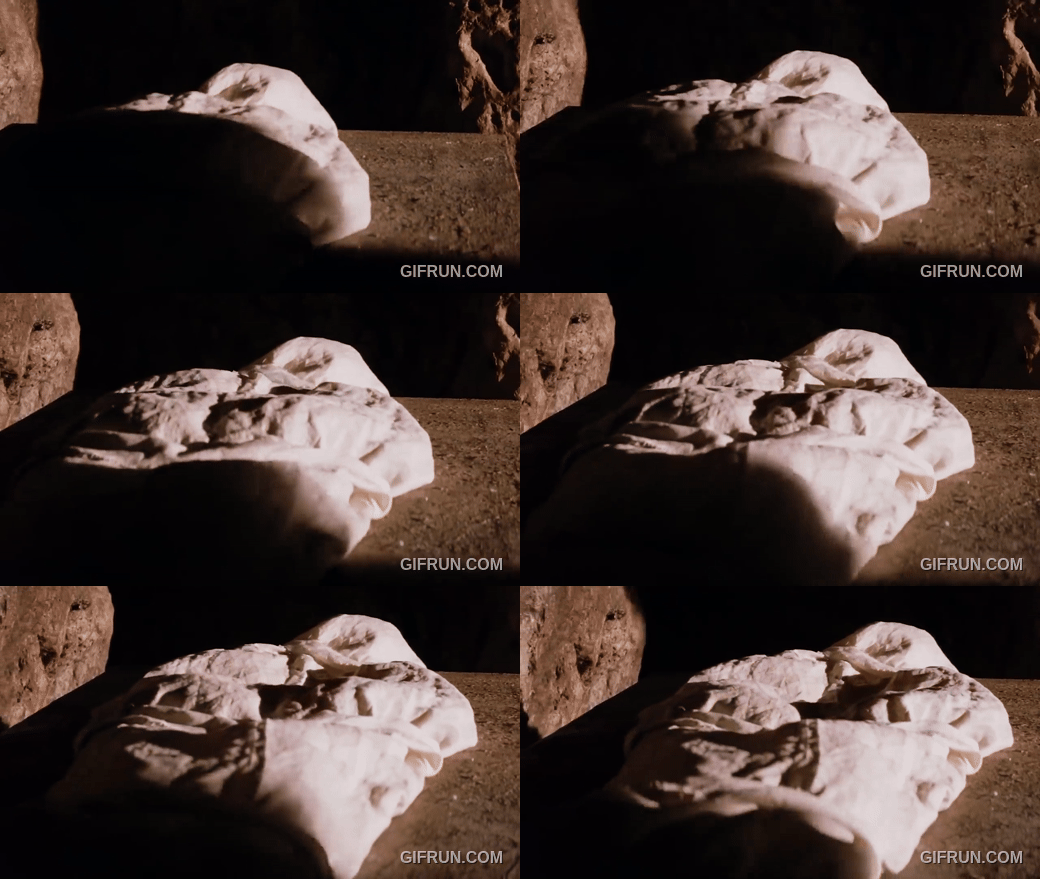
At the writing of this article, Mel Gibson is in the production phase of the sequel The Resurrection of the Christ (2027?). In principal film, the Resurrection is understandably only glimpsed at the end. After 2 hours of unhinged violence on Jesus (Jim Caviezel), the resurrection seems to hint at his sovereignty. The dark scene is split by the close up of a stone moving from the tomb entrance. Day light falls on the wrapped body which seems to deflate, leaving the grave clothes untouched. Then Jesus appears, sitting up, free of blood. He stands naked and we see the nail wound in his hand.
The Passion of the Christ (2004) is a movie I have complicated feelings about. However, the Resurrection scene seems to say in a simple way that this story doesn’t end with the bloody spectacle of the Crucifixion. That Jesus cannot be stopped.
Jesus of Nazareth (1977) ★
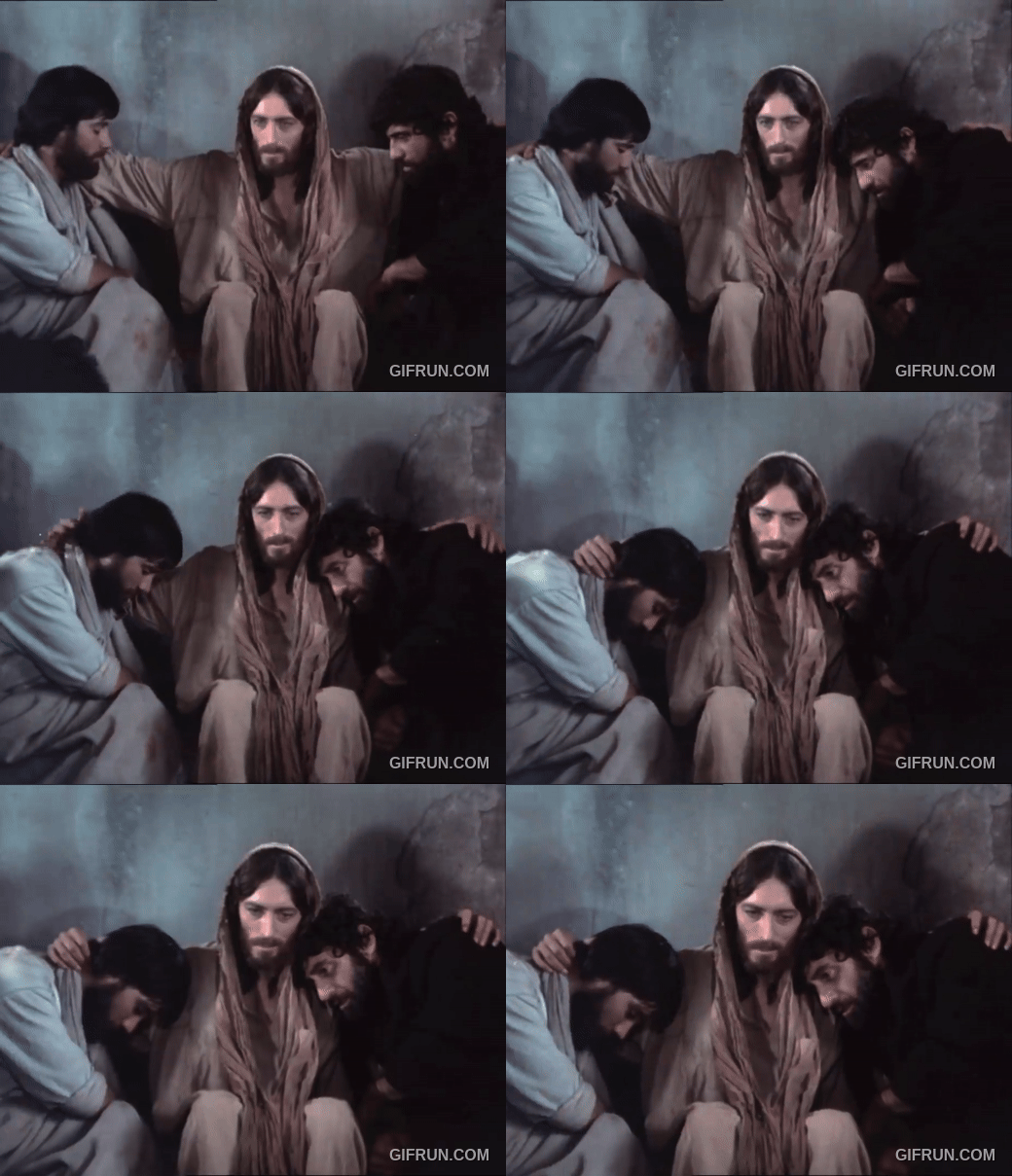
Jesus of Nazareth (1977) might be one of the most influential Biblical films ever. Originally airing in 5 parts on NBC every Sunday, it shaped the way many people saw Jesus. All of this is a combination of a great creative team, the direction of Franco Zeffirelli, and the moving performance by Robert Powell who plays Christ. Zeffirelli, known for his operatic adaptations of classics, coached Powell on how to appear on camera in such a way that his every move felt ethereal. However, for a 6 hour epic, the Resurrection almost didn’t happen.
Zeffirelli had told an interviewer from Modern Screen that the film would portray Jesus as "an ordinary man – gentle, fragile, simple". So, the original director’s cut didn’t cover the Resurrection. But after the American Religious Right flooded funders with letter's complaining of the “blasphemy of omitting the resurrection”, new financial support pushed for a simulated resurrection to be added. The result is a scene with the empty tomb and some early press material showing Jesus giving the Great Commission. With this context, it is no wonder why the Resurrection feels like an afterthought. The message of the film is more focused on the extraordinary life of Christ instead of the theological meaning.
The Miracle Maker (1999) ★★★★★
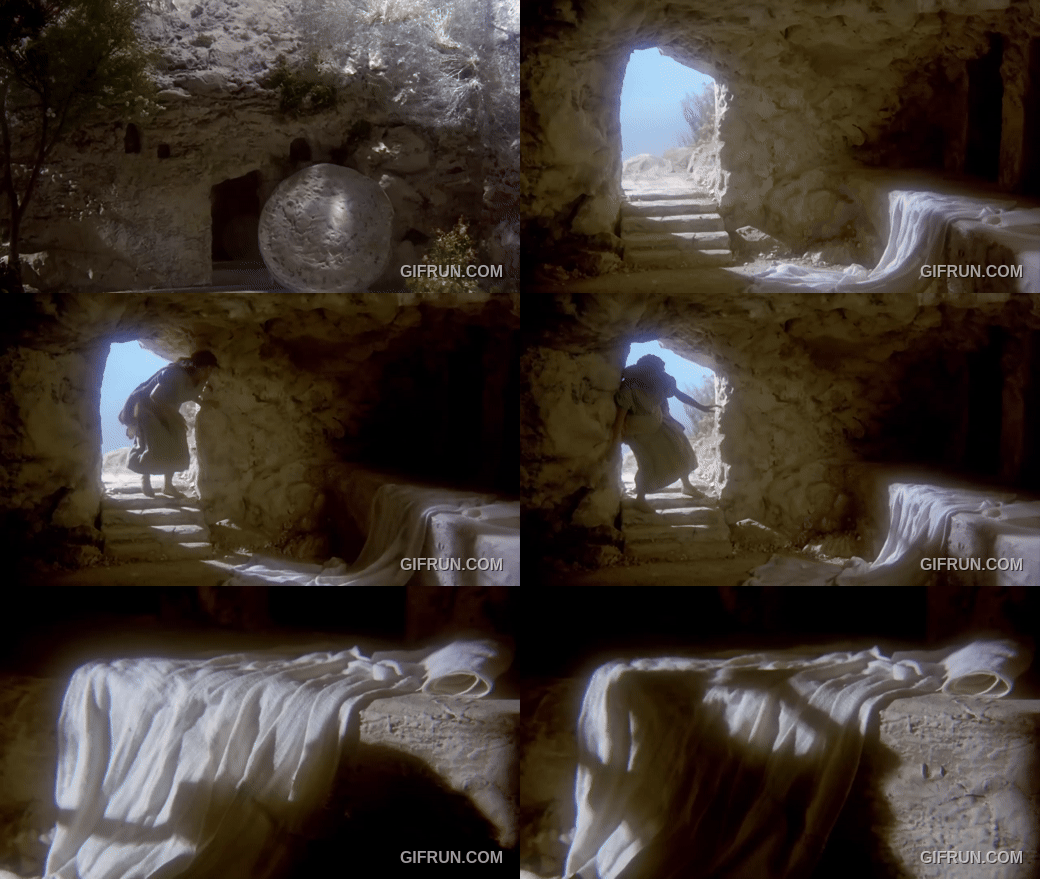
The Miracle Maker (1999) is one of the best Jesus films ever. Made as the conclusion to Testament: The Bible in Animation (1996), this film is fully made in stop motion with some sequences in 2D cell animation. With incredible attention to historical detail, this film is one of the few that follows the time of the events most closely to Scripture. Following the Crucifixion, the disciples rush to bury Jesus stating they will return after the Sabbath. For a family film, this is one of the few that captures the sense felt by the Disciples on Holy Saturday.
Like other films, Mary Magdalene in John 20 is the lens for the Resurrection. She doesn’t see the two angels mentioned in the text or tell Peter and John, but she does have her encounter with Jesus. This film acknowledges other Gospel accounts with other women from the Synoptic Gospels appearing as Mary Magdalene runs to the disciples to share the news.
More than the other films on this list, The Miracle Maker (1999) spends time with the Resurrection. A cell animated flashback of the Emmaus road story is shown as Cleopas and Jairus enter the upper room to meet the Disciples. The story of Thomas’s reluctance to believe and his appearance is shown. Jesus’ great commission is given on the Mount of Olives. Jesus doesn’t ascend but vanishes. The takeaway seems to be for kids and families that the sadness and pain of the Crucifixion was just a passageway to the greatest miracle of all. Just like Luke’s Gospel, which this film is mostly based on, Jesus gives many convincing proofs he is alive again.
Honorable Mentions
The Greatest Story ever Told (1965)★★★: Classical storybook approach with a Hallelujah chorus as the soundtrack. The resurrection news comes from remembering prophecy, not seeing the empty tomb. News spreads rapidly and Jesus (Max von Sydow) ascends into Heaven, not giving the great commission, but words from Matthew 5 on worrying. Again, the message seems to be sentimental.
Jesus of Montreal (1989)★★★: Different as the film is not a literal retelling of the Jesus story. Learn more about this movie from our Reel Faith series, here. When the Jesus archetype, Daniel (Lothaire Bluteau) dies, it is revealed he is an organ donor. His eyes are donated to cure the blind and his heart saves a dying man. Resurrection here is seen in the capacity that it impacts others.
Son of Man (2006)★★★: This film follows the life of Jesus as if it took place in a modern day African country. The crucifixion is presented as Mary (Pauline Malefane) revealing to the world her dead son who was killed in secret by the powerful. His death unites the people instead of discouraging them. The Resurrection is shown when Jesus (Andile Kosi) ascends a mountain surrounded by child angels. He fist bumps the air in victory showing his Resurrection proves the power of his mission.