Was John a Baptist?
“A voice of one calling in the wilderness,‘Prepare the way for the Lord, make straight paths for him.’”
(Matthew 3:3b)
Take Me to the Water
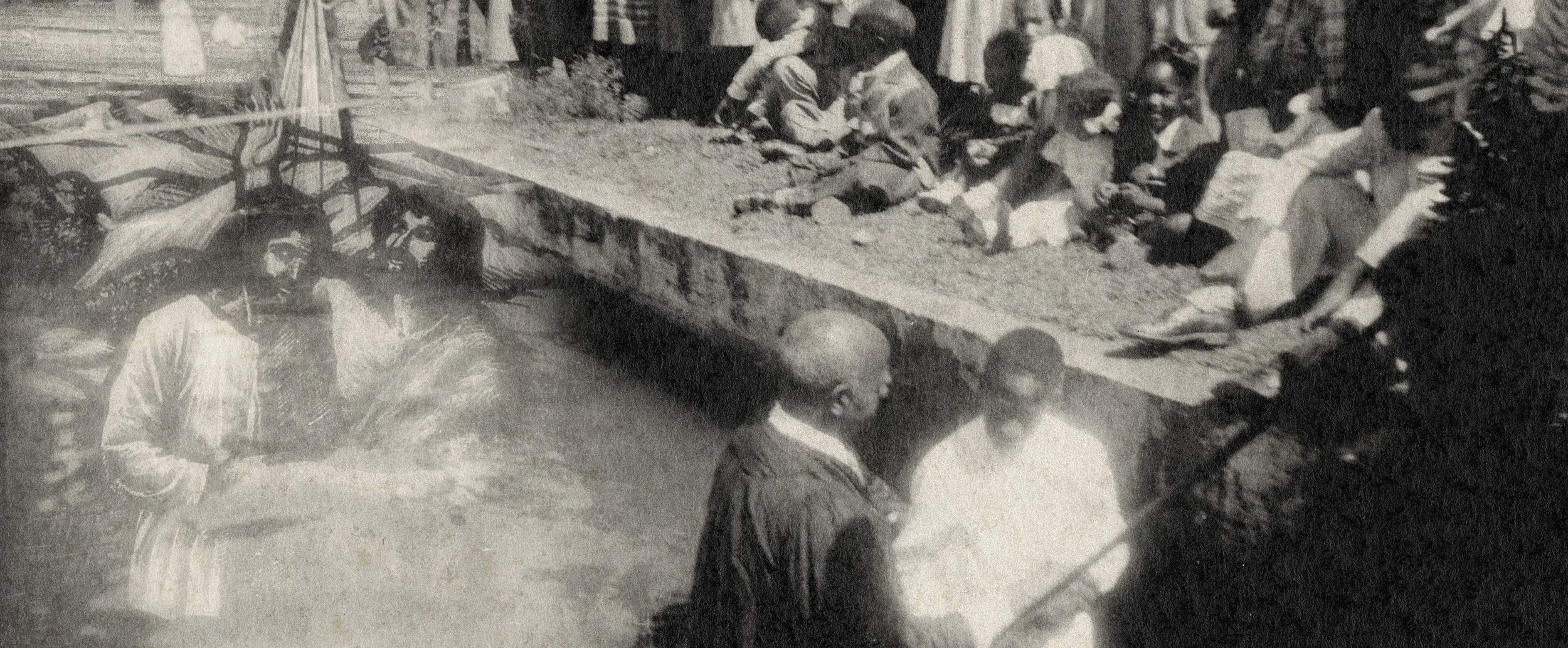
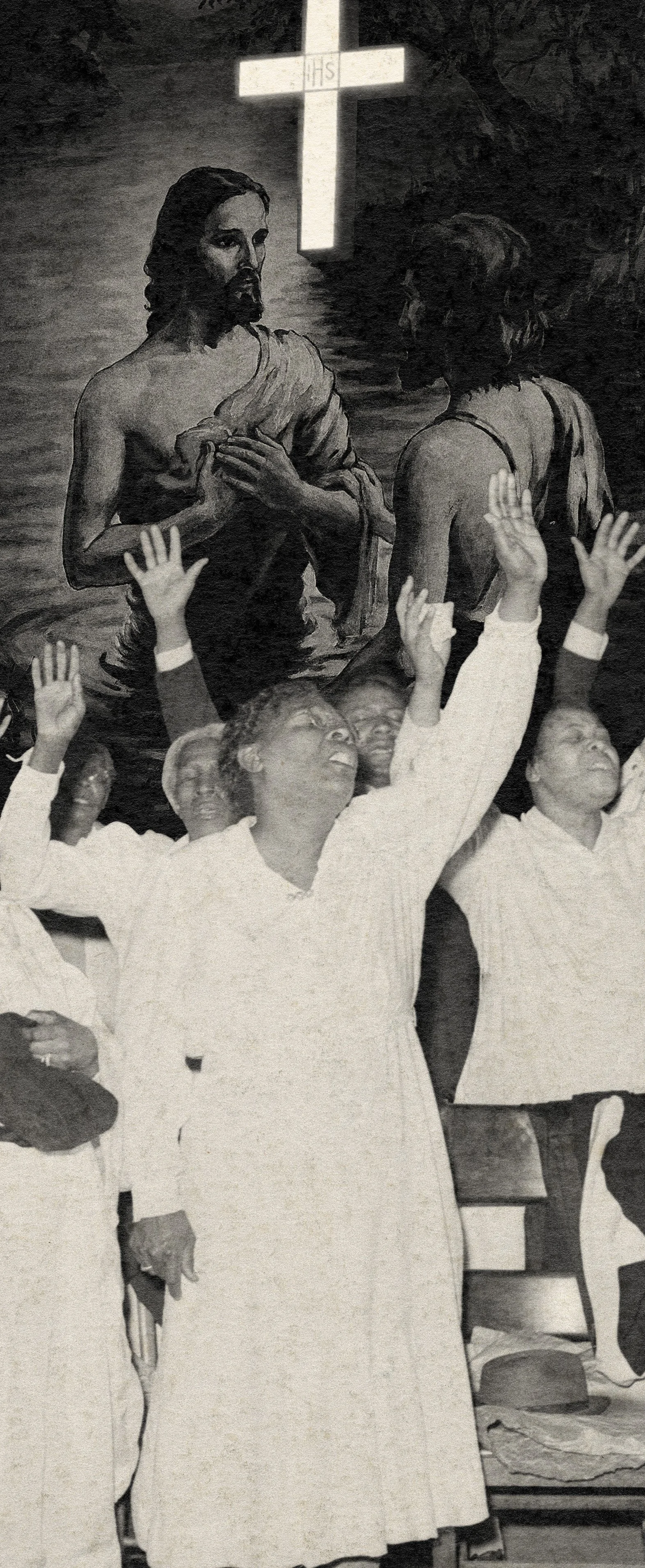
Travel with me in your imagination to that thin place where Heaven brushes against earth. Brown hands clap in rhythm as hymns of redemption rise from parched lips. Women shake tambourines like Miriam on the far side of the Red Sea, this time rejoicing over a different salvation drawn up from the water. A fiery, Spirit-filled preacher stands waist-deep in a river, voice cutting through the music: “Repent! Make your path straight, for the Lord is coming!”
If you grew up in the Black Pentecostal or Baptist tradition as I did, it’s hard to tell whether that scene unfolds at the Jordan River two thousand years ago or in a sanctuary last Sunday. John the Baptist is not a distant desert mystic to me. I’ve seen him in pulpits across the country. He has pastored Black churches, calling out hypocrisy, preaching liberation, and announcing that God is on the move. Yet much of the West has encountered a quieter John: a philosopher in camel’s hair, a theological warm-up act before Jesus arrives. But what if we imagined John as charismatic? As a revivalist? As a Pentecostal prophet whose ministry pulsed with rhythm and resistance? Would the baptism of Jesus feel less like a painting and more like a praise break?
A Different Vision
That reimagining took shape for me while watching The Last Temptation of Christ (1988). In Scorsese’s portrayal, the Jordan teems with life. Drums beating, voices rising in call-and-response, bodies swaying in spiritual ecstasy. John preaches above the roar, baptizing in the same waters where so many of Israel’s sacred moments took place. The scene felt familiar. It reminded me of childhood Sundays when the sanctuary danced, people ran laps, and others were slain in the Spirit. But this connection runs deeper than aesthetics. John’s ministry, like the Black Pentecostal tradition, was rooted in resistance. In Luke 3, he confronts religious leaders, tax collectors, and soldiers alike.
“You brood of vipers… Do not say, ‘We have Abraham as our father.’ Out of these stones God can raise up children for Abraham.” (Luke 3:7-9)
John refuses ritual without repentance. He demands equity in everyday life. He calls for honesty from tax collectors, integrity from soldiers, humility from leaders. Later, he will denounce King Herod himself, a boldness that costs him his life. Like the Black church during the Civil Rights movement, John’s baptism was not only spiritual cleansing; it was social transformation. Nonviolence, as Dr. King embodied, was a kind of mirroring, living as citizens of God’s kingdom under the shadow of empire. “There was a certain kind of fire that no [fire hoses] could put out ...we had been immersed ...we had been sprinkled, but we knew water,” King said of Birmingham. Those who had been baptized knew something about water. It could not drown their calling.
Baptism as Resistance
Isaiah’s prophecy frames John’s voice: “A voice of one calling: 'In the wilderness prepare the way for the Lord; make straight in the desert a highway for our God. Every valley shall be raised up, every mountain and hill made low; the rough ground shall become level, the rugged places a plain.” (Isaiah 40:3-4)
This is social leveling. The lowly lifted. The proud brought down. Rough places made plain so that all might stand face to face. That is when the glory of the Lord is revealed.
Imagine John’s Jordan ministry as an early Pentecostal revival with songs swelling, bodies immersed, lives turning toward justice. Under Roman occupation, even choosing to be baptized was an act of defiance. To dance, to repent, to align your life with a coming kingdom when Caesar claimed your allegiance, that was radical. No wonder John the Baptist was Jesus’ favorite preacher (Luke 7:24-30). The Baptist wasn’t simply introducing the Messiah; he was preparing a people brave enough to receive him.