Healing of the Official’s Son : “Good Shepherd”
“This was the second sign Jesus performed after coming from Judea to Galilee.” (John 4:54)
A Reflection
Knowing the Shepherd
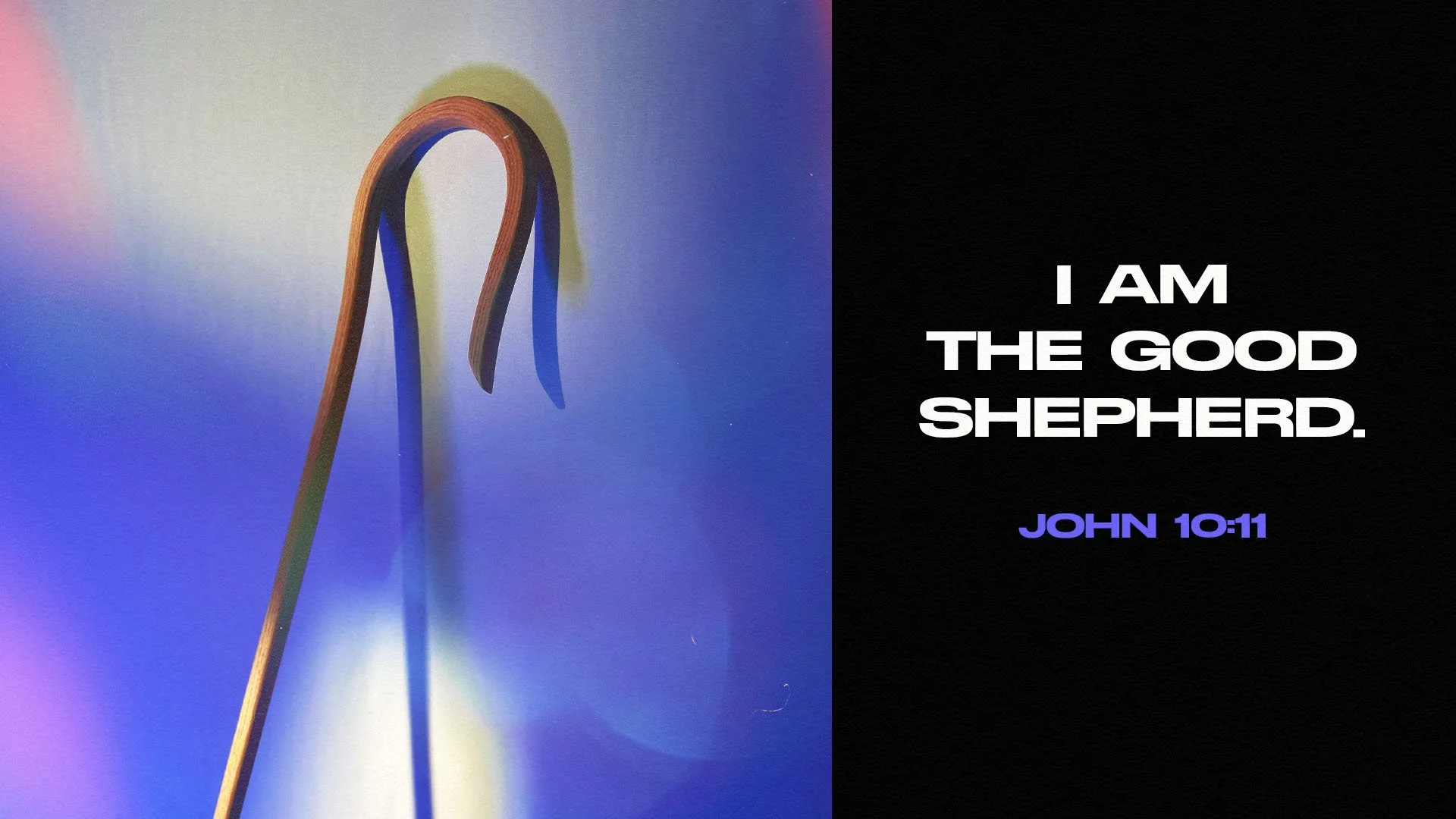
If you’ve spent any time around the Bible, you’ve heard a lot about shepherds. Shepherds as underdogs. Shepherds as overlooked outsiders. Shepherds as poets’ metaphors, such as “The Lord is my shepherd”(Psalm 23:1). By the time we reach John’s Gospel, the image is already loaded with meaning. In John 10:11–18, Jesus takes that familiar image and makes a shocking claim: “I am the Good Shepherd.” With those words, he redefines the metaphor. Jesus describes what kind of shepherd he is and how his flock can be identified. He says the Good Shepherd lays down his life for the sheep, cares for them, and knows them deeply; even those not yet gathered into the fold. And of the sheep, Jesus says simply, they know him, and they listen to his voice. If that feels like an uneven list, it’s because it is! The shepherd carries far more responsibility than the sheep. Our role is not to manage the flock or map the terrain; it’s to stay close and listen. The Greek word for “know” here communicates a deep, intimate perception of something. This isn’t surface-level recognition; it’s relational trust.
Trusting the Voice
Jesus’ second sign gives us a picture of this principle in action. In John 4:43-54, Jesus has just spent two days in a Samaritan village. He returns to Cana in Galilee, the same town where he quietly turned water into wine. By now, his reputation has grown. Crowds are eager. Expectations are high. News of his actions in Jerusalem has spread, and whispers of the wedding miracle likely linger in the air. Into this moment steps a royal official, a man with status, power, and influence. His son is gravely ill in another town, and desperation drives him to Jesus. John is already shaping our expectations. Everything about this setup screams opportunity. Jesus is popular. He’s back where a miracle once happened. A powerful man is asking for help. If Jesus wanted to grow his platform, this would be the moment. But instead of responding with urgency or spectacle, Jesus says something jarring: “Unless you people see signs and wonders, you will never believe”(John 4:48).
Jesus isn’t impressed by status or crowds. He knows his flock. He’s not after shallow fascination. He’s after trust. This turns our instincts upside down. We live in a world where seeing is believing. Jesus operates by a different logic: believing is seeing. There is a kind of sight that begins in the heart. That inner vision is what opens the door to real intimacy with God.
The royal official presses even more. “Sir, come down before my child dies”(John 4:49).
But Jesus refuses to perform the miracle the way the man expects. Instead, he says,
“Go. Your son will live”(John 4:50a). The miracle happens offstage.
Inner Vision
In John 10:4, Jesus describes himself by saying, “When he has brought out all his own, he goes on ahead of them, and his sheep follow him because they know his voice.” In this moment, the official faces a choice. Will he cling to the crowd’s hype and demand visible proof? Or will he trust the Shepherd’s voice and follow even when he can’t see the outcome? Sight is a big theme in John’s Gospel. People constantly misinterpret Jesus because they approach him with the wrong kind of vision. They hear his words, but don’t understand them. John lets us watch trust form in real time, especially when obedience feels risky.
“The man took Jesus at his word and departed.” (John 4:50b)
Just like the servants at the wedding, the miracle didn’t happen until the man started moving. The official hasn’t even reached home when his servants meet him with the news: his son is healed. He still hasn’t seen it for himself. First, he trusted Jesus’ word. Now, he has to trust others' testimony. The craziest twist in this whole passage is that this miracle is labeled a sign because of what it says about Jesus. Remember, Jesus is the Word made flesh (John 1:14). Just as in Genesis, when God speaks, reality responds. When Jesus speaks, it is done.
To follow the Good Shepherd is to trust his voice—not only because he is caring and reliable, but because his word carries authority.
Take with You
“I am the Good Shepherd; I know my sheep and my sheep know me— just as the Father knows me and I know the Father—and I lay down my life for the sheep. (John 10:14-15)
Jesus makes his “I am the Good Shepherd” claim in the Temple to the Pharisees, the very powerful leaders who will later conspire with the Romans to have him killed. Knowing exactly what lies ahead, Jesus declares in John 10:17-18, “I lay down my life—only to take it up again. No one takes it from me, but I lay it down of my own accord.”
Jesus is fearless! Even as arrest, suffering, and crucifixion approach, Jesus insists that he remains in control. His life is not stolen. It is given. For the sheep of his flock whose responsibility it is to know the Shepherd and hear his voice, the question becomes: do we trust the voice we hear? If our Good Shepherd goes before us and scouts out the rocky terrain of life, can we follow freely where he leads? Often, we can mistake that journey for the destination. But the Shepherd knows where he’s leading. And the invitation remains the same: listen, trust, and follow.