“It is Finished!”
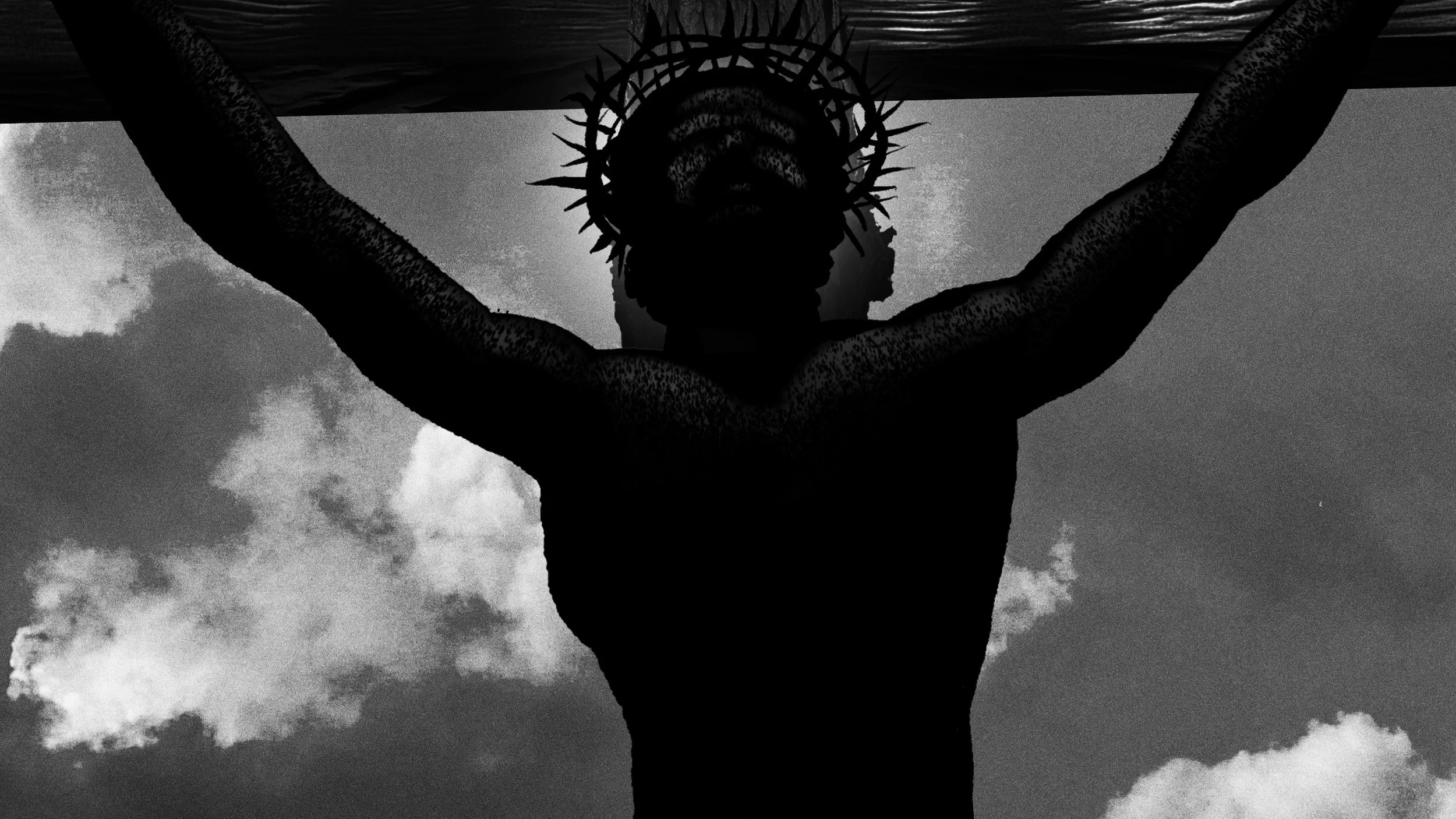
When he had received the drink, Jesus said, “It is finished.” With that, he bowed his head and gave up his spirit. (John 19:30)
We all love a good shortcut. There’s something deeply satisfying about maximum impact with minimal effort. Whether it’s finding a faster route somewhere or simplifying a complicated idea, shortcuts are everywhere. Entire movements have been launched, elections won, and stereotypes cemented through the oversimplification of stories people resonated with. It’s neurological. Our brains are wired to recognize patterns and reduce complexity so we can survive the constant flood of information we’re taking in. We bring that same instinct to the Bible.
Truth is often more marketable when it’s easy to approach. We like Mary and Joseph being turned away by a mean innkeeper because it makes the Nativity simple and emotionally clear. We decorate children’s rooms with Noah’s Ark to celebrate God’s promises, without lingering too long on the fact that the promise was never to destroy the world with water again. One of the most common biblical shortcuts shows up every Holy Week devotional.
When Jesus says, “It is finished,” we’re often told the Greek word τετέλεσται (tetelestai) means “paid in full.” The idea fits neatly into a familiar framework: humanity owes God a debt because of sin, and Jesus pays it on the cross. It’s clean and memorable. But what if that’s a shortcut? What if it’s an oversimplification of something far richer? If so, the real question becomes: what exactly is Jesus finishing?
What “Tetelestai” Means

John’s Gospel, written in Greek, records Jesus’ final declaration as τετέλεσται (tetelestai): “It is finished” (John 19:30). Over time, people began claiming that this word appeared on ancient receipts, meaning “debt paid in full.” The idea gained traction after Egyptian papyrus receipts published in 1896 showed the abbreviation τετελ (tetel). Later scholarship connected this abbreviation to Jesus’ final words. But there’s a problem. As biblical scholar Gary Manning points out, tetel is not a completed word; it’s a prefix. At least five different Greek words begin with those letters. The word Jesus uses in John isn’t shorthand for payment; it’s a completed verb meaning a task brought to completion, a mission fulfilled. That distinction matters. To read more about Manning’s work on this, click here.
It’s easy to see why the “debt paid” explanation caught on. Scripture often uses economic metaphors like ransom, redemption, wages, and debts. Jesus teaches his disciples to pray, “Forgive us our debts” (Matthew 6:12). Paul writes, “The wages of sin is death” (Romans 6:23). But metaphors don’t define this reality; they illustrate it. When Paul speaks of wages, he’s talking about expected consequences. Just as work produces wages, a life disconnected from love, justice, and God produces death, disconnection from the eternal life God offers. Redemption in Scripture is less about paying someone off and more about the process of returning someone’s possession to them. All Biblical language of redemption traces back to the Exodus account.
At Passover, God isn’t paying Pharaoh for Israel. Pharaoh receives exactly what his system has produced by possessing God’s people as slaves. The consequence of sin is death, and God allows this. However, God also offers the gift of life. When the blood of the Passover lamb covers the doorposts, death passes over because it encounters a life that does not belong to it; a life fully surrendered to God. No transaction takes place. But the gift has a cost.
A Costly Gift
Jesus’ life was costly. Jesus doesn’t pay death what it’s owed; death isn’t owed anything. Instead, Jesus enters fully into what never had a rightful claim on him. He gives himself freely. The cost is borne not because God demands violence, but because love refuses shortcuts.
For centuries, theologians have argued over how salvation works. They have debated which sacraments save and which theories explain the cross best. But standing before the crucified Christ, one truth becomes unavoidable: God is not distant from our sin. God is wounded by it. The cross exposes the lengths we’ll go to maintain control. But it also reveals a God who loves us enough to step into our suffering, to share our humiliation, to identify with our pain, to enter death without belonging to it. Death never owned Jesus. But Jesus entered death anyway, wading in its waters to pull us out.
What Jesus Finishes
John frames this moment carefully: “Later, knowing that everything had now been finished, and so that Scripture would be fulfilled, Jesus said, ‘I am thirsty.’ … When he had received the drink, Jesus said, ‘It is finished.’ With that, he bowed his head and gave up his spirit.” (John 19:28–30)
Jesus finished his mission. Jesus finished giving his gift. John’s Gospel has been moving toward this moment all along. Jesus had been hinting that his glory would be revealed. The crowd was eager for a shortcut, for Jesus to use power, overthrow Rome, and take the throne. Even when Jesus spoke of being “lifted up,” no one imagined he meant a cross. “Just as Moses lifted up the snake in the wilderness, so the Son of Man must be lifted up, that everyone who believes may have eternal life in him.” (John 3:14–15)
The cross is the lifting up. The cross is the glory. The cross is the face of God; it is how God has chosen to reveal himself once and for all. It’s not the face of a tyrant, not a conqueror, not a distant judge. God’s face looks like open arms, vulnerability, and radical love. God refuses shortcuts. God takes the long way. We may never fully understand the cross, but this much we can trust: its work is finished.
Day, Gardiner M. Christ Speaks from the Cross. Seabury Press, 1956.
Mackie, Tim, and Jon Collins. “Did Jesus’ Death Have to Be a Gruesome Crucifixion?” BibleProject.Com, The Bible Project, 25 Aug. 2025, bibleproject.com/podcasts/did-jesus-death-have-be-gruesome-crucifixion/.
Manning, Gary. “‘Paid in Full’? The Meaning of Τετέλεσται (Tetelestai) in Jesus’ Final Words.” The Good Book Blog - Biola University Blogs, Biola.edu, 20 Apr. 2022, www.biola.edu/blogs/good-book-blog/2022/paid-in-full-the-meaning-of-tetelestai-in-jesus-final-words#:~:text=Jesus’%20last%20word%20from%20the,(John%2019%3A30).