“Father Forgive Them”
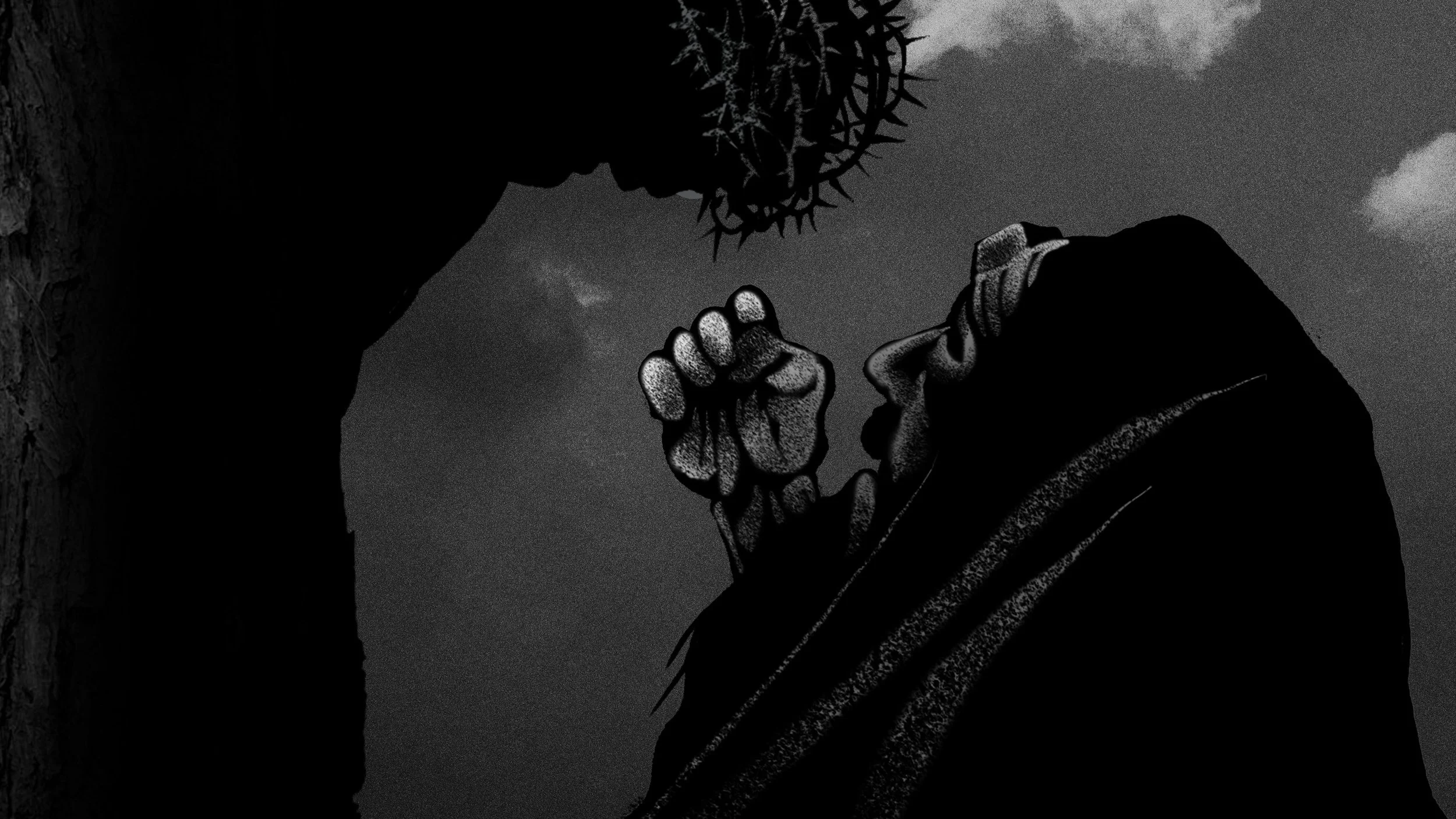
“Jesus said, “Father, forgive them, for they do not know what they are doing.” And they divided up his clothes by casting lots.” (Luke 23:34)
Have you ever seen Malcolm in the Middle? It’s an early-2000s sitcom starring Frankie Muniz, and it’s one of my all-time favorites. I’ve probably watched the entire series a dozen times. One of the show’s running jokes centers on the oldest brother, Francis, a former juvenile delinquent who is perpetually fixated on how deeply his parents failed him. I never wanted to be a Francis, especially as the oldest child. But at some point, I realized I had become one.
There’s a half-joking truth people say about the oldest children: you get a different version of your parents. They’re fresh. Inexperienced. Figuring things out in real time. If your parents are anything like mine, they did what most parents do—they borrowed heavily from how they themselves were raised. Through a lot of therapy, prayer, and hard conversations, God has slowly given me empathy for the pressure and fear they must have felt as first-time caretakers of a living, breathing child. That empathy doesn’t heal any friction in our relationship. But it does create a foundation; one built on understanding and grace rather than resentment. When Jesus is being crucified, Luke tells us that he prays, “Father, forgive them, for they do not know what they are doing” (Luke 23:34). We often read that as a purely spiritual statement. But it is profoundly practical.
Forgive Who?
My struggles with my parents are not even remotely comparable to what Jesus endured during the crucifixion. Still, I start here because forgiveness is often treated as something reserved only for the most dramatic, catastrophic moments. We save it for the cross and then quietly excuse ourselves from practicing it anywhere else. So, if we think on a basic level, who is Jesus seeking to forgive?
The most obvious answer is the Roman soldiers, the men who were ordered to carry out yet another execution of yet another supposed rebel threatening Rome’s authority. But don’t sanitize what that meant. The Gospels describe the soldiers delighting in Jesus’ suffering. Imagine a body so beaten and bloodied that it can no longer carry a roughly 150-pound crossbeam through the city streets. Imagine guards grabbing Simon of Cyrene from the crowd just to help him make it up the hill. Imagine a shaking, exhausted, and exposed Jesus crawling toward the rough wood as his clothes are torn from him. Would you forgive the people who dislocated your arms and drove cold iron spikes through your wrists?
Jesus does. And he goes further: “They don’t know what they’re doing.” He says this not out of denial, but discernment.
What kind of freedom does it take to refuse the role of the isolated victim and instead see your oppressors as people caught inside a larger, broken system? Luke’s Greek grammar gives us an important detail here. The phrase “Jesus said” is written in the imperfect tense, suggesting ongoing action. In other words, Jesus was repeating this. He didn’t pray for forgiveness once. He kept praying it through the beating, through the mocking, through the nails. Yet, this forgiveness does not excuse violence. Forgiveness never denies wrongdoing. In fact, the very act of forgiving names that something unjust has occurred. When Jesus prays this prayer, he acknowledges that what’s happening to him is bigger than individual cruelty. It is the result of institutions—political, religious, and military—working exactly as they were designed to. These are the very “powers and authorities” that Colossians 2:15 says Jesus exposes and disarms through the cross.
Forgive What Sin?
In church spaces, we often talk about sin as a strictly personal failure: my mistakes, my guilt, my repentance. But Scripture consistently treats sin as collective. It speaks of “the sin of Israel,” of nations bearing responsibility together. Joshua 7 tells the story of an entire people losing a battle because of one person’s hidden wrongdoing. What Jesus shows us from the cross is this: pain never exists in a vacuum. Sin is communal. Harm is shared. We are all, at different moments, both victims and participants. By refusing to fight back, Jesus makes a devastating point. The most innocent person who has ever lived is condemned by our systems. The cross asks us an unsettling question: Are we willing to kill God in order to preserve our power?
Colossians can only claim that Jesus disarms systemic power through his death because of who Jesus is. He is God in flesh. His crucifixion is not just about salvation; it is a divine critique. It exposes every system that tries to function as a god unto itself. Political systems. Religious systems. Social systems. All of them distort power into something it was never meant to be. But what about those of us without power?
The temptation is to read “they don’t know what they’re doing” as resignation; as if Jesus is saying nothing will ever change. But this is not defeatist language. While soldiers carried out the execution, religious leaders mocked and manipulated the crowd, and Rome maintained order, Luke quietly asks another question: Where were the disciples? Luke 23:49 says, “But all those who knew him, including the women who had followed him from Galilee, stood at a distance, watching these things.”
The Sin of Silence
Jesus’ prayer is not only forgiveness; it is an indictment of apathy. If the powerful are blind to the damage they cause, then Jesus’ words become a call for others to speak up for those without a voice, for those crushed by systems they didn’t choose. If that feels like a stretch, look again at how Jesus chose to die. Crucifixion was reserved for slaves and rebels. From the very beginning, God gave God’s self to humanity, knowing exactly what it would cost. This is fore-giving: grace extended before offense, not after. This is why Jesus doesn’t resist the cross. He allows himself to be crushed so that the system doing the crushing can be undone.
This brings me back to my parents. Adult relationships with parents are difficult because everyone is wrestling with the past in the present. You’re all encountering unfamiliar territory, and when fear sets in, you default to habit. Living forgiveness the way Jesus models it doesn’t mean excusing harm or tolerating abuse. It means choosing freedom over fixation. Grace over grudge. Distance when needed without surrendering your humanity. Forgiveness, in Jesus’ hands, doesn’t protect unjust systems. It dismantles them.
Day, Gardiner M. Christ Speaks from the Cross. Seabury Press, 1956.
Hunter, Mary Grahame. “Spiritual Practices for Forgiveness.” Faith+Lead.Org, 28 Oct. 2024, faithlead.org/blog/spiritual-practices-for-forgiveness/.
Cohen, Amy R. “Video §21 Imperfect Indicative Active.” YouTube, PlayGreek, www.youtube.com/watch?v=tNWcalxUadk. Accessed 6 Jan. 2026.