1. A Force to Be Reckoned With
Today’s Reading: Mark 1
Baptism and Tempting (v.1-13)
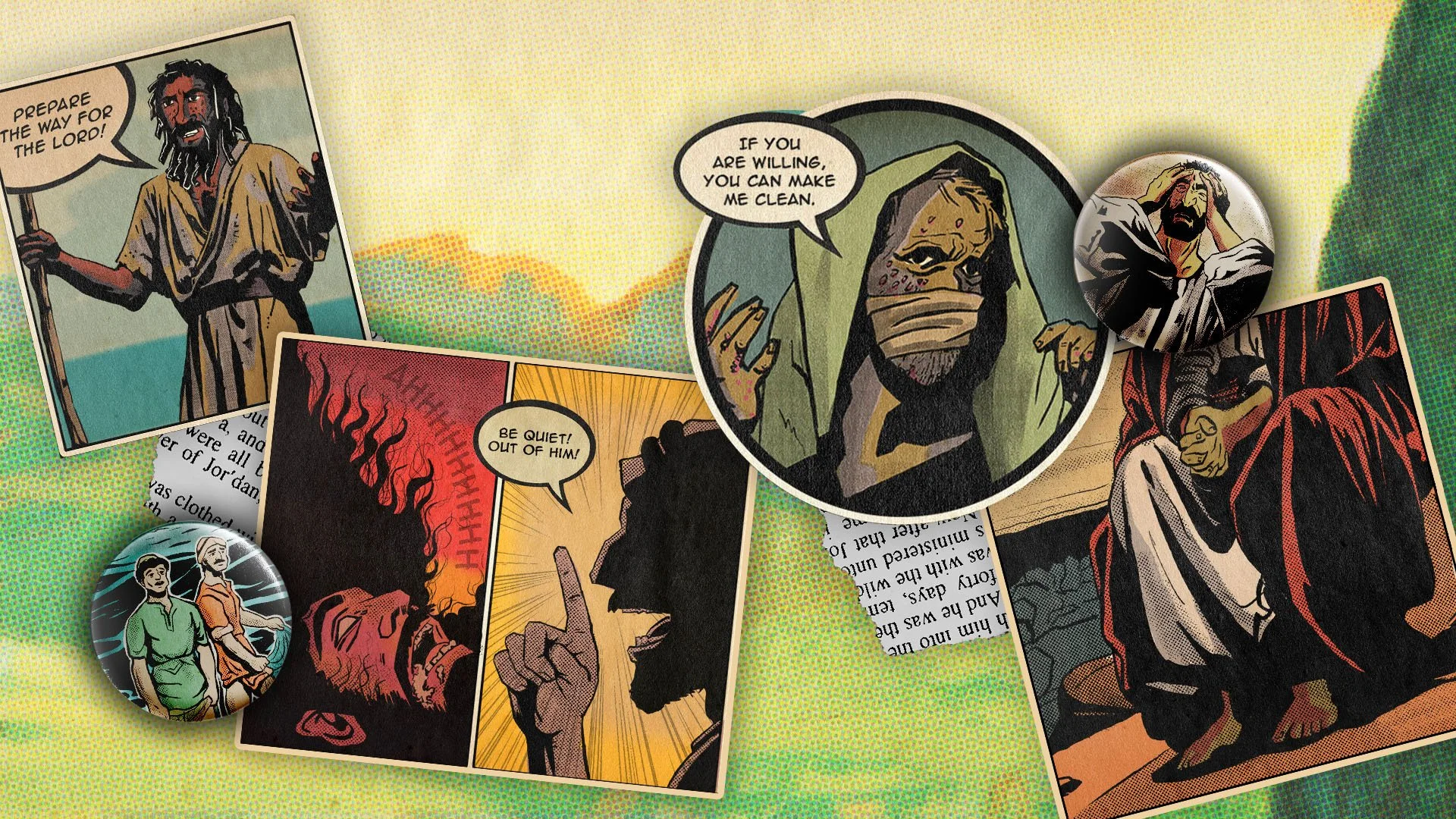
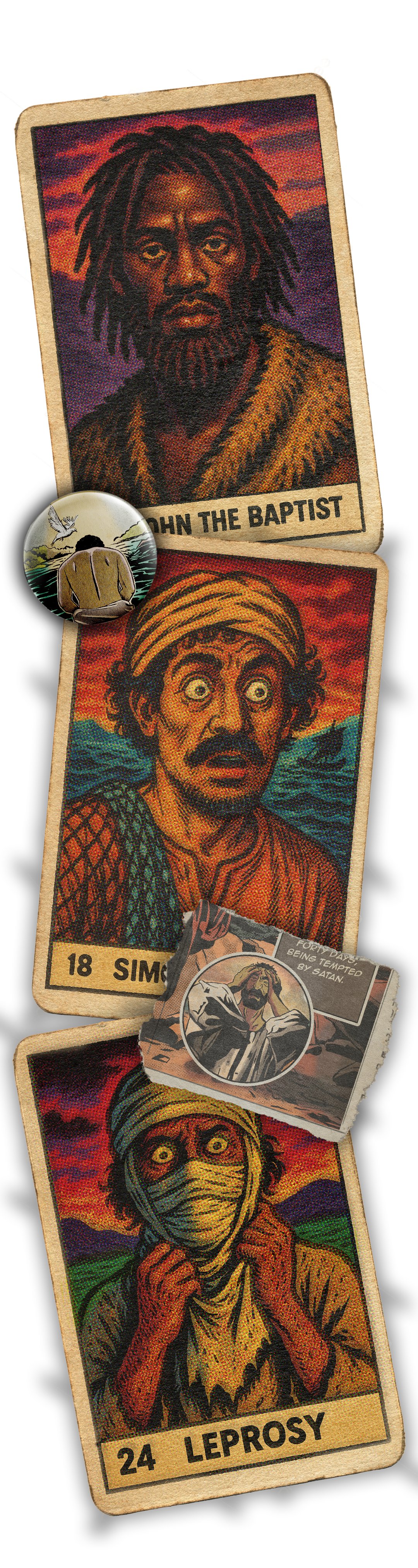
Mark is a fast-paced book that jumps right into the story. The wild desert preacher, John the Baptist, appears on the scene “preparing the way” for Jesus to come. Notice the description of John: “John wore clothing made of camel’s hair, with a leather belt around his waist, and he ate locusts and wild honey” (Mark 1:6).These are traits associated with the Prophet Elijah, who was believed to return to herald the Messiah. Mark was written primarily for Gentiles, who were often more concerned with actions than Jewish history. Still, this description of John, along with the passage from Isaiah, reveals the deeply Jewish context of the story.
Imagine the impact of Jesus’ first appearance. He enters the story at his baptism, where God immediately affirms his identity. God’s voice appears twice in Mark’s Gospel, and each time it begins a new section of the story. But Mark does not slow down. Immediately, the same Spirit that descends like a dove leads him toward the Devil.
Notice this unique detail in Mark 1:13: “he was in the wilderness forty days, being tempted by Satan. He was with the wild animals…” Jesus enters a place of lack, danger, and stress. The mention of the wild animals creates an image of being surrounded by the urge to follow your instincts and do whatever is necessary to survive. But Jesus has a higher calling. Because Mark tells these stories so quickly, he often leaves out details that the other Gospels later explain. Mark does not directly tell us how Jesus overcame the temptations he faced. However, his victory is implied. Jesus enters the wilderness secure in the identity the Father gave him at his baptism.
The Exorcist (v.21-28)
After calling the fishermen to follow him, Jesus entered a synagogue in Capernaum. It was located in one of the largest and most popular cities in the region. During Jesus’ teaching, a demon-possessed congregant cries out in fear of being destroyed. Jesus commands the demon to leave and prevents it from revealing more about who he is.
Notice the pattern Mark is creating. First, Jesus calls men, and without question, they leave their work and follow him. Now, evil spirits recognize Jesus, and he has the authority to drive them out. In the Gentile world, power often looked like the ability to command other people (Matthew 8:9). Hexes, divination, curses, and the evil eye were also common concerns in many pagan cultures. Jesus’ recognition by the spirits, along with his authority over them, demonstrates an even deeper kind of power. Still, Jesus seems concerned about the news spreading. He repeatedly prevents those he helps from revealing his identity too soon.
Leprosy and Loneliness (v.35-45)
After several demonstrations of his authority over sickness and disease, Jesus withdraws to a solitary place. The disciples and the crowds search for him, but Jesus hides away to pray. Throughout the Gospel of Mark, Jesus resists his growing popularity. Crowds want to be near him, healed by him, and associated with him. But Jesus does not receive his validation from the crowds. He receives it through time spent with his Father in prayer.
Contrast this with a man isolated from society because of leprosy. Leprosy was a devastating skin disease that could cause numbness in the limbs. Those suffering from it often covered their scars and were required to avoid the general public. When travelers approached, they had to ring a bell or shamefully cry out, “Unclean!” to warn those passing by. When this man with leprosy boldly approaches Jesus for healing, Mark 1:41says he is “Jesus was indignant” or “filled with compassion”. This seems like a contradiction of emotions. But, read how the man approaches Jesus: “If you are willing, you can make me clean.” The man is so isolated, he assumes that Jesus may not want to help him. He superimposes how others have treated him onto God. Jesus is angered by the man’s mistreatment and touches him, immediately healing him.
Reflection Questions
Before Jesus does anything in his ministry, God validates his identity. What is God speaking over you about your identity?
Mark 1:15 gives us the message Jesus preached as he traveled. “The kingdom of God has come near. Repent and believe the good news!” The word “repent” simply means to change one’s mind. What is the good news that Jesus was calling for people to change their minds about? What does it seem Jesus has come to do?
Are there beliefs about God you have because of how others have treated you? Spend time in quiet reflection and analyze these beliefs.