2. Who is This For?
Today’s Reading: Mark 2-3:6
Raising the Roof (v. 1–12)
Throughout this section, a pattern emerges. Jesus does something surprising, and the religious leaders respond.
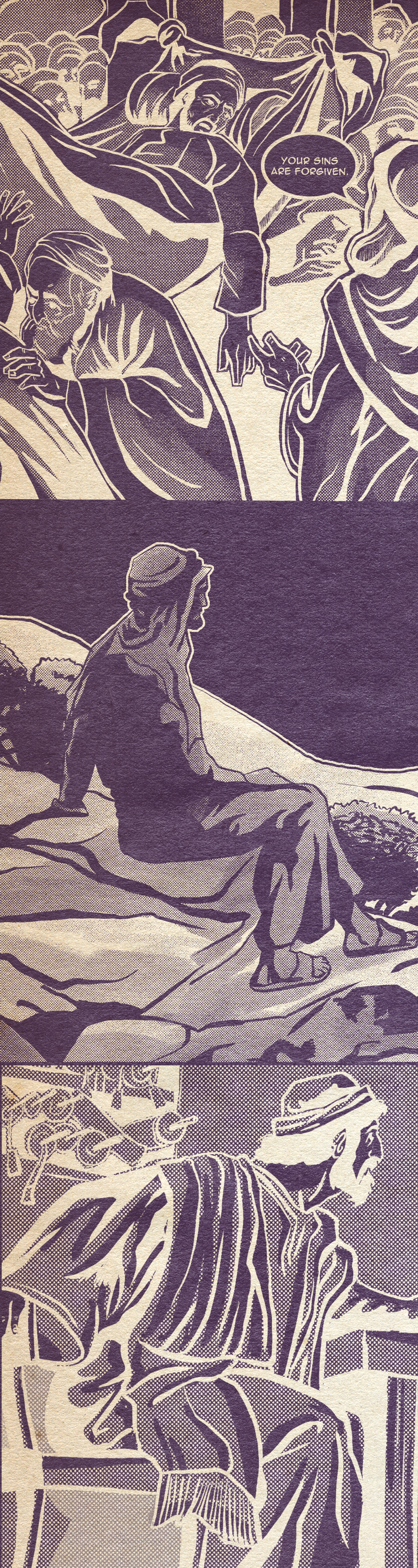
In this first story, Jesus is so popular and widely sought after that when he goes to a house to teach, the crowds overwhelm the house and block the door. Notice how, in Mark’s Gospel, the crowd is often spoken of as an amorphous character. The crowd pushes to see and be noticed by Jesus. But Jesus focuses his attention on individuals. One of these individuals is a paralyzed man carried on a mat by four men. The crowd is so dense that they can’t get through to see Jesus. So, the four men carry him onto the roof and lower him into the house.
First-century houses in this region often had stairs built onto the outside to access the roof. The roofs were made of wooden planks and straw insulation. The four men dig a hole through the roof and lower their friend directly in front of Jesus. Seeing their desperation and faith, Jesus responds, “Son, your sins are forgiven” (Mark 2:5). Sin is another theme throughout this section. The religious leaders constantly push sin to the center of their theology. Here, before Jesus heals the man physically, he addresses his inner struggle and shame.
Mark then introduces another aspect of Jesus’ power in verse 8: “Immediately Jesus knew in his spirit that this was what they were thinking in their hearts, and he said to them, ‘Why are you thinking these things?’” That’s an interesting phrase: “thinking in their hearts.” It communicates a deeply rooted belief about the world. Jesus sees how the religious leaders understand the world and challenge it.
Jesus begins his response by asking, “Which is easier: to say to this paralyzed man, ‘Your sins are forgiven,’ or to say, ‘Get up, take your mat and walk’?” He is positioning his authority. The expectation is that Jesus will heal the man’s body. But if Jesus has the authority to do that, wouldn’t he also have the authority to forgive his sins? Jesus then flips the argument. Both statements require an authority that belongs to God. So, as a demonstration that the Messiah from God has this authority, Jesus tells the paralyzed man to get up, take his mat, and walk, and he does.
Levi, Let’s Go! (v. 13–22)
Jesus’ next run-in with the religious leaders comes after he calls a tax collector named Levi, later known as Matthew, to follow him as a disciple. Jesus and the disciples have a meal at Levi’s house, where other “sinners” and tax collectors are also gathered. The religious leaders show up and question why Jesus would eat with these kinds of people.
“On hearing this, Jesus said to them, ‘It is not the healthy who need a doctor, but the sick. I have not come to call the righteous, but sinners’” (Mark 2:17).
With this statement, Mark tells us who Jesus has come for. So far, Jesus has been shown going out of his way to find the most desperate and vulnerable people in society. He isn’t interested in gaining the approval of religious leaders or associating with the upper classes. He specifically surrounds himself with the poor and the outcast. In Mark 2:21–22, Jesus uses two analogies about combining something new with something old. Through both, Jesus is expressing that God is moving in a new way through his ministry. The old containers can’t always hold what God is doing now.
This is similar to Matthew’s placement of the Sermon on the Mount in his Gospel. There, Jesus repeatedly says, “You have heard that it was said…but I tell you…” (Matthew 5). Something new is happening.
Get a Grip (2:23–3:6)
Sabbath laws were established for the Jewish people through Moses as a way to preserve a day of rest. The Sabbath was a cultural reminder of God resting after his good work of creation. However, the Pharisees expanded these laws as a way of protecting them. Where the Law said not to work on the Sabbath, the Pharisees went further by defining exactly what counted as “work.” This ranged from how much weight a person could carry to how many steps they could take. What began as a way of showing reverence for God’s law quickly became a way to police people. When Jesus’ followers pick heads of grain, they have to thresh them in their hands. This is considered “work.” Notice how quickly the Pharisees comment on what the disciples are doing.
They are watching Jesus obsessively, just as they have throughout this entire section. Whether Jesus is healing someone, having dinner, or traveling through a grain field, the Pharisees have something to say. But Jesus’ response is surprising. Jesus takes the Pharisees on a history lesson. He reminds them of the story of David, who was on the run from Saul. When David and his men were hungry, he broke the rules surrounding sacred bread so they could eat. Jesus’ point is simple: God wants to take care of your needs. Spiritual practices are there to serve a person’s relationship with God, not become obstacles in the way.
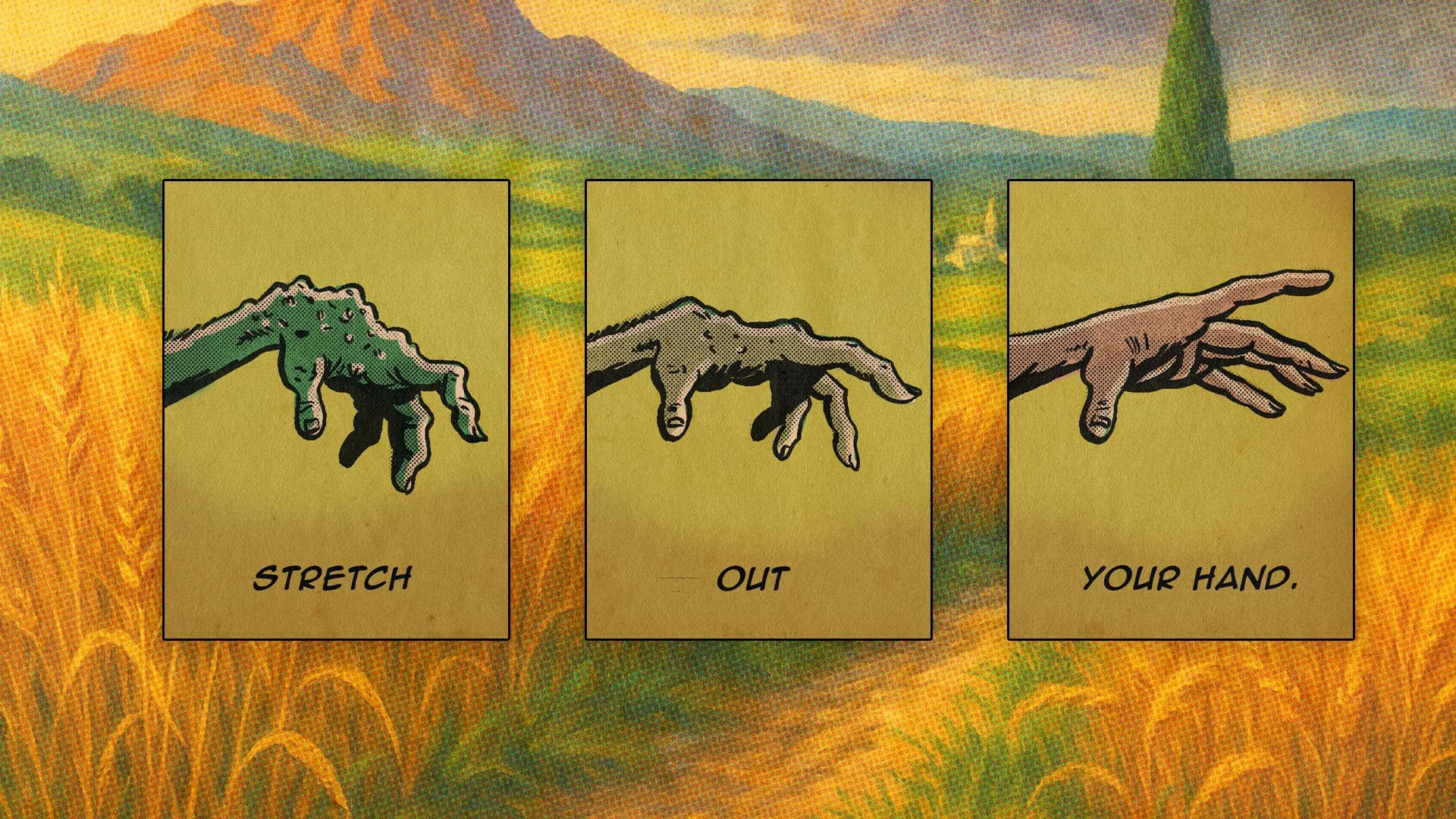
Jesus then demonstrates this again by healing a man with a shriveled hand in a synagogue. Before he heals him, Jesus asks, “Which is lawful on the Sabbath: to do good or to do evil, to save life or to kill?” (Mark 3:4).
Mark’s audience is primarily Gentile. They are drawn to demonstrations of power and action, but they also have little experience with the Law of Judaism. Yet the early Church emerged from this deeply Jewish context. Mark may be using the Pharisees as an example of what can happen when people become too familiar with tradition. Their familiarity with the Law makes it harder for them to recognize the new thing God is doing right in front of them. At the same time, Mark may be encouraging his Gentile audience to pay attention to where God is meeting them now.
Reflection Questions
The religious leaders put limits on what they believed Jesus could do. Are there limits you have placed on Jesus?
What is a new thing God wants to do in your life? Spend some time reflecting on Mark 2:21–22.
Spiritual practices are meant to bring you closer to God. What personal practices help you grow in your relationship with God?