11. Leaves that Deceive
Today’s Reading: Mark 11:12-25
Jesus Has a Bad Day (Mark 11:12–25)
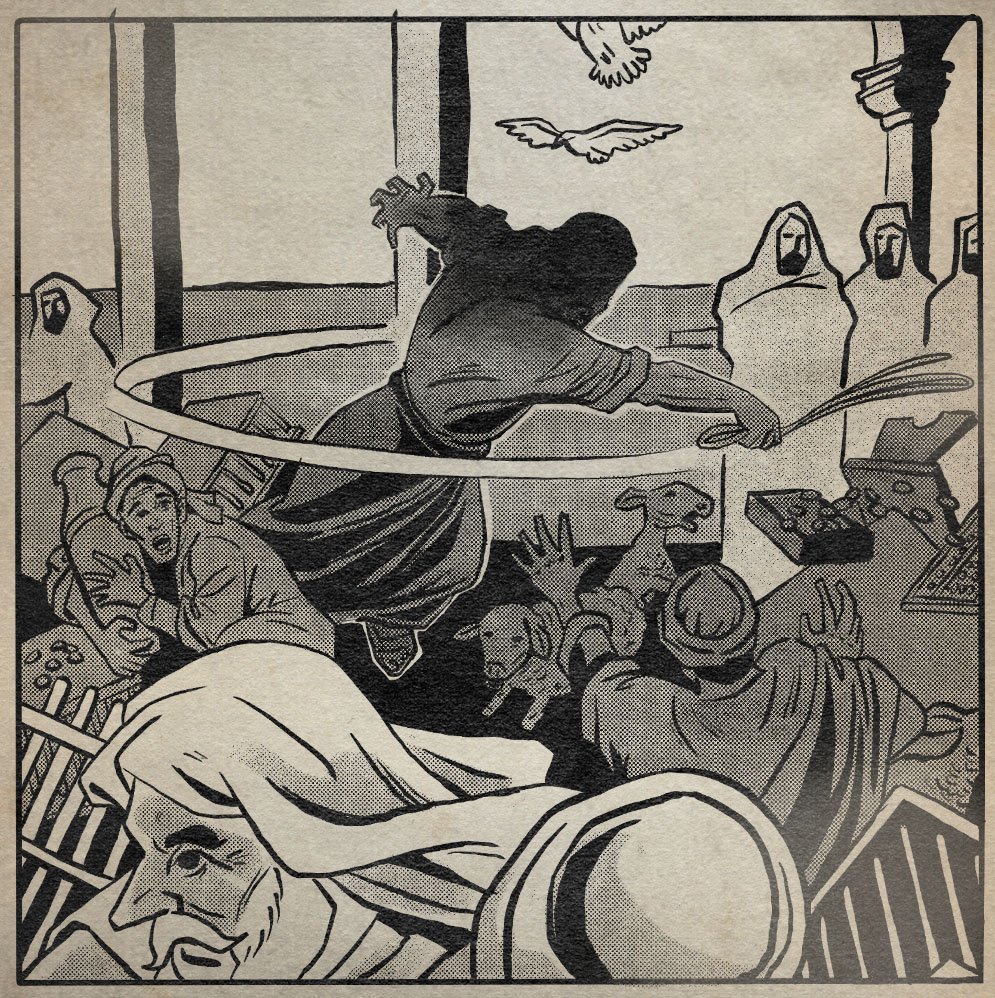
Mark describes a very human day for Jesus. On the way to Jerusalem, Jesus becomes hungry. He sees a fig tree in the distance, but when he gets closer, it has no fruit. Jesus curses the tree, and later it shrivels up. Then, Jesus and the disciples go to the Temple. This place was supposed to be the house of God, where all nations were welcomed to worship. Instead, Jesus sees ethnic separation, empty faith that doesn’t inspire hearts, and a sacrificial system built on cruelty and corruption. This enrages Jesus. In protest, he flips the tables of the merchants and money changers. He drives people out of the courtyard and calls out their hypocrisy.
Much has been made of Jesus cleansing the Temple courts, but how is this connected to the cursing of the fig tree? This scene in Mark 11 leaves many questions unanswered. For example, why would Jesus curse something? Especially something that wasn’t even in the right season to produce fruit?
Verse 13 gives us a clue: “Seeing in the distance a fig tree in leaf, he went to find out if it had any fruit. When he reached it, he found nothing but leaves, because it was not the season for figs” (Mark 11:13).
Fig trees signal their fruitfulness by displaying lush leaves. Anyone seeing this tree from a distance might have been impressed. It appeared to have produced fruit before its time. But it was all a smoke screen. The fig tree and the Temple angered Jesus for the same reason. They both chose to appear healthy rather than doing the work of being fruitful. The lush leaves on the fig tree were an ill-timed beauty. The ornate structure of the Temple was a wonder of the ancient world. But all Jesus saw was noise; things that took up space but weren’t contributing anything of value. Leaves can sometimes be very deceiving.
In John 15:5, Jesus says, “I am the vine; you are the branches. If you remain in me and I in you, you will bear much fruit; apart from me you can do nothing.” When we try to produce out of our own strength, it rarely produces anything lasting. It might look as beautiful and full as the leaves of the fig tree, but deep inside it can leave us feeling drained. If you need to be fruitful out of season, you can—but it takes being connected to the Source.
The passage ends with Jesus saying: “Truly I tell you, if anyone says to this mountain, ‘Go, throw yourself into the sea,’ and does not doubt in their heart but believes that what they say will happen, it will be done for them” (Mark 11:23).
This saying can seem out of place until you remember where Jesus is. He is standing near the Temple Mount. In context, “this mountain” may point directly toward the Temple system Jesus has just confronted. Just as in Isaiah 1:10–15, Jesus is saying that all the noise of appearing righteous can be cast aside if what remains is true belief and faith. Appearance is not the same thing as fruit.
Reflection Questions
Mark’s Gospel is centered more on the actions of Jesus than on long sections of teaching. What we do often says more about our hearts than what we say. Take time to reflect on how your actions and beliefs align.
Are there areas of your life where you are focused more on appearing fruitful than actually becoming fruitful?
What does it look like for you to stay connected to the Source rather than trying to produce everything out of your own strength?