Mountain 7
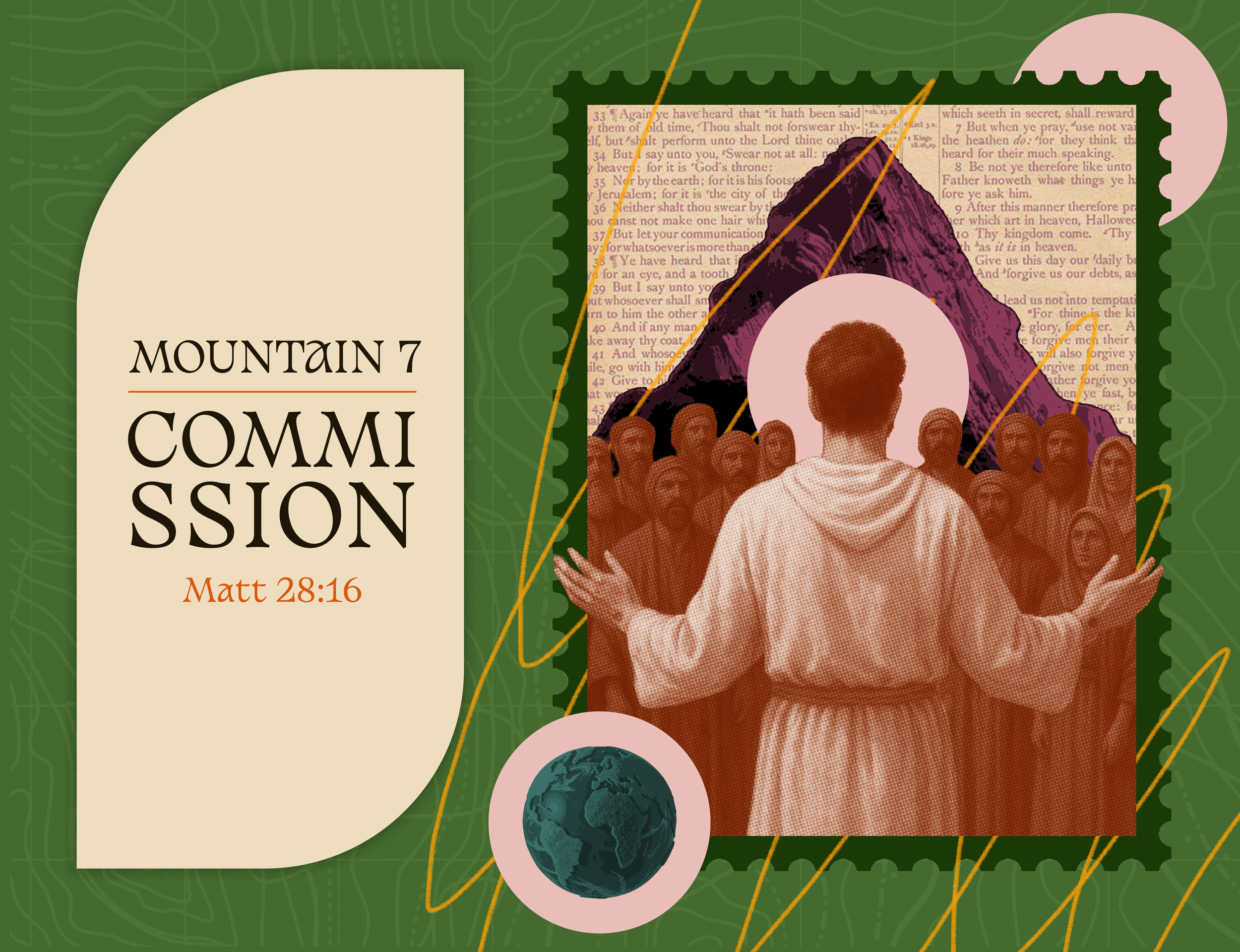
“Then the eleven disciples went to Galilee, to the mountain where Jesus had told them to go.”
The seventh and final mountain in Matthew's Gospel centers on commission. Following his resurrection, Jesus gathers his disciples on a mountain in Galilee and gives them his final instructions. This scene functions as Matthew's conclusion to the journey readers have been taking throughout the Gospel. The final mountain asks a simple question: now that we know who Jesus is, what do we do next? Matthew shows us in three ways.
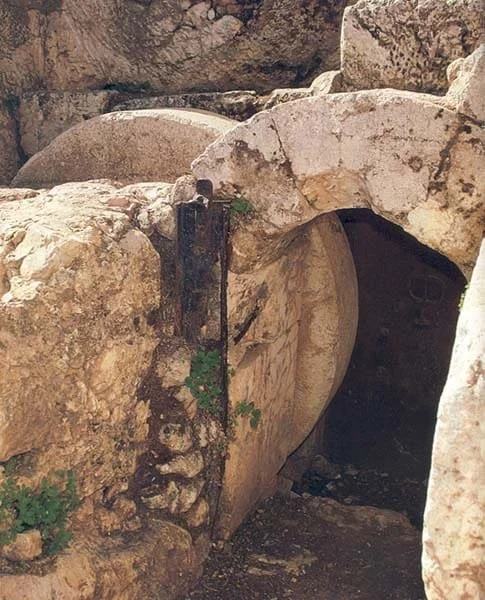
The Resurrection is the empowerment for living out Christ’s commission.
1. Jesus is Alive
Matthew begins the resurrection account with two women, Mary Magdalene and the other Mary, journeying to Jesus' tomb. An earthquake shakes the ground, and an angel announces that Jesus has risen. As the women hurry away to tell the disciples, they encounter the risen Christ himself. This detail is significant. In the ancient world, women were often viewed as unreliable witnesses and were not permitted to testify in court. Yet Matthew presents these women as the first messengers of the resurrection. "Then Jesus said to them, “Do not be afraid. Go and tell my brothers…" (Matthew 28:10).
Matthew reminds his readers that God's mission has never depended upon worldly status or qualifications. The good news is entrusted to ordinary people willing to bear witness to what they have seen. Even among the disciples, belief is not portrayed as effortless. Matthew tells us that when they saw Jesus, they worshiped him "but some doubted" (Matthew 28:17). The resurrection stretches the imagination. However, Matthew offers a comforting picture of discipleship: worship and uncertainty can exist together. Doubt does not disqualify people from encountering the risen Christ.
2. Jesus Has Authority
Standing on the mountain, Jesus declares: "All authority in heaven and on earth has been given to me" (Matthew 28:18). For Matthew's original audience, these words would have offered profound comfort. The Early Church existed under the shadow of imperial Roman power and increasing persecution. Followers of Jesus often found themselves marginalized by both political authorities and religious communities. Matthew reminds them that the one who had been arrested, mocked, and crucified now stands victorious over death itself. The authority Jesus claims is comprehensive. It’s not merely spiritual authority, but all authority in heaven and on earth. The resurrection becomes God's vindication of Jesus' life, teaching, and mission. Whatever challenges lie ahead, the story of Jesus does not end in defeat.
3. Jesus Gives an Assignment
Because Jesus possesses all authority and is the victorious King, he commissions his followers: "Go and make disciples of all nations..." (Matthew 28:19). In the Roman world, announcements of a new emperor's reign were proclaimed throughout the empire as good news. Matthew presents a different kind of King and a different kind of kingdom. The disciples are sent to invite others into the way of Jesus. They are called to baptize, teach, and help others learn what it means to follow Christ.
Baptism marks entry into a new identity centered in the life of the Father, Son, and Holy Spirit. The Greek word for baptism means "to immerse," capturing the image of being drawn into the life and love of God. The mission is not simply to gather converts, but to cultivate disciples or people whose lives are increasingly shaped by Jesus' teaching and example. And Jesus concludes with a promise: "Surely I am with you always, to the very end of the age" (Matthew 28:20).Matthew's Gospel began with the announcement that Jesus would be called Immanuel, “God with us”. It ends with Jesus promising that he still is.
Contrast with the Mountain of Temptation
Matthew's final mountain mirrors the first. On the mountain of temptation, the devil offers Jesus authority over the kingdoms of the world: "All this I will give you... if you will bow down and worship me" (Matthew 4:9). It is unclear if this is even a request the devil can fill, but the temptation is a shortcut. Jesus is invited to seize power without suffering and glory without obedience. But Jesus refuses, choosing faithfulness to the Father over instant gratification.
Now, at the conclusion of Matthew's Gospel, Jesus declares: "All authority in heaven and on earth has been given to me" (Matthew 28:18). The contrast is striking. The authority offered in temptation was limited and rooted in compromise. It asks whether Jesus will trust the Father's way. But the authority Jesus receives through resurrection is complete and rooted in obedience. It reveals the outcome of that trust.
Matthew's Gospel reminds readers that God's purposes are rarely fulfilled through shortcuts. The path of Jesus leads through wilderness, service, suffering, and sacrifice before arriving at resurrection and commission. Following Jesus as a disciple means walking the same path. The risen Jesus invites his followers to participate in his mission, to trust his authority, and embody his teaching, ultimately carrying the good news into the world. The Mountain of Temptation asked whether Jesus would remain faithful to his calling, while the Mountain of Commission asks whether we will remain faithful to ours.
Keener, C. (1999). The Commission (16:28-17:13). In A Commentary on the Gospel of Matthew (pp. 697–721). essay, W.B. Eerdmans Pub. Retrieved June 4, 2026, from https://archive.org/details/commentaryongosp0000keen/page/144/mode/2up.
Schweizer, E., & Green, D. E. (1975). The Good News According to Matthew. John Knox Press.