Monday: “Bread”
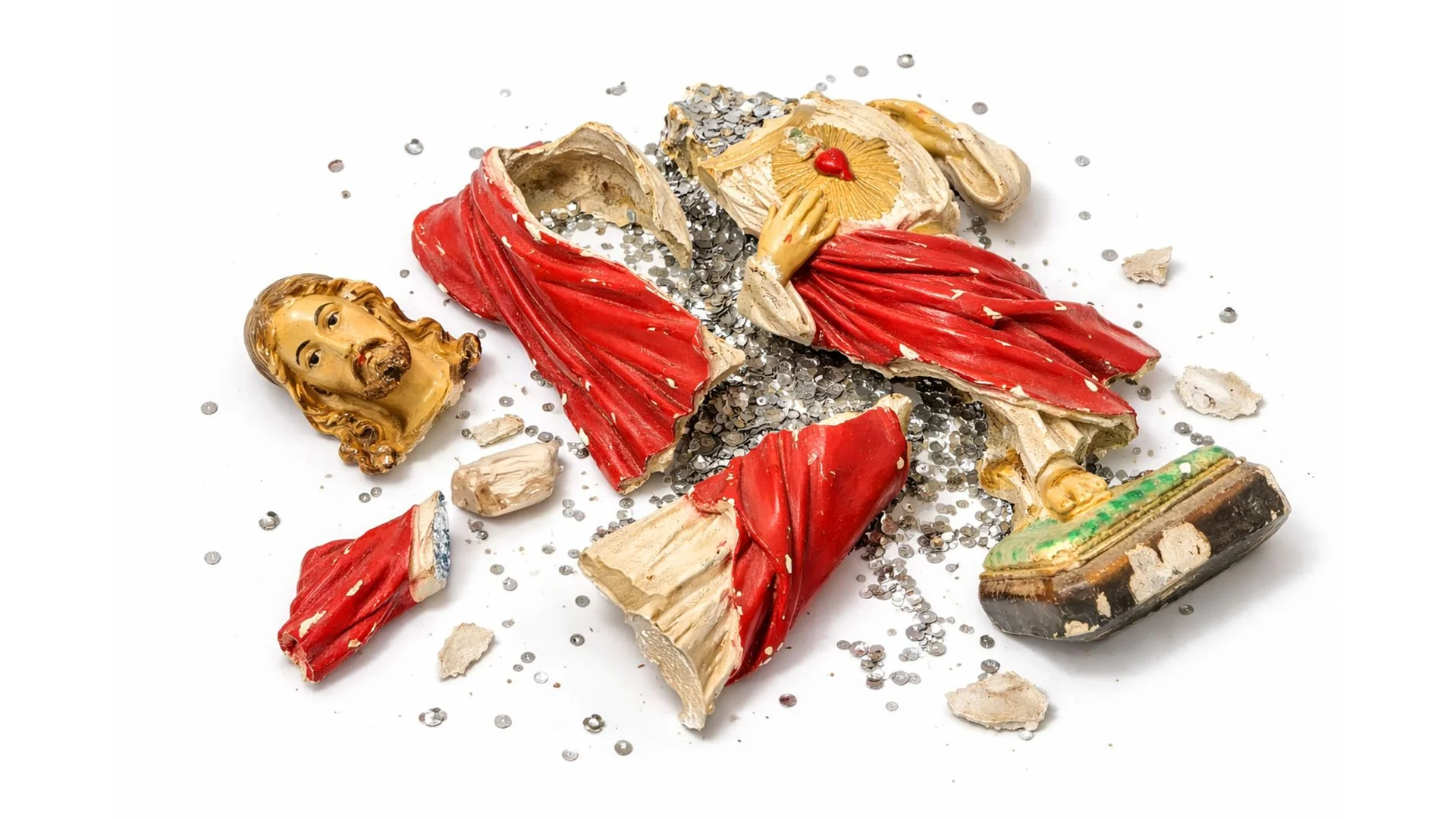
Who is this that comes in splendor, coming from the blazing East?
This is he we had not thought of, this is he the airy Christ.
Airy, in an airy manner in an airy parkland walking,
Others take him by the hand, lead him, do the talking.
But the Form, the airy One, frowns an airy frown,
What they say he knows must be, but he looks aloofly down,
Looks aloofly at his feet, looks aloofly at his hands,
Knows they must, as prophets say, nailed be to wooden bands…
Excerpt from Stevie Smith, “The Airy Christ” from New Selected Poems. Copyright © 1972 Reprinted by permission of New Directions Publishing Corporation.

Scripture Reading
“When the hour came, Jesus and his apostles reclined at the table. And he said to them, “I have eagerly desired to eat this Passover with you before I suffer. For I tell you, I will not eat it again until it finds fulfillment in the kingdom of God.”
After taking the cup, he gave thanks and said, “Take this and divide it among you. For I tell you I will not drink again from the fruit of the vine until the kingdom of God comes.” And he took bread, gave thanks and broke it, and gave it to them, saying, “This is my body given for you; do this in remembrance of me.”
In the same way, after the supper he took the cup, saying, “This cup is the new covenant in my blood, which is poured out for you.
(Luke 22:14-20)
Take With You
On the night he was betrayed, Jesus and the disciples gathered for the traditional Passover Meal. We are accustomed to this scene as it has been captured in paintings, movie scenes, and regularly in church gatherings. But for those disciples gathered in the upper room that night, Jesus was tearing away from tradition and starting something new. Some believe that based on the general order of a Seder meal, Jesus took the afikomen, which is a half-piece of matzo flatbread which is broken in two during the start and set aside to be eaten as a dessert after the meal. This bread was the unleavened bread that wasn’t allowed to rise as the Israelites were in a rush leaving Egypt. Yet also, in Jesus meaning, salvation was coming swift as he would offer himself to be crucified soon.
In many contemporary churches, Seder meals are practiced during Holy Week. They are centered on Jesus rather than the Exodus itself, but to understand what it means for Jesus to offer his body as broken bread, we must understand the story behind the meal. The Exodus is one of the Bible’s central narratives. Nearly every aspect of Jewish faith points back to God freeing his people from oppression. What may look like a battle with physical enemies is, at its core, a blueprint for how God pursues, rescues, and restores his people.
After a ministry filled with healing, teaching, and renewal, Jesus chooses this story as the backdrop for revealing ultimate redemption. “Do this in remembrance of me.” With those words, tradition is transformed. His body is broken. His blood is shared. Like the final Passover Lamb, Jesus offers his life to turn death away from all who trust in him.