The Dolorous Passion
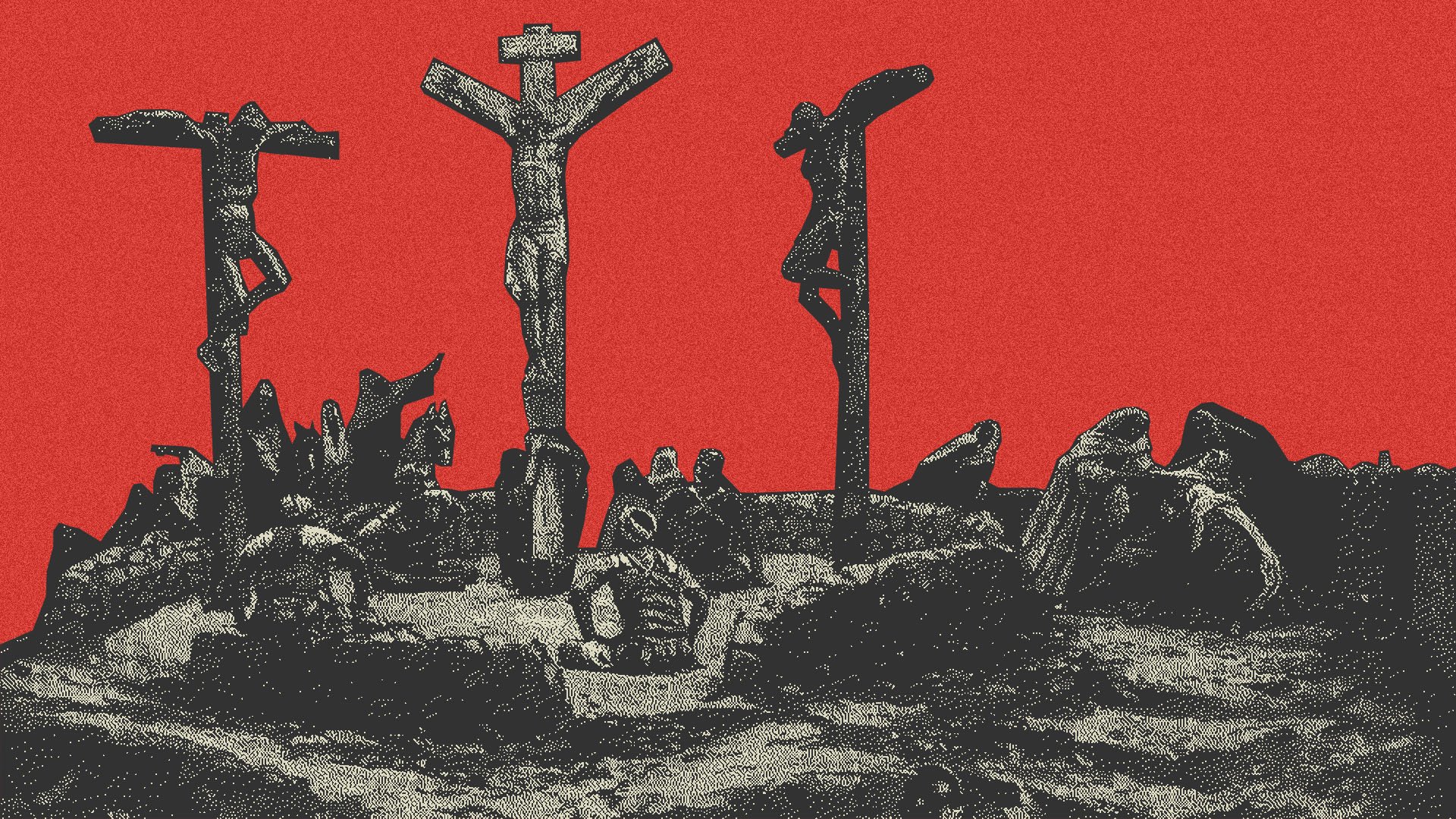
“These writings have no pretensions whatever to add an iota to Sacred Scripture as interpreted by the Church.” - Anne Catherine Emmerich
The Dolorous Passion of Our Lord Jesus Christ by Anne Catherine Emmerich is one of the most influential books about the last days of Jesus that you've probably never heard of.

As part of my Holy Week meditation this year, I read through this powerful work and found myself transported into the vivid visions it describes. Anne Catherine Emmerich (1774–1824) was a German nun, mystic, and stigmatist. Bedridden for most of her life, she reported experiencing intense visions centered primarily on the lives of the Virgin Mary and Jesus. The German novelist Clemens Brentano interviewed her extensively and recorded these visions. During her visions of Christ's Passion, Anne sometimes experienced the same painful sensations she described Christ enduring—even exhibiting wounds on her hands and feet resembling the marks of the crucifixion that reportedly bled periodically.
What makes Anne's visions so compelling is the extraordinary confidence and detail with which she describes events seemingly impossible for her to know. She recounts ancient architecture, customs, and languages from places she had never visited. She also describes spiritual realities such as the Trinity, Jesus' preaching to the souls in Purgatory, and the Annunciation to Mary. To many in her community, these remarkably detailed accounts appeared to be divine gifts given through God's chosen vessel.
Yet skepticism has accompanied her visions from the beginning. Some later scholars pointed to historical maps and reference materials found among Brentano's notes, suggesting that, as a novelist, he may have embellished or expanded portions of Anne's accounts. Others remain convinced that the visions themselves are authentic, while acknowledging the possibility that Brentano's editorial hand shaped how they reached us.
Crux of Construction
It's impossible to talk about The Dolorous Passion without first discussing verisimilitude—literally, "like truth." Verisimilitude is the quality of seeming true, real, or believable. Derived from the Latin words for "truth" and "similar," it describes how stories, art, and ideas can feel authentic to an audience, even when they are fictional or interpretive. Of course, the events of Christ's Passion happened historically. However, the details, atmosphere, and distinctly Catholic lens that Anne brings to the story create an account that is uniquely her own.
For example, one of the most significant conflicts between Anne's visions and the Gospel accounts concerns the timing of the crucifixion. Anne states that Jesus was on the cross from noon until 6 p.m. The Gospels, however, record that Jesus was crucified at 9 a.m. and died around 3 p.m. (Mark 15:25, 33–37).
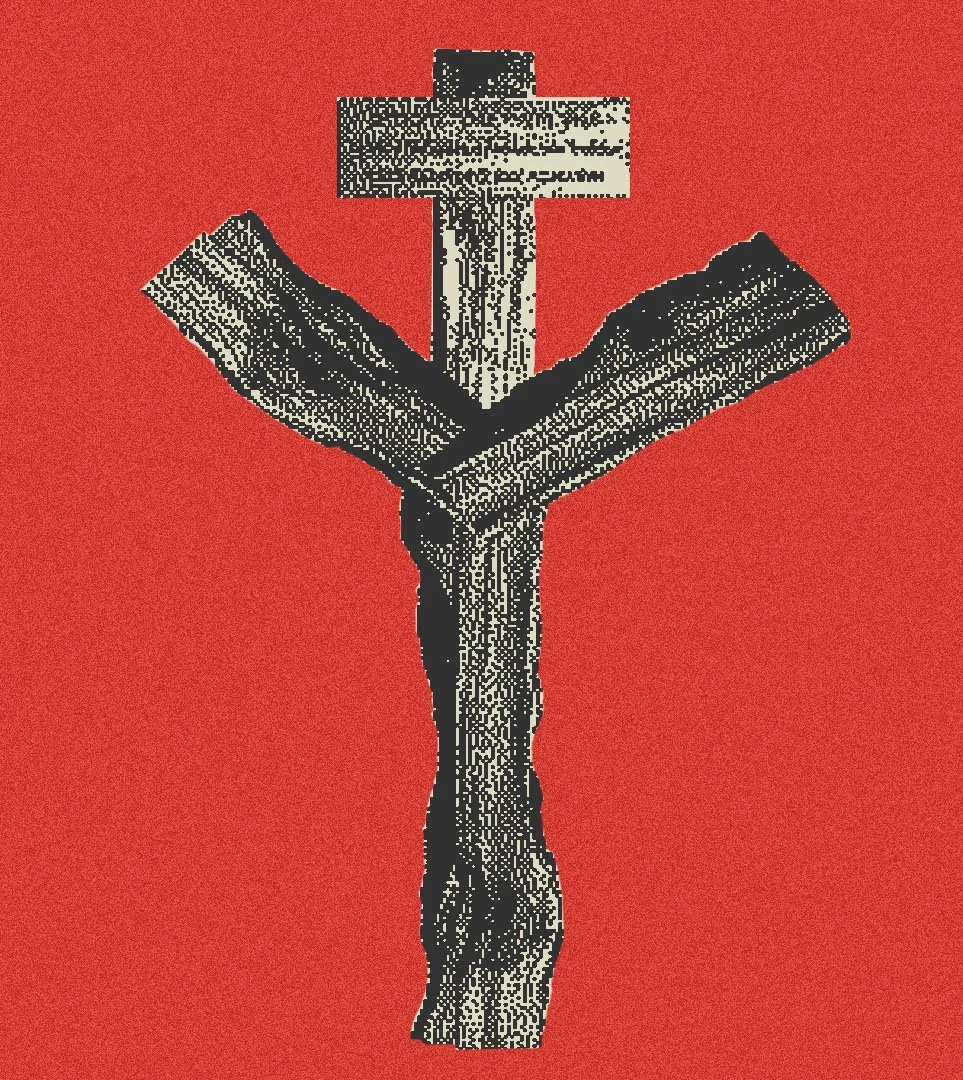
Another major historical discrepancy concerns the cross itself. Anne describes it as being constructed from five separate pieces of timber arranged in a Y-shape.In her account, the chief priests order craftsmen to build a special cross for Jesus, and the executioners carry its separate pieces up the hill during the march to Calvary. Historically, however, this is highly unlikely. Roman crucifixion was a standardized and efficient process. Permanent upright posts were already at execution sites, in some places, using existing tree trunks. The condemned person typically carried only the horizontal crossbeam (patibulum), which was then fastened to the permanent upright once they arrived.
Anne's account reflects a different priority. Because the crucifixion is the theological center of salvation history, the executioners carefully carve grooves into the wood so Christ's body will lie perfectly upon it. Every detail serves a symbolic purpose. There is a predetermined conclusion in mind that shapes the smaller details along the way. But it's not all fanciful.
Regardless of Anne's personal additions, the physical weight and emotional depth of Christ's suffering shine through every page. I found myself in tears reading her descriptions of Jesus wrestling in prayer in Gethsemane and enduring the brutal scourging at the hands of the soldiers. Anne writes with a profound reverence that never lets the reader forget the sacred paradox of Christ's body. It is both the dwelling place of God and a body subjected to unspeakable violence. Her descriptions remain honest about the vandalism inflicted upon it while never losing sight of its holiness.
A Common Vision
The influence of The Dolorous Passion extends far beyond devotional literature. It has inspired many artistic depictions of Christ's final hours, most notably Mel Gibson's The Passion of the Christ (2004) and Jacques Joseph Tissot's monumental painting series The Life of Christ (1896–1898). Together, these works have profoundly shaped the modern visual imagination of the Gospel narratives.
Tissot's paintings are especially fascinating because they demonstrate verisimilitude in action. After a profound religious experience, Tissot returned to the Catholic faith late in life and devoted himself to depicting Scripture. To prepare for this ambitious project, he traveled throughout the Middle East in 1886, 1889, and 1896, producing sketches, collecting photographs, and studying the landscape firsthand in pursuit of what he called "considerable archaeological exactitude."
At the same time, Tissot immersed himself in Anne Catherine Emmerich's then-popular visions, allowing them to shape the emotional and narrative texture of his work. The result was a series of 365 gouache illustrations chronicling the life of Christ. When the paintings were exhibited in Paris, London, and New York, audiences were deeply moved. Many visitors even reported having profound religious experiences while viewing them.
The artwork was, in many ways, a construction; a remarkable example of verisimilitude.Anne's visions had now been clothed in the visual authority of archaeological research and recognizable holy sites. They felt historically authentic. Yet artistic decisions were constantly being made. Viewers were not seeing history itself; they were seeing a carefully crafted vision of history that had become culturally persuasive.
The Bigger Picture
Perhaps the most helpful perspective on all of this comes from Pope Benedict XIV's discussion of mystical discrepancies. Reflecting on the many saints throughout Church history who claimed visions of Christ's crucifixion, he observed that these accounts often disagree. The number of nails changes. The shape of the cross changes. Certain events appear in one vision but not another.
For Benedict, these differences are not necessarily a problem. Even canonized saints and approved private revelations may contain human error, imperfect memory, or personal interpretation. In other words, mystical visions are not primarily trying to communicate historical precision. They are trying to communicate a deeper truth. The details often emerge through the visionary's own imagination, symbolism, and visual language, while the theological message remains the point.
Perhaps this explains why Anne describes Christ's cross as Y-shaped. Historically, it almost certainly was not. Symbolically, however, the image is rich. The cross becomes a tree, recalling the Tree of Life in Eden. What humanity lost through one tree, God restores through another. Whether or not Anne literally saw a Y-shaped cross ultimately matters less than what the image reveals: that on the wood of the cross, God transforms the instrument of death into the Tree of Life through which the world is redeemed.
Pope Benedict XIV. “Apparitions & Private Revelations: EWTN.” EWTN Global Catholic Television Network, Vatican Publications, 2025, www.ewtn.com/catholicism/answers/apparitions-private-revelations-24763.
“James Tissot.” Wikipedia, Wikimedia Foundation, 19 July 2026, en.wikipedia.org/wiki/James_Tissot.
“Anne Catherine Emmerich.” Wikipedia, Wikimedia Foundation, 15 June 2026, en.wikipedia.org/wiki/Anne_Catherine_Emmerich.
Emmerich, Blessed Anne Catherine. The Dolorous Passion of Our Lord Jesus Christ: From the Visions of Blessed Anne Catherine Emmerich. Firebrand Technologies, 2024.