8. Do You See what I See?
Today’s Reading: Mark 8:22-9:50
Seeing the Savior (Mark 8:22–9:13)
In one of Mark's most unusual sections, we get three stories about spiritual sight. This comes directly after a sequence highlighting the disciples’ inability to recognize what Jesus’ signs are pointing to.
1. Mixed Signals
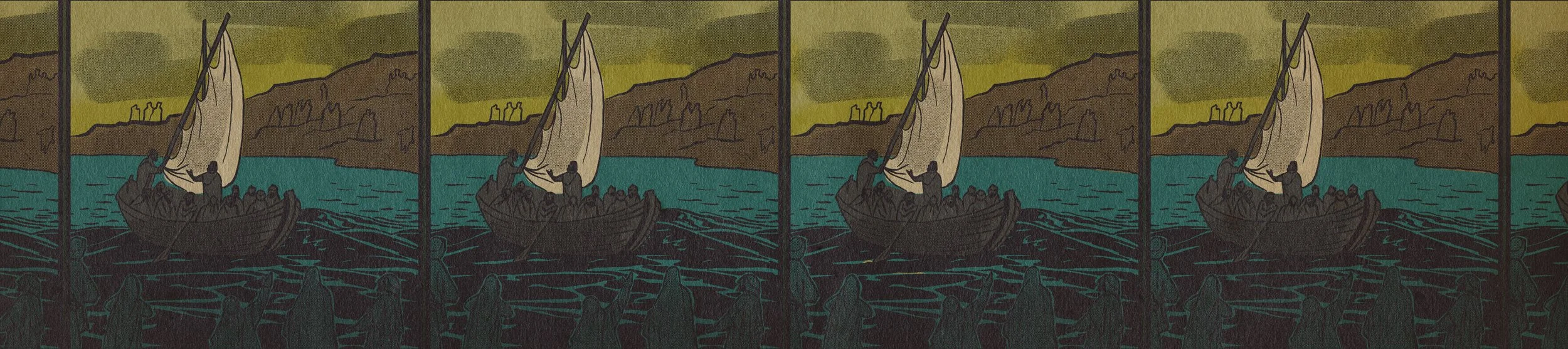
In the first story, Jesus encounters a blind man in the village of Bethsaida. He leads the man outside the village and, as in John 9, uses spit to heal him. This story is unusual because, in other passages, Jesus’ healing seems immediate and unquestioned. Here, Jesus asks the man: “Do you see anything?” (Mark 8:23).
The man responds, “I see people; they look like trees walking around” (Mark 8:24). It is unclear why some miracles are instant while this one takes time. One possibility is that Jesus takes the man away from his familiar surroundings before healing him. His vision of people as trees could become a metaphor for the gradual spiritual perception that comes from being touched by Jesus. This idea is interesting because, in verse 26, after the man receives his full sight, Jesus tells him not to return to the village.
Another reason Mark may include this passage here is to create a transition between the disciples’ blindness in the previous story and Peter’s confession in the next. The disciples are beginning to see. But like the blind man, they aren’t seeing clearly yet.
2. Who Do You Say I Am?
In the second story, Jesus asks his disciples: “Who do people say I am?” (Mark 8:27). This scene sits near the center of the book and highlights the question the reader should be asking by now. There is no doubt that Jesus has power and authority over the natural world, disease, and evil spirits. His words cut to the root of religious hypocrisy and societal exclusion. But who is he? And where does his power come from? These are questions that most characters have asked up to this point. Even his own family has struggled to understand him (Mark 3:21).
“They replied, ‘Some say John the Baptist; others say Elijah; and still others, one of the prophets.’ “But what about you?’ he asked. ‘Who do you say I am?’” (Mark 8:28–29). Jesus turns the question on them. For the readers of this text, the question almost breaks the fourth wall. Who do you say I am? The second half of Mark follows Jesus’ journey toward the cross. Before that journey begins, Jesus takes time to ask his disciples and the reader to decide who they believe he is.
Peter, whose eyewitness preaching is traditionally associated with Mark’s Gospel, speaks up: “You are the Christ” (Mark 8:29). Curiously, Mark doesn’t include the words addressed to Peter in Matthew 16:17–18, where Jesus connects Peter’s confession with the rock on which he will build his church. Matthew is playing with Peter’s name here: Petros, meaning rock. Peter gives Mark the memory of his confession of faith, but it seems he also focuses on his immediate mistake. After Peter’s confession, Jesus explains what it actually means for him to be the Christ. He will be rejected. He will suffer, die, but after three days, he will rise again. Peter, praised in Matthew’s account for his confession, now raises concerns about Jesus’ definition of the Christ.
“But when Jesus turned and looked at his disciples, he rebuked Peter. ‘Get behind me, Satan!’ he said. ‘You do not have in mind the concerns of God, but merely human concerns’” (Mark 8:33). The title “Satan” immediately conjures up the idea of the devil and darkness. But the word satan carries the idea of an adversary or accuser—someone standing in opposition. In this moment, Peter is speaking contrary to Jesus’ mission. Peter recognizes Jesus as the Messiah, but he still doesn’t understand what kind of Messiah Jesus has come to be. Jesus’ words reveal that Peter cares more about self-preservation than the difficult mission of bringing salvation through the cross. Peter can see, but his vision is still blurry.
3. All of the Lights
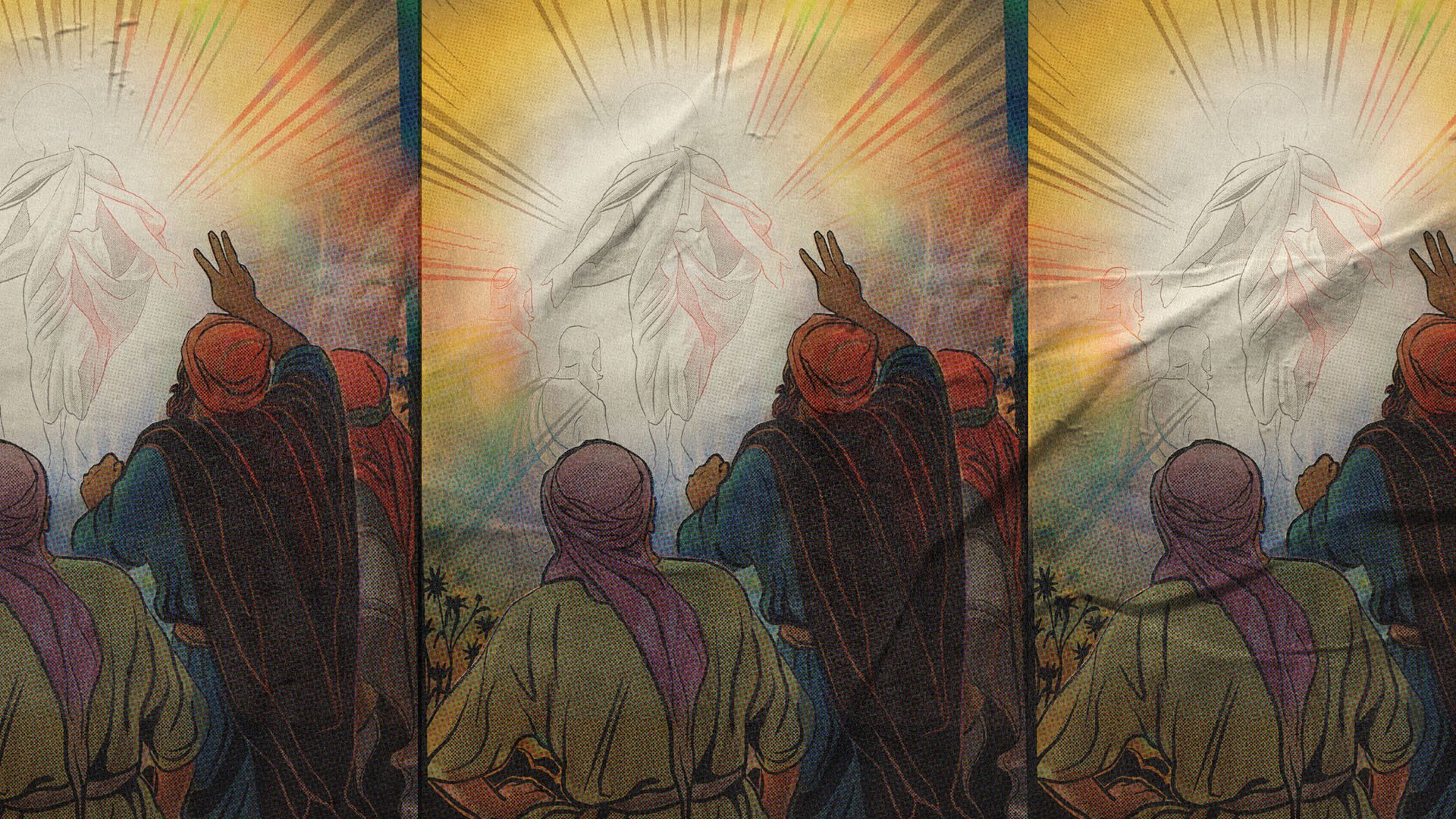
The third story about spiritual sight is by far the most dramatic. At the beginning of Mark 9, Jesus ends his address to the disciples by telling them that some standing there will not die before seeing the Kingdom of God come with power. Then: “After six days Jesus took Peter, James and John with him and led them up a high mountain, where they were all alone. There he was transfigured before them” (Mark 9:2).
His clothes shine with dazzling whiteness, and Moses and Elijah appear beside him. To transfigure means to change in appearance. Jesus is revealing something about his true identity to these three disciples. Remember the first words of Jesus in Mark 1:15: “The time has come…The kingdom of God has come near. Repent and believe the good news!” Jesus the Messiah’s presence is evidence that God’s Kingdom has come near. Just as he promised in Mark 9:1, some of his disciples are now seeing a glimpse of that Kingdom in power.
This event also mirrors the scene of Jesus’ baptism near the beginning of Mark. At Jesus’ baptism, the Father speaks and affirms the Son. Here, near the center of the book, he does so again: “Then a cloud appeared and covered them, and a voice came from the cloud: ‘This is my Son, whom I love. Listen to him!’” (Mark 9:7). Because Mark’s Gospel was experienced largely through public reading, the Father’s voice creates a pattern for the listener to recognize. At the baptism, the Father speaks. At the Transfiguration, the Father speaks. But on the cross, when Jesus is finally glorified through suffering, we might expect the Father to speak again. Instead, Jesus speaks: “My God, my God, why have you forsaken me?” (Mark 15:33)
As Jesus and the three disciples return down the mountain, he instructs them not to tell anyone what they have seen until he rises from the dead. The disciples then ask about Elijah. Jewish expectation associated Elijah’s return with the coming Day of the Lord and God’s promised restoration. Jesus confirms that Elijah has come. Within Mark’s story, this points back toward John the Baptist, who fills that Elijah-like role of preparing the way.
Stumble (Mark 9:14–50)
This section focuses on Jesus training his disciples. Once Jesus and the three disciples rejoin the others, they find a large crowd. The other disciples are arguing with the religious leaders. It turns out that a man brought his son to the disciples to be freed from an evil spirit, but they were unable to help him. Jesus is frustrated by the lack of faith around him and moves to heal the boy. First, he speaks with the father.
The father says: “…But if you can do anything, take pity on us and help us.” “‘If you can’?” said Jesus. “Everything is possible for one who believes.” Immediately the boy’s father exclaims: “I do believe; help me overcome my unbelief!” (Mark 9:22-24) Where the disciples don’t acknowledge their doubt, the father does. He believes, but he also acknowledges the part of himself that is exhausted and frustrated by the situation. Faith and doubt exist in the same sentence, and Jesus still responds. The boy is healed, and the father and son are reunited.
“After Jesus had gone indoors, his disciples asked him privately, ‘Why couldn’t we drive it out?’ “He replied, ‘This kind can come out only by prayer’” (Mark 9:28–29). This answer may seem random until we recognize the pattern in Jesus’ continued training of the disciples. The mission fails when we assume the authority comes from us. In Mark 6:7, Jesus gives his disciples authority over evil spirits before sending them out. The authority was never theirs to begin with. It came from Jesus. Prayer acknowledges our dependence on God’s presence and power. Where the disciples may have become concerned with finding the right formula themselves, Jesus calls them to become vessels through which God can work.
From this point until the end of the chapter, Jesus pulls his disciples away from the crowds to teach them. You can feel the urgency. He doesn’t have much time left, and he has to prepare them to continue the mission after his death and resurrection. Jesus begins by giving them once again a clear picture of himself. The Messiah will be betrayed, killed, and after three days, he will rise. But the disciples are less concerned with Jesus’ image and more concerned with their own.
“But they kept quiet because on the way they had argued about who was the greatest” (Mark 9:34). The power they have been given is going to their heads. It begins to obscure the way they follow Jesus. But Jesus graciously realigns their viewpoint. “He took a little child whom he placed among them. Taking the child in his arms, he said to them, ‘Whoever welcomes one of these little children in my name welcomes me; and whoever welcomes me does not welcome me but the one who sent me’” (Mark 9:36–37). Jesus directs their ego back toward wonder.
Then we see another strain on the ego. John tells Jesus that they saw someone driving out demons in Jesus’ name and told him to stop. The recognition of Jesus’ power is spreading. First, the question was: Which one of us is the greatest? Now it becomes: Who gets to be one of us? The disciples feel that an outsider is threatening the authority they share. But Jesus again broadens their perspective. The power Jesus has given them will eventually be shared and spread through the Holy Spirit. It was never supposed to stay with them.
Another thing to notice is that Jesus is dismantling their tribalism: “For whoever is not against us is for us” (Mark 9:40). Jesus is broadening their understanding of God’s Kingdom and authority. It can be easy to keep your “chosen” status to yourself. But followers of Jesus are called to share the work because it is not their power, but God's power working through them.
We end this section with a harsh statement from Jesus: “If anyone causes one of these little ones—those who believe in me—to stumble, it would be better for them if a large millstone were hung around their neck and they were thrown into the sea” (Mark 9:42).
The child Jesus brought into their conversation earlier may still be in his arms as he says this. Jesus warns the disciples about the cost of having power. He challenges their egos one last time by warning them about what happens when they misuse that power. “If your hand causes you to stumble, cut it off. It is better for you to enter life maimed than with two hands to go into hell, where the fire never goes out” (Mark 9:43). The word translated as “hell” here is Gehenna, a reference to the Valley of Hinnom outside Jerusalem. The valley carried dark biblical associations with idolatry and child sacrifice and later became an image associated with divine judgment.
Then Jesus ends this section by talking about salt. At first, all of this can seem random. But salt becomes a metaphor for the effectiveness and distinctiveness of Jesus’ followers. Jesus is saying we have to be willing to cut off dysfunction to preserve our mission. The more unhealthiness we allow God to remove, the more effective we become as vessels for his power. The disciples have spent this entire chapter learning how to see Jesus clearly. But seeing Jesus clearly also means learning to see yourself clearly.
Reflection Questions
The blind man could see before he could see clearly. Where might you be seeing God, yourself, or your circumstances only partially right now?
Peter correctly identified Jesus as the Messiah but struggled with what following that Messiah would actually cost him. Is there a difference between the Jesus you say you believe in and the Jesus you are actually willing to follow?
The disciples repeatedly struggled with power, status, and who was allowed to belong. Where might ego or comparison be making you less effective as a vessel for what God wants to do through you?