7. Who’s In and Who’s Out
Today’s Reading: Mark 7

Wash Your Hands, Say Your Prayers (v. 1–23)
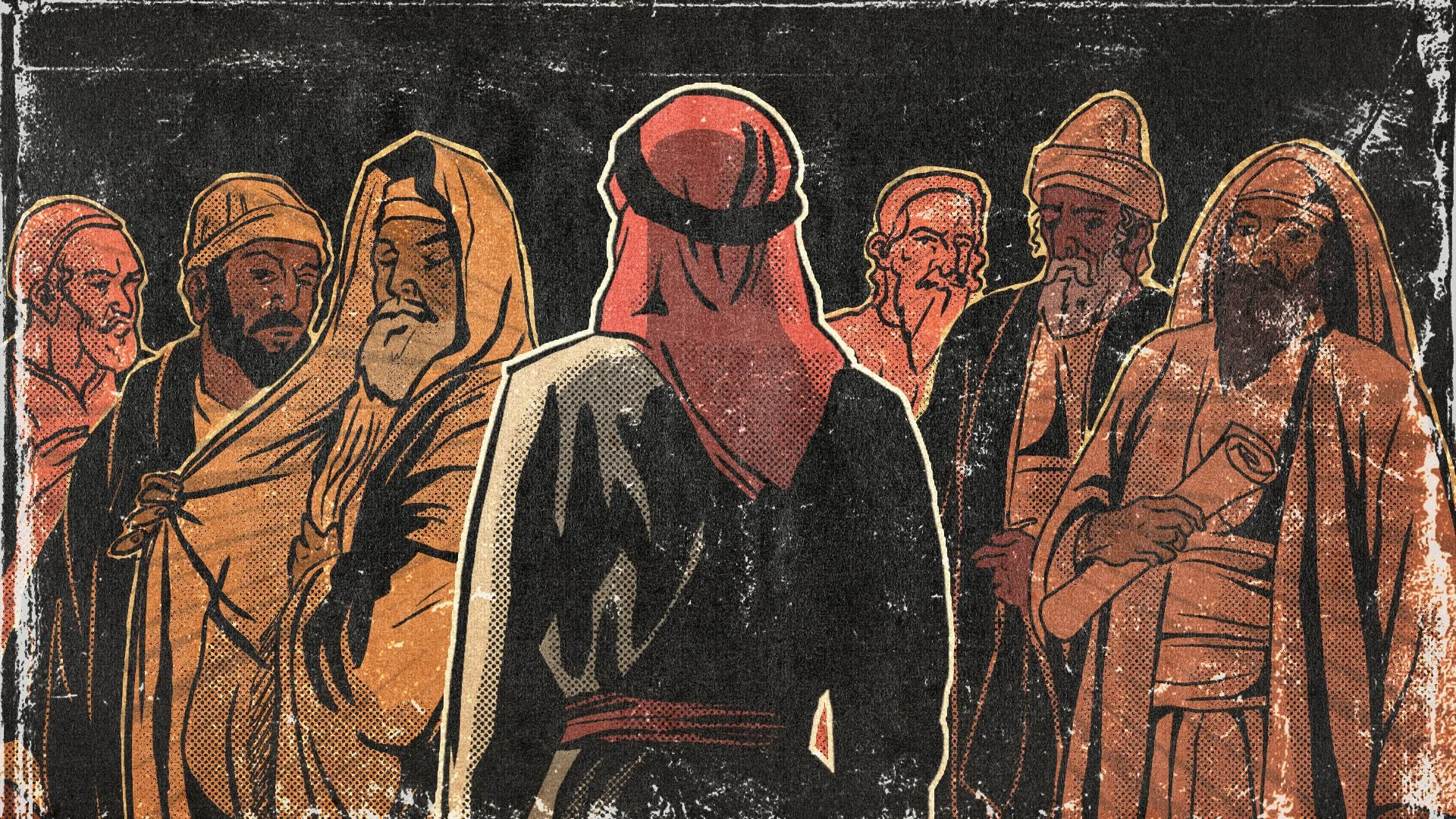
Jesus and his disciples are eating when the religious leaders surround them, watching for something to call out. His disciples dig into the meal before ceremonially washing their hands. Mark notes that this is about much more than etiquette. Jewish religious life was deeply concerned with ideas of cleanliness and purity. Religious leaders and elders would ceremonially wash their hands, cups, and other utensils to maintain ritual cleanliness. It wasn’t necessarily against the Law of Moses to eat without this ceremonial washing. It was an additional measure passed down through the religious tradition.
“So the Pharisees and teachers of the law asked Jesus, ‘Why don’t your disciples live according to the tradition of the elders instead of eating their food with defiled hands?’
He replied,… “You have let go of the commands of God and are holding on to human traditions” (Mark 7:5,8).
Jesus quotes the Prophet Isaiah, who famously called out religious hypocrisy. Jesus goes on to reveal that the religious leaders have become more concerned with the appearance of righteous living than actually following God’s Law. Ironically, even in their performance of righteousness, they can unintentionally break the very Law they claim to protect. Jesus gives an example in verses 10–12.
God commands them to “honor your father and mother.” One practical way to do this in their society was to care for aging parents when they could no longer provide for themselves. But Jesus says their religious traditions had created a loophole. Someone could declare their resources “devoted to God” and use that religious commitment as a reason not to support their parents. In the appearance of righteousness, a person could put on a show for others while neglecting their most basic responsibility.
Boldly, Jesus expands his teaching by calling the crowd around him and the religious leaders. “Nothing outside a person can defile them by going into them. Rather, it is what comes out of a person that defiles them” (Mark 7:15). Jesus is not concerned with outward appearances of righteousness and cleanliness. He cares about the heart. Sometimes cosmetic changes are easier than the difficult work of spiritual development. We can change what something looks like without ever addressing what is happening underneath. But the internal is eternal. Where your treasure is, your heart will be also.
For the Gentile readers of Mark, this would have been a radical comfort. Here, a Jewish Messiah shifts the focus from ritual distinctions around clean and unclean foods to the condition of the heart. Following a religious code is only as effective as the way it spiritually forms you. “For it is from within, out of a person’s heart, that evil thoughts come—sexual immorality, theft, murder, adultery, greed, malice, deceit, lewdness, envy, slander, arrogance and folly. All these evils come from inside and defile a person” (Mark 7:21–23).
Even the Dogs (vv. 24–30)
In the next story, a Gentile woman approaches Jesus, asking for her daughter to be healed. Jesus responds with a difficult image: “First let the children eat all they want,” he told her, “for it is not right to take the children’s bread and toss it to the dogs” (Mark 7:27).
“Dog” could be used as an ethnically insulting way of speaking about Gentiles. It reflected the idea that those outside the Jewish covenant were unclean. So, did Jesus call this woman a slur?
There is more happening in the conversation. Mark appears to be playing with expected language here, especially for his Gentile audience. The Greek word Jesus uses is a diminutive form that can refer to a small dog or household dog. The image Jesus creates is not simply of wild dogs outside, but of children eating at a table with dogs underneath. You can hear this imagery continue in the woman’s response. “Lord,” she replied, “even the dogs under the table eat the children’s crumbs” (Mark 7:28). She picks up Jesus’ metaphor and pushes it further. If the children belong at the table, she reasons, even the dogs underneath receive something from what falls. She is not asking Jesus to deny Israel’s place in the story. She is arguing that there is enough at the table for her too.
Jesus honors her response. The image that could have represented exclusion suddenly becomes an image of proximity. Even the household dogs are still inside the house. Jesus affirms the faith of this Gentile woman who dared to ask a Jewish rabbi for healing for her Gentile daughter. Something here even anticipates what Jesus will later do with the cross: transforming an image associated with shame and disappointment into something that communicates ultimate belonging and hope.
Keep It Inside (vv. 31–36)
Jesus and his disciples then travel through the Decapolis, a predominantly Gentile region. Notice the theme running throughout Mark 7. Mark has grouped three stories in which Jesus encounters people or things that could be considered unclean or outside the boundaries of traditional Jewish purity. The first section discusses food and cleanliness. The second discusses God’s favor reaching someone outside the Jewish covenant. Now, Jesus confronts disability.
A deaf man who also has difficulty speaking is brought to Jesus for healing. We aren’t told whether this man is Jewish or Gentile. But the story takes place in a Gentile region, immediately after Jesus has healed the daughter of a Gentile woman. Curiously, Jesus handles this miracle differently. Where Jesus had previously allowed news of his miraculous power to spread through this region in Mark 5, this time he takes the man away from the crowd and heals him privately. But the process by which Jesus heals him is…gross.
“After he took him aside, away from the crowd, Jesus put his fingers into the man’s ears. Then he spit and touched the man’s tongue” (Mark 7:33).
It seems unusual to us, but saliva was sometimes thought to have healing properties in the ancient world. Something deeply personal may also be happening here. Jesus is interacting with a man who cannot hear him. By touching his ears and tongue, Jesus communicates physically what he is about to do. Jesus meets the man in a way he can understand. Then Jesus commands his ears to open and his tongue to loosen. Again, we see Jesus’ words carrying authority over the natural world.
But when Jesus commands the people to keep the news quiet, they can’t stop talking about it. Perhaps after all those years of silence, this man had a lot to say. In this case, Jesus doesn’t want the miracle to become the entire message. Physical healing is important, but it isn’t the whole of his mission. Like the other miracles throughout Mark, the healings and exorcisms reveal something about Jesus’ identity as the Messiah. But they point toward a larger purpose: bringing salvation, announcing the Kingdom of God, and preparing his disciples to continue spreading the Gospel after he leaves. The miracle is a sign pointing toward Jesus.
Reflection Questions
The religious leaders focused on appearing clean while Jesus focused on what was happening inside. Where are you tempted to make cosmetic changes instead of doing the deeper work of spiritual formation?
The Gentile woman believed there was enough grace at Jesus’ table for her too. Where have you convinced yourself that God’s grace, attention, or mercy is available to others but not to you?
Jesus meets the deaf man in a way he can understand. Looking back, how has God met you personally rather than in the way you expected?