5. See and Do
Today’s Reading: Mark 5:21-6:13
Function of Faith (5:21–43)
For many, the story in Mark 5 is familiar. However, look at it through the lens of mind, belief, and faith in action. In his book Conversations with God, Neale Donald Walsch writes:
“Thoughts are very subtle, yet an extremely powerful, form of energy. Words are less subtle, more dense. Action is most dense of all… It is very difficult to reverse the effects of negative thinking once they have taken physical form. Not impossible—but very difficult. It takes an act of extreme faith… extraordinary belief in… God. Healers have just such faith. It is faith that crosses over into absolute knowing. They know you are meant to be whole, complete, and perfect in this moment now.”
The Woman with the Issue of Blood
For 12 years of her life, this woman has been told that she is unclean and unwelcome. Jewish Law dictated that she had to remain separate because of her constant bleeding. Verse 26 shows us her desperation to find healing: “She had suffered a great deal under the care of many doctors and had spent all she had.”
Imagine the negative thoughts this woman might have had about herself. Society has told her that she has no place and that she is defective because of her condition. She is condemned to the shadows and considered untouchable. But remember our Walsch quote: “It takes an extreme act of faith.”
Let’s be clear: circumstances in life can be random. This woman didn’t think her way into her medical problem. However, the belief that she didn’t belong offered no path toward healing. Then, she hears about Jesus and that he might be the Messiah. Malachi 4:2 prophesies that the Messiah will “bring healing in his wings.” The Hebrew word for “wings,” kanaf, can also refer to the “corners” or “skirts” of a garment. Jewish men were commanded to wear tassels on the corners of their garments, knotted to remind them of the Law.
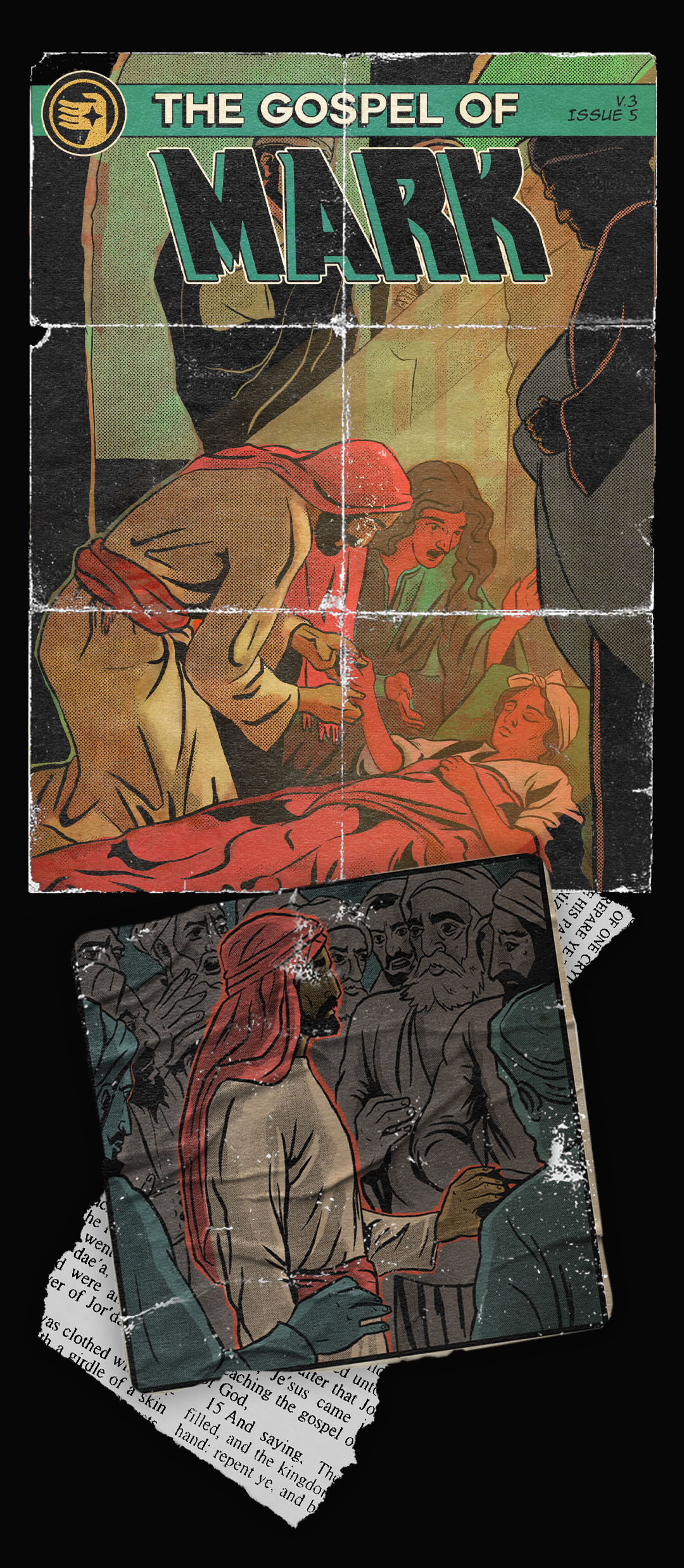
In an extreme act of faith, the woman enters a crowd she is supposed to avoid and reaches for Jesus’ garment. By doing this, she proclaims that she recognizes who he is. She reaches for the very garment associated with the Law that has declared her unclean. When Jesus responds, he says, “Daughter, your faith has made you well” (v. 34). Jesus validates her belonging by calling her “daughter.” Then, he tells her that her extreme act of faith, moving against the current of negativity surrounding her, has made her well.
Jairus the Synagogue Ruler
This passage opens with a very important man seeking help from Jesus. Instead of pastors preaching every week, chosen men would stand and read from the Torah and then explain what the passage meant. As a synagogue ruler, Jairus would have helped oversee the synagogue and its worship. He was a respected man within the religious community. The fact that religious leaders in previous chapters are already plotting against Jesus shows us how desperate Jairus is for help. Jairus’ daughter has become very ill and is on her deathbed.
The crowd that gathers around Jesus tests the faith of both Jairus and the afflicted woman. For her, she is an outsider trying to get in. Jairus is an insider trying to get out—with Jesus. The pause in the story for the healing of the afflicted woman causes two men from Jairus’ house to arrive and tell him he has run out of time. His daughter has died. Think of the negative thoughts going through Jairus’ head.
“Ignoring what they said, Jesus told him, ‘Don’t be afraid; just believe’” (v. 36). From this point on in the story, Jesus physically creates space for faith to grow. He only allows three disciples to continue with him. When they arrive, Jesus removes the mourners who have gathered at the house. He cuts out the noise. Or, in the words of Walsch, “Healers have just such faith. It is faith that crosses over into absolute knowing.” Jesus raises Jairus’ daughter to life, and everyone is astonished.
A Lesson in Rejection (6:1–13)
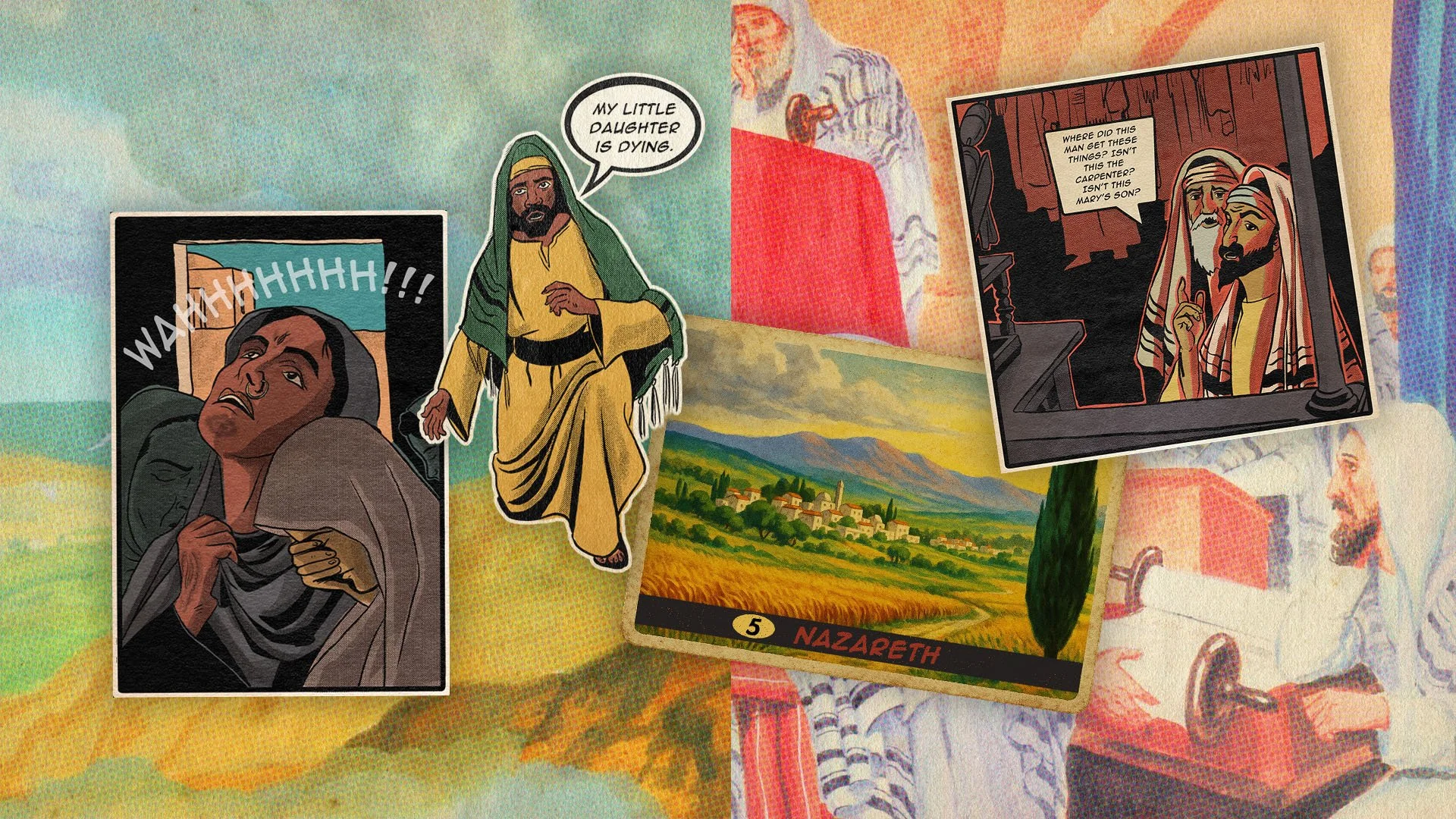
In contrast to these stories about acts of extreme faith, Mark gives us the account of Jesus going home. Jesus returns to his hometown and speaks in the synagogue. Everyone is amazed at his ability, but they are skeptical of his authority. How could they doubt Jesus? Especially since this town had the unique opportunity to watch him grow up? Here’s why: familiarity can be one of the greatest enemies of faith.
It’s harder to believe when you assume you already know something. It’s harder to accept a miracle when you’ve removed all traces of mystery. It’s hard to believe that anything is possible when your environment is constantly telling you otherwise. Jesus couldn’t do many miracles in a place shaped by the attitude, “Can anything good come from Nazareth?” (John 1:46). That negative belief had stunted their ability to recognize his presence. They already had a preconceived idea of who Jesus was and what they should expect from him.
The disciples witness this rejection in Nazareth. When they leave the town, the lesson for them becomes: How will they respond to spaces that suffocate their faith? Jesus gathers the disciples together before sending them out. He tells them not to take much with them, but instead to rely on the kindness of those they meet. This is Jesus’ way of helping his disciples learn to let go of what doesn’t serve them and prioritize the things that nourish faith. Faith can be fragile, and extreme faith can be difficult if it isn’t protected. The disciples now have the example of Jesus when it comes to handling rejection. They don’t have to remain in places that refuse to receive them. They can shake the dust off their feet and keep moving.
Reflection Questions
What are some deep beliefs about yourself that challenge your ability to walk in faith?
Even Jesus was rejected by people. What can you take away from the way Jesus handled rejection?
What are some relational ways we can interpret Jesus’ instructions to his disciples for our lives today?
Droach. (2019, August 8). Why were people healed from touching Jesus’ clothes? BibleMesh. https://biblemesh.com/blog/why-were-people-healed-from-touching-jesus-clothes/
Penley, P. (n.d.). Why Jesus heals people who touch his clothes: You’d have to be an ancient rabbi to figure out Matthew 9:20-22. Reenacting the Way. https://www.reenactingtheway.com/blog/why-jesus-heals-people-who-touch-his-clothes-youd-have-to-be-an-ancient-rabbi-to-figure-out-matthew-920-22
Mark 5:35. BibleRef.com. (n.d.). https://www.bibleref.com/Mark/5/Mark-5-35.html