Mountain 1
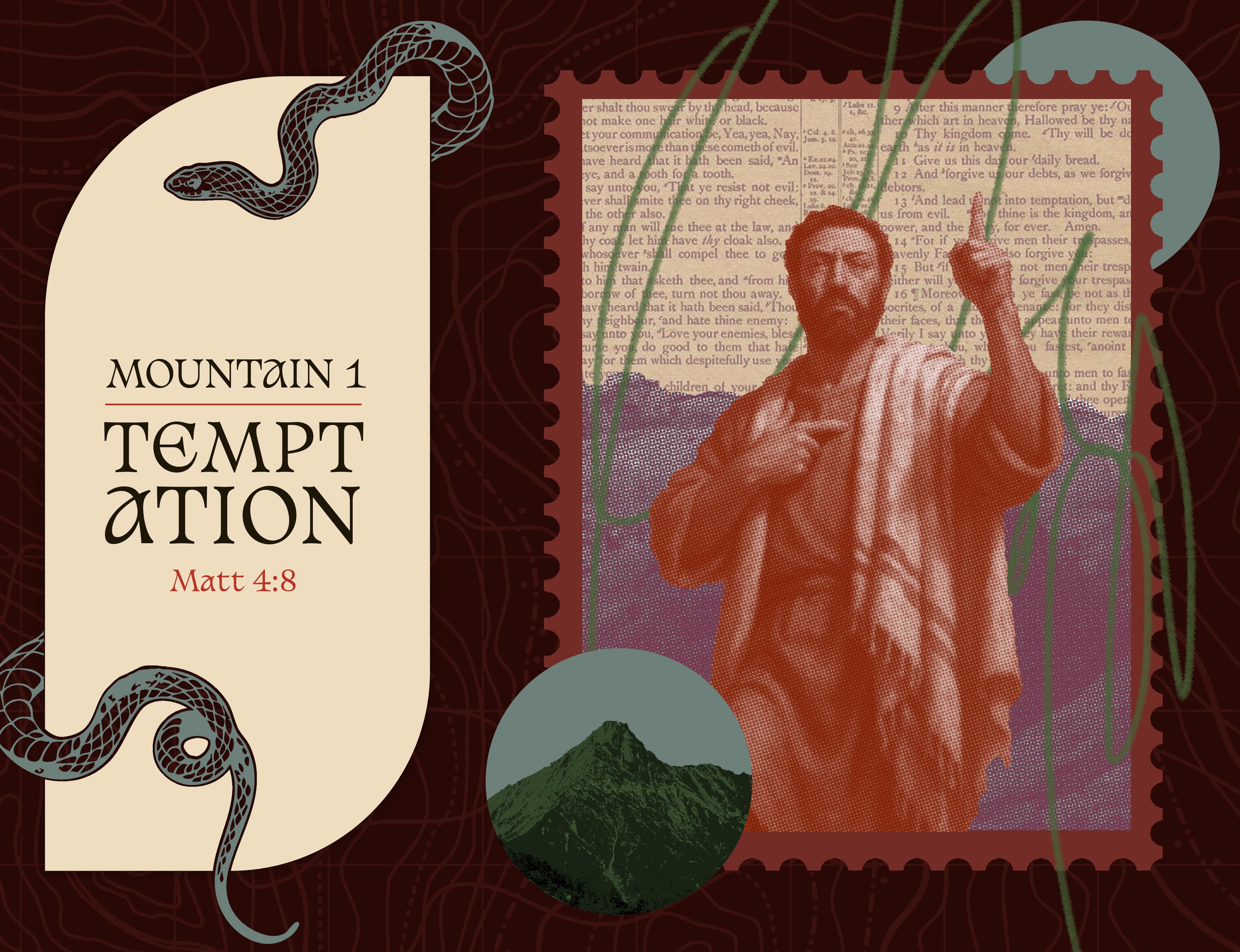
“Again, the devil took him to a very high mountain and showed him all the kingdoms of the world and their splendor.”
The first mountain in Matthew appears during Jesus' temptation in Matthew 4:1–11. After his baptism, the Spirit descends upon Jesus, heaven opens, and God declares him to be His beloved Son. Immediately afterward, the Spirit leads Jesus into the wilderness, where he fasts for forty days and faces temptation. Matthew begins Jesus' public ministry with this story because it reveals three important truths about who Jesus is.
1) Jesus Identifies with His People
The wilderness was a defining part of Israel's story. After being delivered from slavery in Egypt, the Israelites spent forty years wandering in the desert, learning to trust God. Yet again and again, they responded with fear, complaining, and disobedience. Throughout Scripture, other figures such as Abraham(Gen 12:1-10), Moses(Ex 2:11-22), David(1 Sam 21:10-22:5), and Elijah(1 Kings 19:1-9)also experienced seasons in the wilderness where they discovered the depth of God’s grace and sustaining power. Jesus enters the wilderness as Israel's representative. Where Israel failed, Jesus remains faithful. He trusts God for provision, refuses to grasp for power, and rests securely in God's presence. Even the Spirit leading Jesus into the wilderness echoes Israel being led by the pillar of cloud and fire through the desert(Ex 13:21-22). Matthew presents Jesus as the faithful Son who succeeds where God's people could not. At the same time, Jesus gives us a model for our own wilderness seasons. Temptation is not avoided but confronted, and it is God's word that anchors him through the struggle.
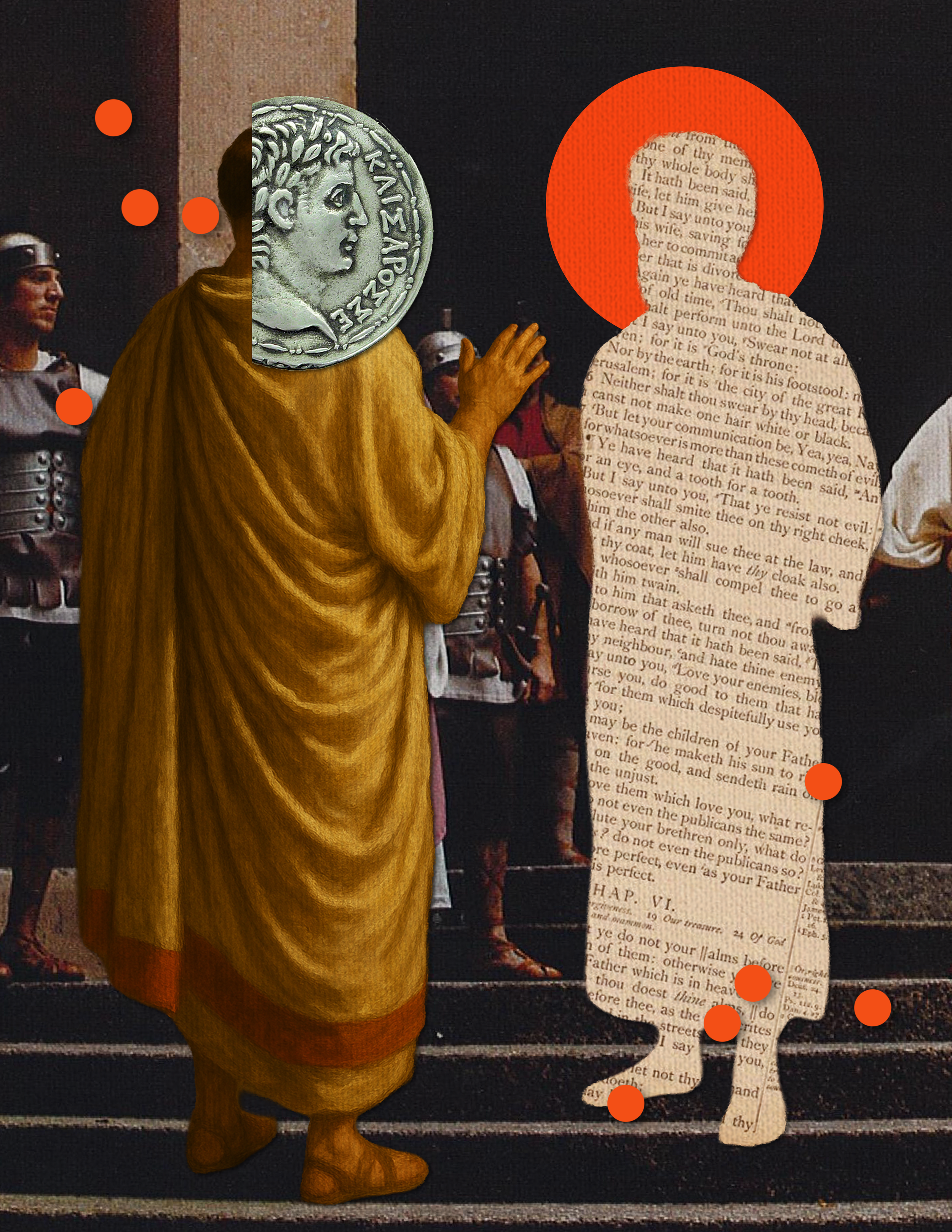
During his arrest and trial, Jesus resists the temptation to use Divine force. (Matthew 26:53)
2) Jesus Chose Not to Perform
Matthew opens his book with a burst of action, leading many readers of the book to recognize these connections and expect a Messiah who would display power, overthrow enemies, and establish political rule. The Mountain of Temptation corrects those expectations. The Devil repeatedly invites Jesus to use his power for himself; to satisfy his hunger, prove his identity, and gain influence without suffering. Each temptation offers a shortcut to power and bypasses trust in the Father. But Jesus refuses.
The second temptation is especially revealing. Standing on the pinnacle of the Temple, Jesus is challenged to throw himself down and force God to rescue him. The Devil even quotes Scripture in an attempt to justify the test(Matthew 4:6). Yet Jesus refuses to turn his relationship with the Father into a performance.
This theme will continue throughout Matthew's Gospel. Jesus is constantly pressured to prove himself through signs and displays of power. Even at the cross, the crowd mocks him: "If you are the Son of God, come down from the cross"(Matthew 27:40). But Jesus remains faithful to the Father's will rather than seeking validation from the crowd.
3) Jesus Gives Us a Pattern
It can be easy to assume that Jesus experienced temptation differently because he was the Son of God. Yet Matthew presents him as genuinely hungry, tired, and vulnerable. The temptations Jesus faces are deeply human. We all know the desire to meet our own needs apart from God. We all feel pressure to prove ourselves. We all face the temptation to take shortcuts toward success, influence, or security.
Jesus responds to each temptation with trust and the word of God. He trusts God's provision rather than grasping for control. He trusts God's approval rather than seeking recognition. He trusts God's path rather than pursuing power at any cost. The lesson is simple but challenging: what we continually bow to eventually shapes us. Jesus shows that faithfulness is worth more than any shortcut.
Satan
The figure of Satan has been understood in different ways throughout Christian history. In the Old Testament, particularly in the book of Job, "the satan" is presented as an accuser or challenger who tests human faithfulness. By the time we reach the New Testament, Satan has become more closely associated with evil and opposition to God's purposes. The New Testament consistently portrays Satan as a force that seeks to distort truth, undermine trust, and pull people away from God. James writes that believers should resist the Devil, trusting that he will flee (James 4:7).
Exactly how we understand Satan may vary, but Matthew's focus is less on explaining the Devil and more on exposing his strategy. Notice that each temptation invites Jesus to abandon trust in the Father. The temptation is not merely to do something wrong; it is to pursue a good outcome through the wrong means. Turn stones into bread. Gain influence without sacrifice. Force God to prove Himself. The voice of temptation often sounds reasonable because it promises immediate results. Yet beneath the surface is an invitation to distrust God and take control for ourselves. This is why Jesus' response is so important. He does not defeat temptation through displays of power but through trust, obedience, and a deep knowledge of Scripture.
The mountain of temptation reminds us that the battle is often less about obvious evil and more about whether we will trust God's way when easier alternatives are offered. Jesus shows us that faithfulness is possible, even in the wilderness, and that temptation does not have the final word.
Keener, C. (1999). Jesus Passes the Test (4:1-11). In A Commentary on the Gospel of Matthew (pp. 136–144). essay, W.B. Eerdmans Pub. Retrieved June 4, 2026, from https://archive.org/details/commentaryongosp0000keen/page/144/mode/2up.
Schweizer, E., & Green, D. E. (1975). The Good News According to Matthew. John Knox Press.