Mountain 2
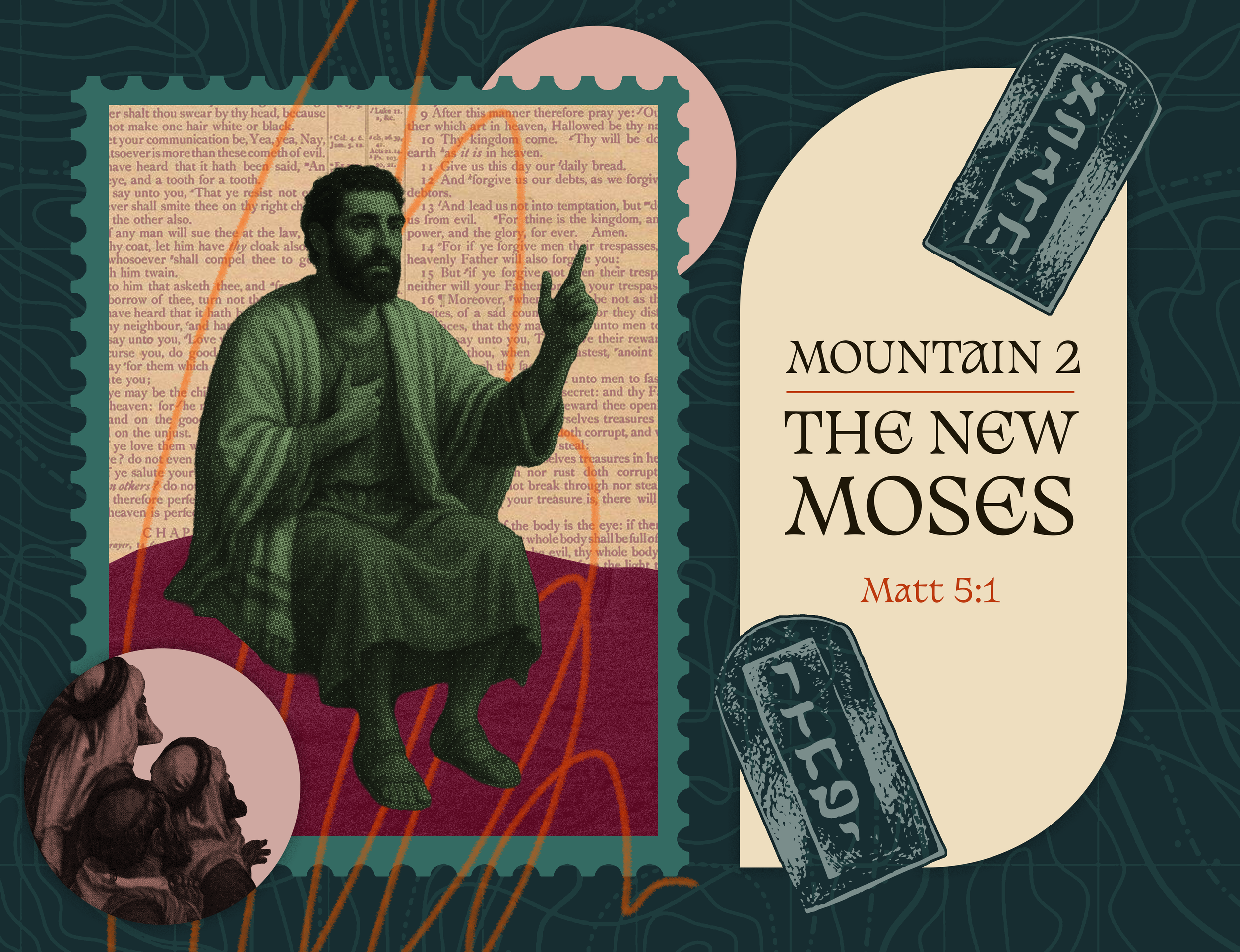
“Now when Jesus saw the crowds, he went up on a mountainside and sat down. His disciples came to him,”
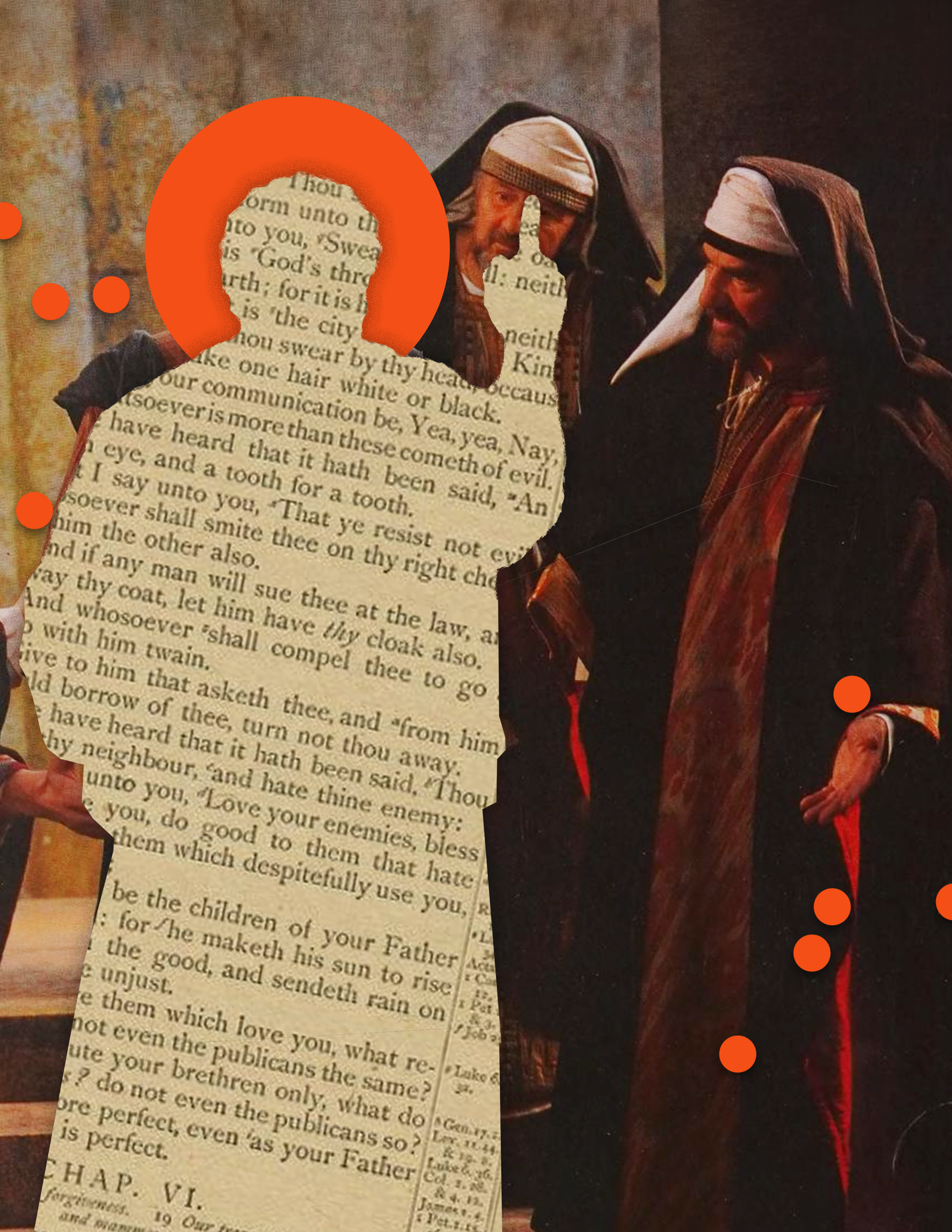
Jesus constantly called out Israel’s religious leaders for their hypocrisy in following God’s law.
Matthew's Gospel is structured around five major collections of Jesus' teaching. Many scholars see these five discourses as an intentional echo of the five books of Moses (the Torah). The first and most famous of these teachings is found in Matthew 5–7 and is commonly known as the Sermon on the Mount.
Luke refers to a similar scene as the "Sermon on the Plain." These descriptions are not contradictory. Jesus could have taught in a level area within the hill country. What matters most for Matthew is not the geography but the symbolism. By placing Jesus on a mountain, Matthew invites us to see him through the lens of Moses and Mount Sinai in Exodus 19.
1. Jesus Saw
Matthew tells us that after teaching and healing throughout Galilee, large crowds began to follow Jesus. "When Jesus saw the crowds, he went up on a mountainside..." (Matthew 5:1).
A similar moment occurs in Exodus 19. Israel has been delivered from Egypt and arrives at Mount Sinai. Moses ascends the mountain to receive instruction from God. God's message for the people is clear: “You’ve seen my power. Obey my commands and live as my covenant community.” Jesus does something similar, but with an important difference. He teaches not merely outward obedience, but inward transformation.
Many listening to Jesus were already faithful Jews who knew the Law of Moses well. Yet Jesus repeatedly moves beyond external actions to the condition of the heart. "You have heard that it was said... 'You shall not murder'... But I tell you that anyone who is angry with a brother or sister will be subject to judgment" (Matthew 5:21–22). Jesus reveals that God's concern has always extended beyond behavior to the attitudes and desires that shape it. The righteousness of God's Kingdom is not simply about avoiding harmful actions, but becoming people marked by love, mercy, and integrity.
2. Jesus Sat and Summoned
"He went up on a mountainside and sat down. His disciples came to him..." (Matthew 5:1).
In the ancient world, sitting communicated authority. Kings would pace around their thrones during times of war and would only sit when victory was won. Rabbis taught from a seated position, and even the Pharisees were described as occupying "Moses' seat" (Matthew 23:2), representing their role as interpreters of the Law. Matthew emphasizes Jesus' posture because his authority surpasses that of every other teacher.
Moses was simply a representative receiving God's instructions and delivering them to the people. Jesus speaks with an authority that belongs to God Himself. Throughout the Sermon on the Mount, he repeatedly says, "You have heard that it was said... but I tell you..." Jesus is not setting aside the Law; he is revealing its deepest intent.
Matthew also notes that Jesus' disciples came to him. Like Moses summoning Israel's leaders in Exodus 19:7, Jesus forms a community of followers who will carry his teaching into the world. In Matthew 10, he sends them out to proclaim the Kingdom of God. The Sermon on the Mount becomes part of the message they are entrusted to share.
3. Jesus Spoke
It has been said that the Sermon on the Mount has all you need to navigate life as a follower of Jesus. Throughout the Sermon, Jesus addresses different themes such as our relationships with others, prayer, generosity, provision, trust, and perseverance. (Many resources are available to help you study the Sermon on the Mount in depth on the resource section of the Gospel of Matthew page.) At the end of the sermon, Matthew records the crowd's reaction: "The crowds were amazed at his teaching, because he taught as one who had authority, and not as their teachers of the law" (Matthew 7:28–29).
Matthew's emphasis is not ultimately on the mountain itself or even Jesus' posture upon it. It's on what Jesus says. Matthew places the reader in the crowd listening to these words and gives us the decision. Does this mountain of teaching hold up? The sermon concludes with the parable of the wise and foolish builders. One builds on rock; the other builds on sand. When the storms come, only one foundation remains. Jesus leaves his audience and every reader with a choice. Will we merely admire his teaching, or will we build our lives upon it?
Fulfillment of the Law
Matthew wrote primarily to Jewish audiences who had come to believe that Jesus was Israel's promised Messiah. For many of these believers, an important question remained: What place does the Law of Moses have now?
The Law shaped every aspect of Jewish life. Given through Moses as part of God's covenant with Israel, it guided worship, relationships, and daily practices. As Gentiles increasingly came to faith without adopting these same requirements, questions naturally arose about how followers of Jesus should understand the Law (Acts 21:21). But Jesus addresses this directly.
"Do not think that I have come to abolish the Law or the Prophets; I have not come to abolish them but to fulfill them." (Matthew 5:17)
Jesus did not reject the Law of Moses. He brought them to their intended goal. He fulfilled the Law by perfectly embodying its purpose and revealing God's heart more clearly than anyone before him. Throughout the Sermon on the Mount, Jesus demonstrates that obedience is not merely about external rule-keeping, but internal transformation.
For Gentile believers, this meant that faithfulness to God was not found in adopting every aspect of Israel's covenant practices. For Jewish believers, it meant that following Jesus was not abandoning the Law but embracing its fulfillment. Paul later describes this transformation as being "conformed to the image" of Christ (Romans 8:29). The goal of the Christian life is not simply avoiding certain behaviors or checking religious boxes. It is becoming more like Jesus. The Sermon on the Mount reveals what that life looks like. Kingdom obedience flows from a changed heart, one that increasingly reflects the character of Christ.
Keener, C. (1999). The Sermon on the Mount (5-7). In A Commentary on the Gospel of Matthew (pp. 160–257). essay, W.B. Eerdmans Pub. Retrieved June 4, 2026, from https://archive.org/details/commentaryongosp0000keen/page/144/mode/2up.
Schweizer, E., & Green, D. E. (1975). The Good News According to Matthew. John Knox Press.