Mountain 6
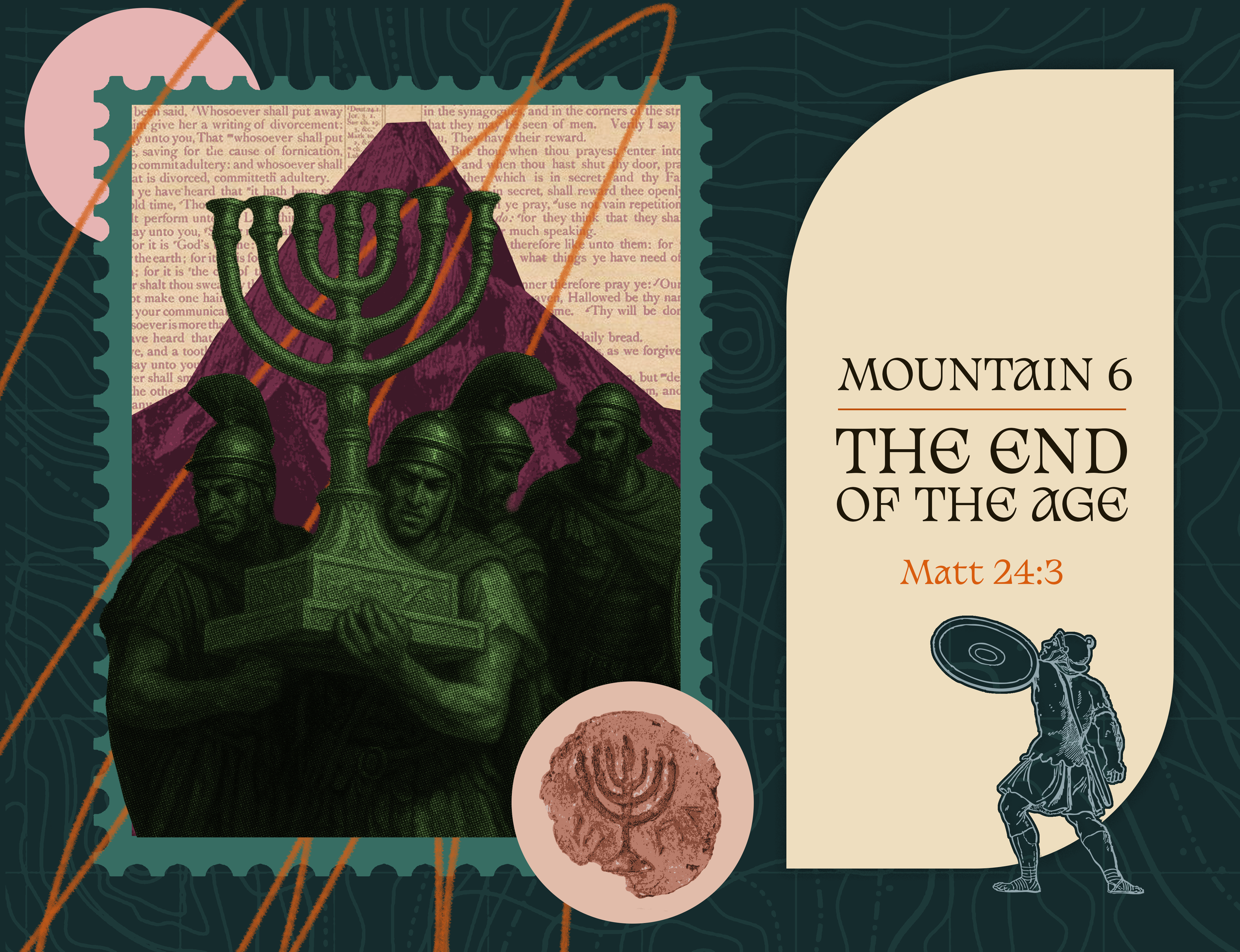
“As Jesus was sitting on the Mount of Olives, the disciples came to him privately. “Tell us,” they said, “when will this happen, and what will be the sign of your coming and of the end of the age?”
The sixth mountain in Matthew's Gospel centers on judgment, faithfulness, and the future. It moves between two significant locations: the Temple Mount, where Jesus confronts Israel's religious leaders, and the Mount of Olives, where he prepares his disciples for what lies ahead. The tension begins in Matthew 21 when Jesus descends the Mount of Olives and enters Jerusalem on a donkey, fulfilling prophetic hopes surrounding the Messiah. He proceeds directly to the Temple, where he drives out those exploiting worship for personal gain. The Messiah has arrived in Jerusalem, but instead of receiving him, many of the religious leaders reject him. Through these final teachings, Jesus addresses three important themes:
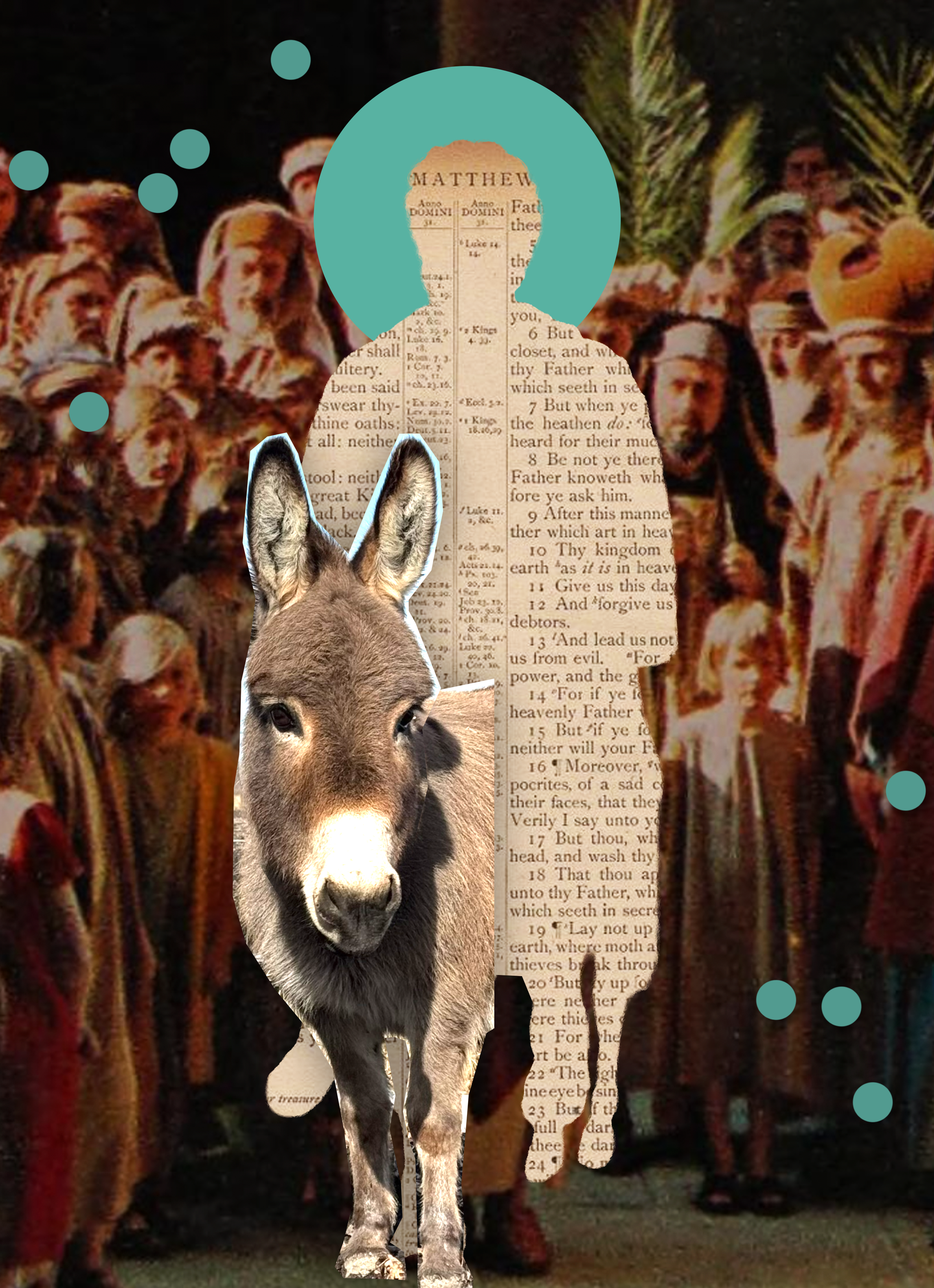
Where Jesus’ entry into Jerusalem was as the sacrificial Lamb, his End Time entry will be as the victorious Lion.
1. Woe, Woe, Woe
After enduring a series of challenges and questions from the religious leaders, Jesus turns and confronts them directly. Matthew 23 records seven "woes" or solemn warnings exposing the gap between outward appearance and inward reality. Jesus' criticism is not that these leaders cared too much about God's Law. Rather, they had reduced obedience to appearances while neglecting the very things the Law was meant to produce.
"…You have neglected the more important matters of the law—justice, mercy and faithfulness..." (Matthew 23:23)
Again and again, Jesus exposes a spirituality built on image management rather than transformation. The religious leaders honored prophets of the past while rejecting the prophets standing before them. Jesus warns that this same pattern will continue, ultimately culminating in his own death and later opposition toward his followers (read about this in the Book of Acts). One of Matthew's recurring themes is that Jesus' strongest opposition rarely comes from outsiders or “sinners”. More often, it comes from those most confident in their own righteousness. Matthew reminds his readers that genuine faith is measured not merely by religious activity but by the fruit it produces.
2. What Beautiful Buildings!
Leaving the Temple for the final time, Jesus' disciples marvel at its beauty and grandeur. Jesus responds with startling words: "Not one stone here will be left on another; every one will be thrown down" (Matthew 24:2).Much of Matthew 24 points toward the coming destruction of Jerusalem and the Temple in AD 70. We know this because Jesus says, “Truly I tell you, this generation will certainly not pass away until all these things have happened” (Matthew 24:34). For Matthew's original audience, these events would have been painful and recent. Yet Matthew's emphasis is not merely historical.
Throughout this mountain, Jesus sees beyond appearances. Earlier in the Gospel, Jesus declared, "Something greater than the temple is here"(Matthew 12:6). The Temple represented God's presence among His people, but Matthew consistently presents Jesus as the true meeting place between God and humanity. The Temple would fall, and Jesus would also be rejected and killed. But God would raise only one again. Matthew places these events side by side to remind readers that earthly structures, even sacred ones, cannot replace the living presence of Christ.
3. When Will It End?
Questions naturally arise about the end of time from Jesus' predictions. When will these things happen? How should God's people respond? Jesus' answer is surprisingly simple: "About that day or hour no one knows... but only the Father" (Matthew 24:36). Rather than satisfying human curiosity, Jesus redirects attention toward faithful living. Through parables like the Ten Virgins, the Talents, and the Sheep and Goats, Jesus paints a picture of readiness. In the parables, the wise remain prepared, and the faithful use what has been entrusted to them. The righteous serve others with compassion. What unites these examples is that none of them remains passive. Jesus does not call his followers to fear, speculation, or withdrawal from the world. He calls them to active faithfulness. While the timing of God's future remains hidden, the responsibility of discipleship does not. Keep watch. Be ready. Live faithfully.
Contrast with the Mountain of Teaching
Matthew intentionally places this mountain of judgment alongside the earlier Sermon on the Mount. In Deuteronomy 27–28, Moses pronounces blessings for covenant faithfulness and warnings for disobedience. Matthew appears to echo this pattern through Jesus' teaching ministry. On the mountain of teaching, Jesus announces: "Blessed are the poor in spirit...", "Blessed are the merciful...", "Blessed are the peacemakers..." (Matthew 5:1-11). These blessings reveal the character of those shaped by God's kingdom.
On this sixth mountain, Jesus pronounces woes: "Woe to you, teachers of the law and Pharisees..." (Matthew 23). These warnings expose what happens when religious devotion becomes disconnected from the heart of God. The contrast is striking. The Beatitudes describe humility, mercy, and sincerity, while the woes expose pride, hypocrisy, and self-interest. Both mountains address the same question:What does genuine obedience look like?
For Jesus, obedience has never been merely external conformity. It is the transformation of the heart that produces lives marked by justice, mercy, and faithfulness. The warnings of this mountain are not invitations to fear but invitations to honesty. The same Jesus who blessed the humble also warns the self-righteous; the Jesus who welcomed sinners confronted hypocrisy. Matthew presents Jesus as greater than Moses because he not only interprets God's Law, but also embodies its deepest intent. The mountain of blessing invites us into the life of God's kingdom. The mountain of judgment asks whether we have settled for appearances instead.
Keener, C. (1999). The Temple’s Destruction (16:28-17:13). In A Commentary on the Gospel of Matthew (pp. 559–567). essay, W.B. Eerdmans Pub. Retrieved June 4, 2026, from https://archive.org/details/commentaryongosp0000keen/page/144/mode/2up.
Schweizer, E., & Green, D. E. (1975). The Good News According to Matthew. John Knox Press.